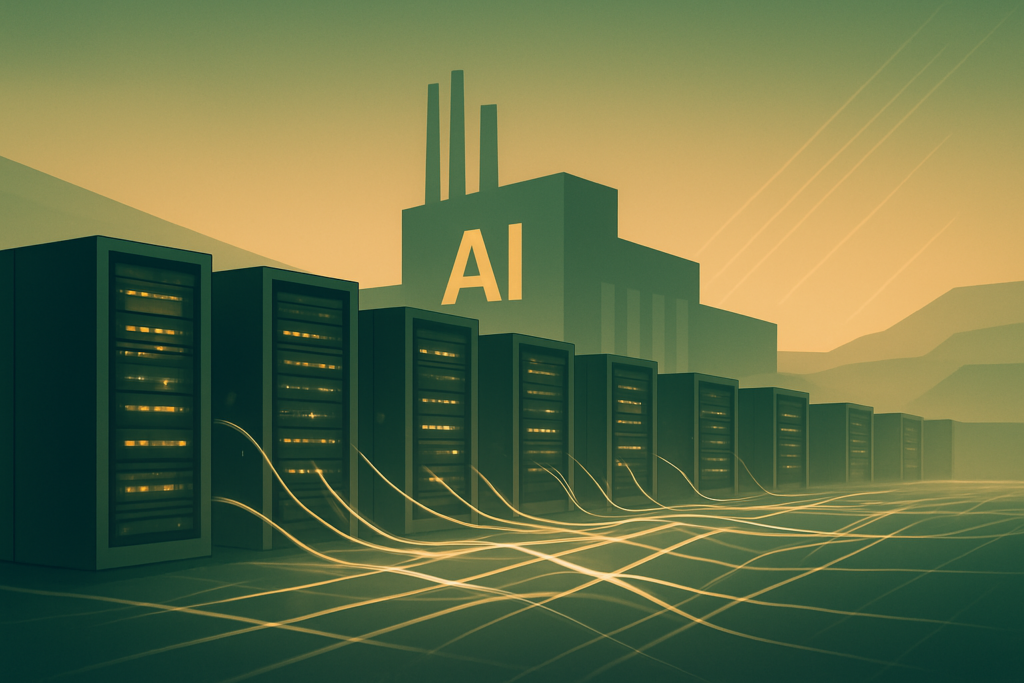
As of January 26, 2026, the global computing landscape is no longer defined by the general-purpose cloud services of the past decade. Instead, a new tier of "AI Hyperscalers" has emerged, led by the meteoric rise of CoreWeave (Nasdaq: CRWV). Today, the company finds itself at the center of the financial world following a landmark $2 billion strategic investment from NVIDIA (Nasdaq: NVDA). This capital injection, priced at a significant premium to its recent trading range, underscores CoreWeave’s position as the primary physical backbone for the generative AI revolution.
Once a niche player in the cryptocurrency mining space, CoreWeave has transformed into a critical piece of global infrastructure. In less than three years, it has scaled from a specialized provider for visual effects to the preferred partner for the world’s most ambitious AI labs, including OpenAI and Meta. This article explores the company’s evolution, its high-leverage business model, and the unique, symbiotic relationship it shares with the world’s most valuable semiconductor company.
Historical Background
CoreWeave’s journey began not in a Silicon Valley incubator, but in a garage in 2017. Founded as Atlantic Crypto by former commodities traders Michael Intrator, Brian Venturo, and Brannin McBee, the company was initially focused on large-scale Ethereum mining. At its peak in 2018, it was one of the largest miners in North America, utilizing thousands of NVIDIA GPUs.
The "crypto winter" of 2018–2019 proved to be a turning point. Realizing that their massive inventory of GPUs was underutilized by volatile mining rewards, the founders pivoted to cloud computing. Rebranding as CoreWeave in 2019, they began renting out "compute" to industries with high-performance requirements, such as visual effects (VFX) and 3D rendering. This early transition allowed them to build a specialized, GPU-native software stack that legacy cloud providers—whose data centers were built primarily for web hosting and CPUs—lacked.
When the generative AI wave hit in late 2022, CoreWeave was perfectly positioned. Unlike Amazon Web Services (AWS) or Microsoft Azure, which had to retrofit massive general-purpose data centers, CoreWeave was building "high-density" clusters designed from the ground up for the thermal and power demands of massive AI training.
Business Model
CoreWeave operates on a GPU-as-a-Service (GPUaaS) model. It positions itself as an "Altscaler" (alternative hyperscaler), offering specialized infrastructure that is often more efficient than traditional cloud providers.
Key revenue sources include:
- On-Demand and Reserved Instances: Renting out NVIDIA’s most advanced chips, including the H100, H200, and the new Blackwell GB300 NVL72 series.
- Bare Metal Infrastructure: Providing customers with direct access to hardware without the "virtualization tax" (software layers that can slow down performance), which is a major draw for AI labs performing massive LLM (Large Language Model) training.
- Strategic Colocation: Managing specialized data centers that focus on extreme power density, often exceeding 100kW per rack.
The company’s customer base is concentrated but high-value. By 2025, CoreWeave had secured massive long-term contracts with industry titans. Its backlog is anchored by a $22.4 billion commitment from OpenAI and a multi-billion dollar agreement with Meta to support their Llama-series development.
Stock Performance Overview
Since its highly anticipated IPO on March 28, 2025, CoreWeave (CRWV) has been one of the market’s top-performing technology stocks.
- IPO Price: $40.00 per share.
- 1-Year Performance (Trailing): The stock has surged approximately 125% from its IPO price, currently trading near $90.00 as of late January 2026.
- Notable Moves: The stock saw a 20% jump today following the news of NVIDIA’s $2 billion direct investment. It also experienced significant volatility in late 2025 following its $9 billion acquisition of Core Scientific, which investors initially viewed as high-risk due to the debt involved.
The stock’s trajectory has mirrored the "AI 2.0" trade—shifting from chipmakers like NVIDIA to the infrastructure providers that deploy those chips at scale.
Financial Performance
CoreWeave’s financial profile is characterized by explosive top-line growth coupled with massive capital intensity.
- Revenue Growth: In fiscal year 2025, CoreWeave reported revenue of $8.2 billion, a staggering increase from $1.9 billion in 2024.
- Margins: Gross margins remain healthy at roughly 45%, but net income has fluctuated near the break-even point. In Q3 2025, the company reported a net loss of $110 million, primarily due to the depreciation of its massive hardware fleet and interest payments on its debt.
- Backlog: The most bullish metric for investors is the company’s $55.6 billion revenue backlog, representing multi-year, non-cancelable contracts from the world's leading AI companies.
- Debt and Liquidity: CoreWeave is heavily leveraged. It has pioneered the use of "GPU-backed loans," where its inventory of NVIDIA chips serves as collateral for billions in financing. While innovative, this strategy leaves the company sensitive to interest rate fluctuations.
Leadership and Management
The company is led by its co-founder and CEO, Michael Intrator. A former hedge fund manager, Intrator’s financial acumen has been central to CoreWeave’s ability to secure billions in specialized debt financing—a critical advantage in a capital-intensive industry.
- Brian Venturo (Chief Strategy Officer): The technical visionary of the group. Venturo’s early decision to pivot away from crypto mining to GPU cloud is widely credited as one of the most successful pivots in modern tech history.
- Nitin Agrawal (CFO): A veteran of Google Cloud and AWS, Agrawal was recruited to professionalize CoreWeave’s financial reporting ahead of the 2025 IPO.
- Brannin McBee (Chief Development Officer): McBee leads the company’s real estate and power acquisition strategy, which has become the primary bottleneck for AI growth in 2026.
The leadership team is regarded as aggressive and highly specialized, with a reputation for moving faster than the bureaucratic "Big Tech" incumbents.
Products, Services, and Innovations
CoreWeave’s competitive edge lies in its GPU-Native Software Stack. While legacy clouds struggle with legacy code and general-purpose storage, CoreWeave’s platform is optimized specifically for NVIDIA’s InfiniBand networking and CUDA software.
Key Innovations:
- Blackwell Integration: CoreWeave was the first cloud provider to deploy NVIDIA’s Blackwell architecture at scale in late 2025.
- CoreWeave Kubernetes Service: A purpose-built orchestration layer that allows AI researchers to deploy thousands of GPUs in seconds, a process that can take hours on legacy platforms.
- Liquid Cooling Standards: By 2026, CoreWeave has set new industry standards for liquid-to-chip cooling, allowing them to pack more compute power into smaller data center footprints.
Competitive Landscape
CoreWeave competes in a "David vs. Goliath" environment, though the lines are increasingly blurred.
- Hyperscaler Rivals (AWS, Azure, GCP): These giants have infinite capital but are often hampered by their own internal AI priorities and a "generalist" focus.
- The "Neoclouds": Competitors like Lambda Labs and Together AI offer similar GPU-centric services, but CoreWeave’s massive lead in power capacity and NVIDIA's direct backing has given it a dominant market share in this sub-sector.
- In-House Hardware: A looming threat comes from Google and Amazon’s internal AI chips (TPUs and Trainium). However, as long as NVIDIA's CUDA remains the industry standard, CoreWeave’s NVIDIA-centric model remains protected.
Industry and Market Trends
The AI market in 2026 is defined by the "Power Wall." The primary constraint on AI growth is no longer chip availability, but the availability of electricity and high-density data center space. CoreWeave’s 2025 acquisition of Core Scientific was a strategic masterstroke, converting former crypto-mining sites with massive electrical permits into AI "factories."
Furthermore, there is a trend toward sovereign AI. Governments in Europe and the Middle East are increasingly looking to build their own AI infrastructure. CoreWeave has capitalized on this by opening data centers in Norway and the UK, catering to data residency requirements.
Risks and Challenges
Despite its success, CRWV faces significant risks:
- Concentration Risk: The company is almost entirely dependent on NVIDIA. Any supply chain disruption or a shift in NVIDIA’s preferred partner status would be catastrophic.
- High Leverage: With billions in debt, CoreWeave is vulnerable if the "AI bubble" bursts or if customer demand for LLM training slows down significantly.
- Infrastructure Delays: The company is currently facing several class-action lawsuits from shareholders related to delays in the build-out of its Texas and Illinois data centers, which allegedly impacted 2025 revenue projections.
- Regulatory Scrutiny: As a dominant AI infrastructure provider, CoreWeave is increasingly under the microscope of the FTC regarding its close relationship with NVIDIA and potential anti-competitive practices.
Opportunities and Catalysts
- NVIDIA’s $2B Investment: Today's investment is more than just cash; it is a signal that NVIDIA views CoreWeave as its "Cloud Arm," ensuring CRWV remains the first in line for future chip generations.
- Edge AI Expansion: As inference (running AI models) becomes more prevalent than training, CoreWeave has the opportunity to expand its footprint to "edge" data centers.
- S&P 500 Inclusion: With a market cap now exceeding $50 billion, CRWV is a prime candidate for S&P 500 inclusion in 2026, which would trigger massive institutional buying.
Investor Sentiment and Analyst Coverage
Wall Street is largely bullish on CRWV, viewing it as the "purest play" on AI infrastructure.
- Analyst Ratings: Currently, 18 analysts cover the stock, with 14 "Buy" ratings and 4 "Hold" ratings.
- Hedge Fund Interest: Several high-profile hedge funds have built significant positions, viewing the company’s $56 billion backlog as a guaranteed revenue stream.
- Retail Sentiment: On social media platforms like X and Reddit, CoreWeave is often discussed as the "Next NVIDIA," though more conservative investors warn of its high valuation (trading at roughly 10x 2026 projected revenue).
Regulatory, Policy, and Geopolitical Factors
The regulatory landscape for AI is tightening. The AI Safety Act of 2025 in the U.S. requires infrastructure providers like CoreWeave to report when customers are using massive amounts of compute to train potentially dangerous models. Compliance costs are rising, but CoreWeave’s specialized focus allows it to implement these "compute-governance" features more natively than its larger rivals.
Geopolitically, the U.S.-China "chip war" remains a double-edged sword. While export controls limit CoreWeave’s ability to expand into Chinese markets, they also solidify the value of its domestic GPU inventory, as high-end AI chips become the "new oil."
Conclusion
CoreWeave (CRWV) has successfully navigated the transition from a garage-based crypto miner to a cornerstone of the global AI economy. Today’s $2 billion investment from NVIDIA is a resounding vote of confidence, effectively cementing the company’s status as the world’s leading AI hyperscaler.
For investors, the case for CoreWeave is built on its massive, multi-year backlog and its unique hardware-software integration. However, the company’s high debt load and its absolute reliance on NVIDIA’s ecosystem remain significant risks. As we move further into 2026, the key metric to watch will be CoreWeave’s ability to convert its $56 billion backlog into profitable operations while managing the immense power and cooling requirements of the Blackwell era.
This content is intended for informational purposes only and is not financial advice. As of January 26, 2026, the author holds no position in CRWV.