In a move that signals the transition from experimental AI to a fully realized "Agent Economy," Alphabet Inc. (NASDAQ: GOOGL) has announced the general availability of its Managed Model Context Protocol (MCP) Servers. This new infrastructure layer is designed to solve the "last mile" problem of AI development: the complex, often fragile connections between autonomous agents and the enterprise data they need to function. By providing a secure, hosted environment for these connections, Google is positioning itself as the primary utility provider for the next generation of autonomous software.
The announcement comes at a pivotal moment as the tech industry moves away from simple chat interfaces toward "agentic" workflows—systems that can independently browse the web, query databases, and execute code. Until now, developers struggled with local, non-scalable methods for connecting these agents to tools. Google’s managed approach replaces bespoke "glue code" with a standardized, enterprise-grade cloud interface, effectively creating a "USB-C port" for the AI era that allows any agent to plug into any data source with minimal friction.
Technical Foundations: From Local Scripts to Cloud-Scale Orchestration
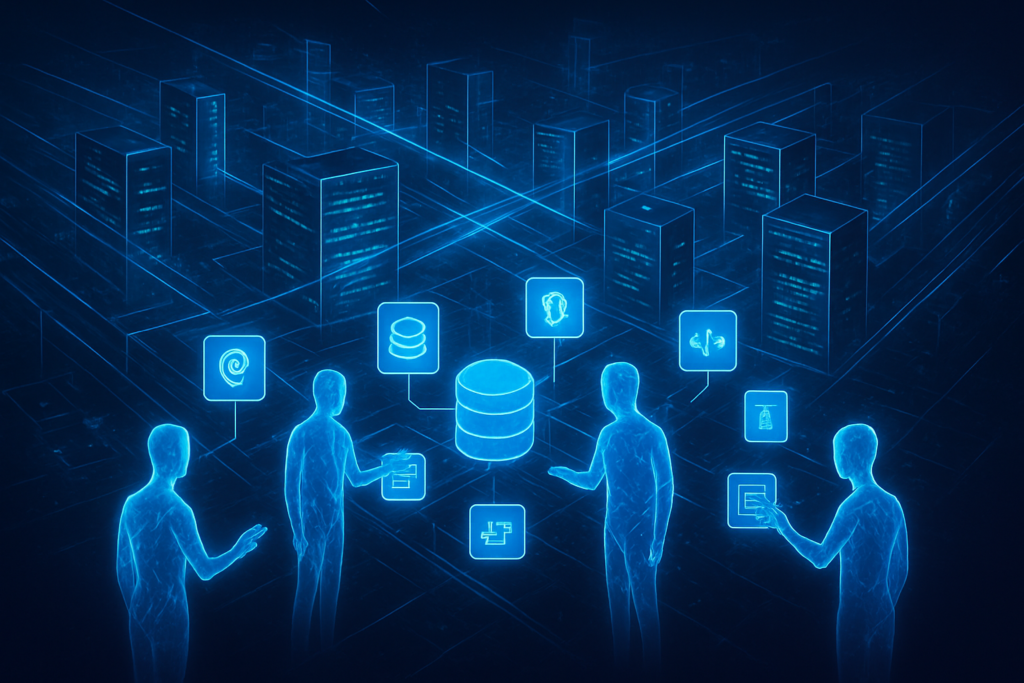
At the heart of this development is the Model Context Protocol (MCP), an open standard originally proposed by Anthropic to govern how AI models interact with external tools and data. While early iterations of MCP relied heavily on local stdio transport—limiting agents to the machine they were running on—Google’s Managed MCP Servers shift the architecture to a remote-first, serverless model. Hosted on Google Cloud, these servers provide globally consistent HTTP endpoints, allowing agents to access live data from Google Maps, BigQuery, and Google Compute Engine without the need for developers to manage underlying server processes or local environments.
The technical sophistication of Google’s implementation lies in its integration with the Vertex AI Agent Builder and the new "Agent Engine" runtime. This managed environment handles the heavy lifting of session management, long-term memory, and multi-agent coordination. Crucially, Google has introduced "Agent Identity" through its Identity and Access Management (IAM) framework. This allows every AI agent to have its own unique security credentials, ensuring that an agent tasked with analyzing a BigQuery table has the permission to read data but lacks the authority to delete it—a critical requirement for enterprise-level deployment.
Furthermore, Google has addressed the "hallucination" and "jailbreak" risks inherent in autonomous systems through a feature called Model Armor. This security layer sits between the agent and the MCP server, scanning every tool call for prompt injections or malicious commands in real-time. By combining these security protocols with the scalability of Google Kubernetes Engine (GKE), developers can now deploy "fleets" of specialized agents that can scale up or down based on workload, a feat that was previously impossible with local-first MCP implementations.
Industry experts have noted that this move effectively "industrializes" agent development. By offering a curated "Agent Garden"—a centralized library of pre-built, verified MCP tools—Google is lowering the barrier to entry for developers. Instead of writing custom connectors for every internal API, enterprises can use Google’s Apigee integration to transform their existing legacy infrastructure into MCP-compatible tools, making their entire software stack "agent-ready" almost overnight.
The Market Shift: Alphabet’s Play for the Agentic Cloud
The launch of Managed MCP Servers places Alphabet Inc. (NASDAQ: GOOGL) in direct competition with other cloud titans vying for dominance in the agent space. Microsoft Corporation (NASDAQ: MSFT) has been aggressive with its Copilot Studio and Azure AI Foundry, while Amazon.com, Inc. (NASDAQ: AMZN) has leveraged its Bedrock platform to offer similar agentic capabilities. However, Google’s decision to double down on the open MCP standard, rather than a proprietary alternative, may give it a strategic advantage in attracting developers who fear vendor lock-in.
For AI startups and mid-sized enterprises, this development is a significant boon. By offloading the infrastructure and security concerns to Google Cloud, these companies can focus on the "intelligence" of their agents rather than the "plumbing" of their data connections. This is expected to trigger a wave of innovation in specialized agent services—what many are calling the "Microservices Moment" for AI. Just as Docker and Kubernetes revolutionized how software was built a decade ago, Managed MCP is poised to redefine how AI services are composed and deployed.
The competitive implications extend beyond the cloud providers. Companies that specialize in integration and middleware may find their traditional business models disrupted as standardized protocols like MCP become the norm. Conversely, data-heavy companies stand to benefit immensely; by making their data "MCP-accessible," they can ensure their services are the first ones integrated into the emerging ecosystem of autonomous AI agents. Google’s move essentially creates a new marketplace where data and tools are the currency, and the cloud provider acts as the exchange.
Strategic positioning is clear: Google is betting that the "Agent Economy" will be larger than the search economy. By providing the most reliable and secure infrastructure for these agents, they aim to become the indispensable backbone of the autonomous enterprise. This strategy not only protects their existing cloud revenue but opens up new streams as agents become the primary users of cloud compute and storage, often operating 24/7 without human intervention.
The Agent Economy: A New Paradigm in Digital Labor
The broader significance of Managed MCP Servers cannot be overstated. We are witnessing a shift from "AI as a consultant" to "AI as a collaborator." In the previous era of AI, models were primarily used to generate text or images based on human prompts. In the 2026 landscape, agents are evolving into "digital labor," capable of managing end-to-end workflows such as supply chain optimization, autonomous R&D pipelines, and real-time financial auditing. Google’s infrastructure provides the "physical" framework—the roads and bridges—that allows this digital labor to move and act.
This development fits into a larger trend of standardizing AI interactions. Much like the early days of the internet required protocols like HTTP and TCP/IP to flourish, the Agent Economy requires a common language for tool use. By backing MCP, Google is helping to prevent a fragmented landscape where different agents cannot talk to different tools. This interoperability is essential for the "Multi-Agent Systems" (MAS) that are now becoming common in the enterprise, where a "manager agent" might coordinate a "researcher agent," a "coder agent," and a "legal agent" to complete a complex project.
However, this transition also raises significant concerns regarding accountability and "workslop"—low-quality or unintended outputs from autonomous systems. As agents gain the ability to execute real-world actions like moving funds or modifying infrastructure, the potential for catastrophic error increases. Google’s focus on "grounded" actions—where agents must verify their steps against trusted data sources like BigQuery—is a direct response to these fears. It represents a shift in the industry's priority from "raw intelligence" to "reliable execution."
Comparisons are already being made to the "API Revolution" of the 2010s. Just as APIs allowed different software programs to talk to each other, MCP allows AI to "talk" to the world. The difference is that while APIs required human programmers to define every interaction, MCP-enabled agents can discover and use tools autonomously. This represents a fundamental leap in how we interact with technology, moving us closer to a world where software is not just a tool we use, but a partner that acts on our behalf.
Future Horizons: The Path Toward Autonomous Enterprises
Looking ahead, the next 18 to 24 months will likely see a rapid expansion of the MCP ecosystem. We can expect to see "Agent-to-Agent" (A2A) protocols becoming more sophisticated, allowing agents from different companies to negotiate and collaborate through these managed servers. For example, a logistics agent from a shipping firm could autonomously negotiate terms with a warehouse agent from a retailer, with Google’s infrastructure providing the secure, audited environment for the transaction.
One of the primary challenges that remains is the "Trust Gap." While the technical infrastructure for agents is now largely in place, the legal and ethical frameworks for autonomous digital labor are still catching up. Experts predict that the next major breakthrough will not be in model size, but in "Verifiable Agency"—the ability to prove exactly why an agent took a specific action and ensure it followed all regulatory guidelines. Google’s investment in audit logs and IAM for agents is a first step in this direction, but industry-wide standards for AI accountability will be the next frontier.
In the near term, we will likely see a surge in "Vertical Agents"—AI systems deeply specialized in specific industries like healthcare, law, or engineering. These agents will use Managed MCP to connect to highly specialized, secure data silos that were previously off-limits to general-purpose AI. As these systems become more reliable, the vision of the "Autonomous Enterprise"—a company where routine operational tasks are handled entirely by coordinated agent networks—will move from science fiction to a standard business model.
Industrializing the Future of AI
Google’s launch of Managed MCP Servers represents a landmark moment in the history of artificial intelligence. By providing the secure, scalable, and standardized infrastructure needed to host AI tools, Alphabet Inc. has effectively laid the tracks for the Agent Economy to accelerate. This is no longer about chatbots that can write poems; it is about a global network of autonomous systems that can drive economic value by performing complex, real-world tasks.
The key takeaway for businesses and developers is that the "infrastructure phase" of the AI revolution has arrived. The focus is shifting from the models themselves to the systems and protocols that surround them. Google’s move to embrace and manage the Model Context Protocol is a powerful signal that the future of AI is open, interoperable, and, above all, agentic.
In the coming weeks and months, the tech world will be watching closely to see how quickly developers adopt these managed services and whether competitors like Microsoft and Amazon will follow suit with their own managed MCP implementations. The race to build the "operating system for the Agent Economy" is officially on, and with Managed MCP Servers, Google has just taken a significant lead.
This content is intended for informational purposes only and represents analysis of current AI developments.
TokenRing AI delivers enterprise-grade solutions for multi-agent AI workflow orchestration, AI-powered development tools, and seamless remote collaboration platforms. For more information, visit https://www.tokenring.ai/.