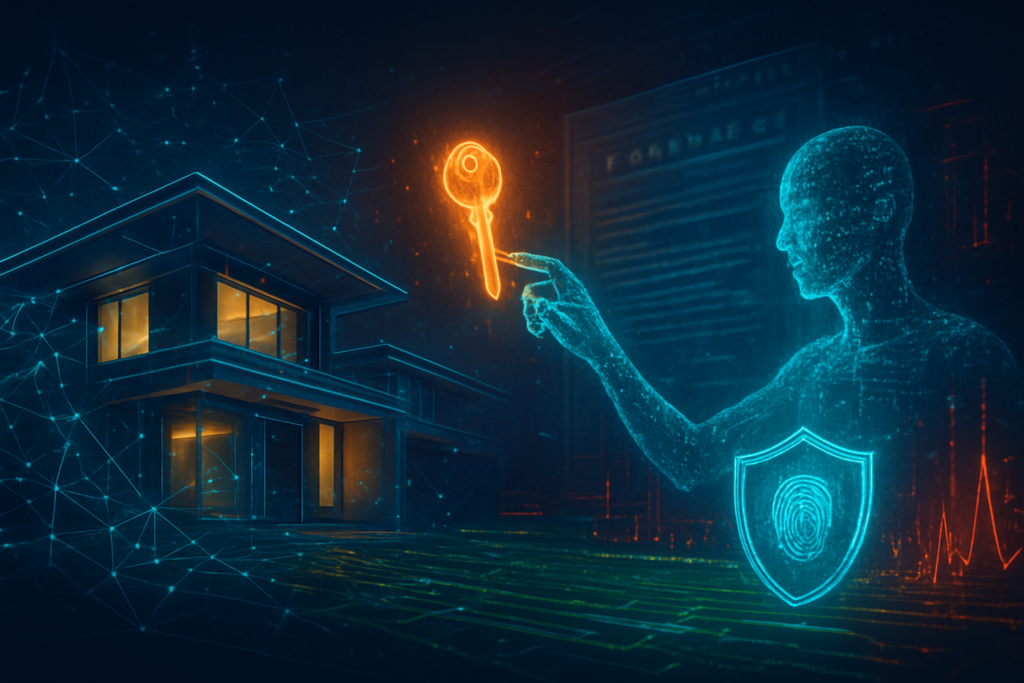
The American dream of homeownership is facing a sophisticated new adversary as 2025 draws to a close. In the first quarter of 2025 alone, AI-driven wire fraud in the real estate sector resulted in over $200 million in financial losses, marking a terrifying evolution in cybercrime. What was once a landscape of poorly spelled phishing emails has transformed into "Social Engineering 2.0," where fraudsters use hyper-realistic deepfakes and autonomous AI agents to hijack the closing process, often leaving buyers and title companies penniless before they even realize a crime has occurred.
This surge in high-tech theft has forced a radical restructuring of the real estate industry’s security protocols. As of December 19, 2025, the traditional "trust but verify" model has been declared dead, replaced by a "Zero-Trust" architecture that treats every email, phone call, and even video conference as a potential AI-generated forgery. The stakes reached a fever pitch this year following a high-profile incident in California, where a couple lost a $720,000 down payment after a live Zoom call with a "deepfake attorney" who perfectly mimicked their legal representative’s voice and appearance in real-time.
The Technical Arsenal: From Dark LLMs to Real-Time Face Swapping
The technical sophistication of these attacks has outpaced traditional cybersecurity defenses. Fraudsters are now leveraging "Dark LLMs" such as FraudGPT and WormGPT—unfiltered versions of large language models specifically trained to generate malicious code and convincing social engineering scripts. Unlike the generic lures of the past, these AI tools scrape data from Multiple Listing Services (MLS) and LinkedIn to create hyper-personalized messages. They reference specific property details, local neighborhood nuances, and even recent weather events to build an immediate, false sense of rapport with buyers and escrow officers.
Beyond text, the emergence of real-time deepfake technology has become the industry's greatest vulnerability. Tools like DeepFaceLive and Amigo AI allow attackers to perform "video-masking" during live consultations. By using as little as 30 seconds of audio and video from an agent's social media profile, scammers can clone voices and overlay digital faces onto their own during Microsoft Teams (NASDAQ: MSFT) or Zoom calls. This capability has effectively neutralized the "video verification" safeguard that many title companies relied upon in 2024. Industry experts note that these "multimodal" attacks are often orchestrated by automated bots that can manage thousands of simultaneous "lure" conversations across WhatsApp, Slack, and email, waiting for a human victim to engage before a live fraudster takes over the final closing call.
The Corporate Counter-Strike: Tech Giants and Startups Pivot to Defense
The escalating threat has triggered a massive response from major technology and cybersecurity firms. Microsoft (NASDAQ: MSFT) recently unveiled Agent 365 at its late-2025 Ignite conference, a platform designed to govern the "agentic" workflows now common in mortgage processing. By integrating with Microsoft Entra, the system enforces strict permissions that prevent unauthorized AI agents from altering wire instructions or title records. Similarly, CrowdStrike (NASDAQ: CRWD) has launched Falcon AI Detection and Response (AIDR), which treats "prompts as the new malware." This system is specifically designed to stop prompt injection attacks where scammers try to "trick" a real estate firm's internal AI into bypassing security checks.
In the identity space, Okta (NASDAQ: OKTA) is rolling out Verifiable Digital Credentials (VDC) to bridge the trust gap. By providing a "Verified Human Signature" for every digital transaction, Okta aims to ensure that even if an AI agent performs a task, there is a cryptographically signed human authorization behind it. Meanwhile, the real estate portal Realtor.com, owned by News Corp (NASDAQ: NWS), has begun integrating automated payment platforms like Payload to handle Earnest Money Deposits (EMD). These systems bypass manual, email-based wire instructions entirely, removing the primary vector used by AI fraudsters to intercept funds.
A New Regulatory Frontier: FinCEN and the SEC Step In
The wider significance of this AI fraud wave extends into the halls of government and the very foundations of the broader AI landscape. The rise of synthetic reality scams has drawn a sharp comparison to the "Business Email Compromise" (BEC) era of the 2010s, but with a critical difference: the speed of execution. Funds stolen via AI-automated "mule" accounts are often laundered through decentralized protocols within minutes, resulting in a recovery rate of less than 5% in 2025. This has prompted the Financial Crimes Enforcement Network (FinCEN) to issue a landmark rule, effective March 1, 2026, requiring title agents to report all non-financed, all-cash residential transfers to legal entities—a move specifically designed to curb AI-enabled money laundering.
Furthermore, the Securities and Exchange Commission (SEC) has launched a crackdown on "AI-washing" within the real estate tech sector. In late 2025, several firms faced enforcement actions for overstating the capabilities of their "AI-powered" property valuation and security tools. This regulatory shift was punctuated by President Trump’s Executive Order on AI, signed on December 11, 2025. The order seeks to establish a "minimally burdensome" national policy that preempts restrictive state laws, aiming to lower compliance costs for legitimate businesses while creating an AI Litigation Task Force to prosecute high-tech financial crimes.
The 2026 Outlook: AI vs. AI Security Battles
Looking ahead, experts predict that 2026 will be defined by an "AI vs. AI" arms race. As fraudsters deploy increasingly autonomous bots to conduct reconnaissance on high-value properties, defensive firms like CertifID and FundingShield are moving toward "self-healing" security systems. These platforms use behavioral biometrics—analyzing typing speed, facial micro-movements, and even mouse patterns—to detect if a participant in a digital closing is a human or a machine-generated deepfake.
The long-term challenge remains the "synthetic reality" problem. As AI-generated video becomes indistinguishable from reality, the industry is expected to move toward blockchain-based escrow services. Companies like Propy and SafeWire are already gaining traction by using smart contracts to hold funds in decentralized ledgers, releasing them only when pre-defined, cryptographically verified conditions are met. This shift would effectively eliminate "wire instructions" as a concept, replacing them with immutable code that cannot be spoofed by a deepfake voice on a phone call.
Conclusion: Rebuilding Trust in a Synthetic Age
The rise of AI-driven wire fraud in 2025 represents a pivotal moment in the history of both real estate and artificial intelligence. It has exposed the fragility of human-centric verification in an era where "seeing is no longer believing." The key takeaway for the industry is that security can no longer be an afterthought or a manual checklist; it must be an integrated, AI-native layer of the transaction itself.
As we move into 2026, the success of the real estate market will depend on its ability to adopt these new "Zero-Trust" technologies. While the financial losses of 2025 have been devastating, they have also accelerated a long-overdue modernization of the closing process. For buyers and sellers, the message is clear: in the age of the invisible closing agent, the only safe transaction is one backed by cryptographic certainty. Watch for the implementation of the FinCEN residential rule in March 2026 as the next major milestone in this ongoing battle for the soul of the digital economy.
This content is intended for informational purposes only and represents analysis of current AI developments.
TokenRing AI delivers enterprise-grade solutions for multi-agent AI workflow orchestration, AI-powered development tools, and seamless remote collaboration platforms.
For more information, visit https://www.tokenring.ai/.