Fast-food company Restaurant Brands (NYSE: QSR) reported revenue ahead of Wall Street’s expectations in Q4 CY2025, with sales up 7.4% year on year to $2.47 billion. Its non-GAAP profit of $0.96 per share was 1.3% above analysts’ consensus estimates.
Is now the time to buy Restaurant Brands? Find out by accessing our full research report, it’s free.
Restaurant Brands (QSR) Q4 CY2025 Highlights:
- Revenue: $2.47 billion vs analyst estimates of $2.41 billion (7.4% year-on-year growth, 2.1% beat)
- Adjusted EPS: $0.96 vs analyst estimates of $0.95 (1.3% beat)
- Adjusted EBITDA: $772 million vs analyst estimates of $768.5 million (31.3% margin, in line)
- Operating Margin: 25.2%, down from 27.7% in the same quarter last year
- Free Cash Flow Margin: 18.4%, similar to the same quarter last year
- Locations: 33,041 at quarter end, up from 32,125 in the same quarter last year
- Same-Store Sales rose 3.1% year on year, in line with the same quarter last year
- Market Capitalization: $23.18 billion
Company Overview
Formed through a strategic merger, Restaurant Brands International (NYSE: QSR) is a multinational corporation that owns three iconic fast-food chains: Burger King, Tim Hortons, and Popeyes.
Revenue Growth
A company’s long-term performance is an indicator of its overall quality. Any business can have short-term success, but a top-tier one grows for years.
With $9.43 billion in revenue over the past 12 months, Restaurant Brands is one of the most widely recognized restaurant chains and benefits from customer loyalty, a luxury many don’t have. Its scale also gives it negotiating leverage with suppliers, enabling it to source its ingredients at a lower cost.
As you can see below, Restaurant Brands’s 9.1% annualized revenue growth over the last six years was decent as it opened new restaurants and increased sales at existing, established dining locations.
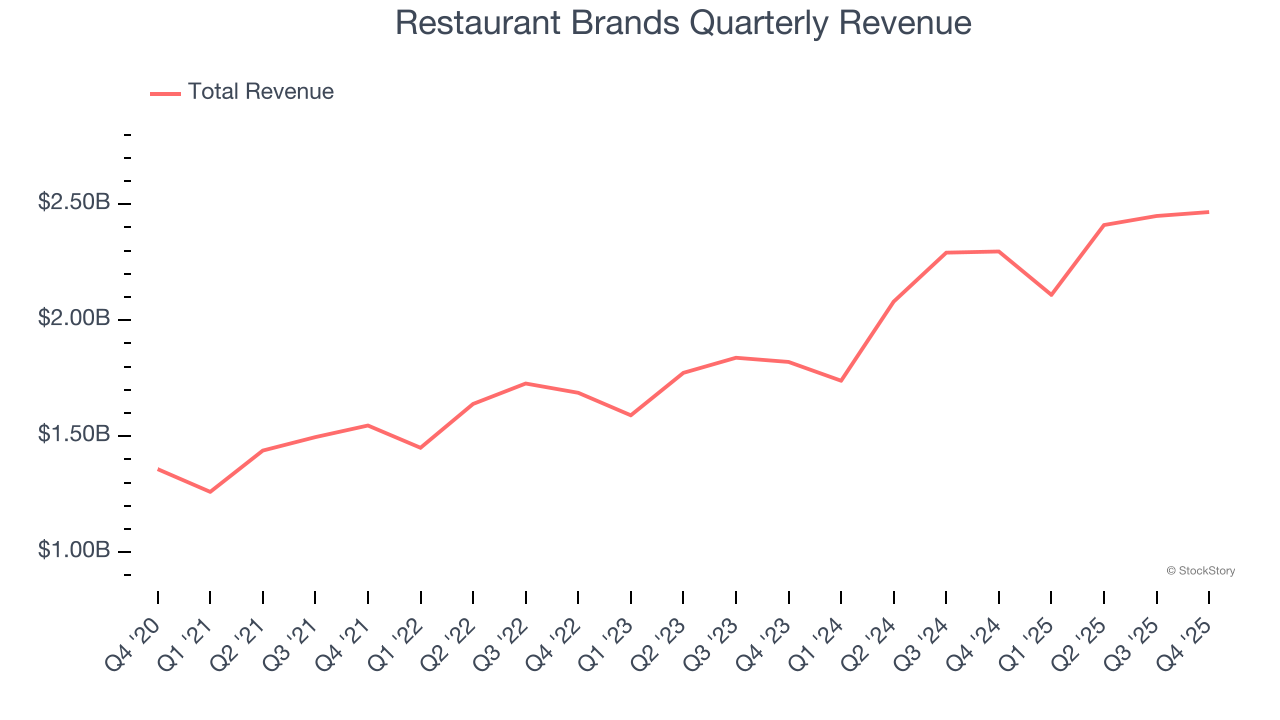
This quarter, Restaurant Brands reported year-on-year revenue growth of 7.4%, and its $2.47 billion of revenue exceeded Wall Street’s estimates by 2.1%.
Looking ahead, sell-side analysts expect revenue to grow 3.5% over the next 12 months, a deceleration versus the last six years. This projection is underwhelming and suggests its menu offerings will see some demand headwinds.
Microsoft, Alphabet, Coca-Cola, Monster Beverage—all began as under-the-radar growth stories riding a massive trend. We’ve identified the next one: a profitable AI semiconductor play Wall Street is still overlooking. Go here for access to our full report.
Restaurant Performance
Number of Restaurants
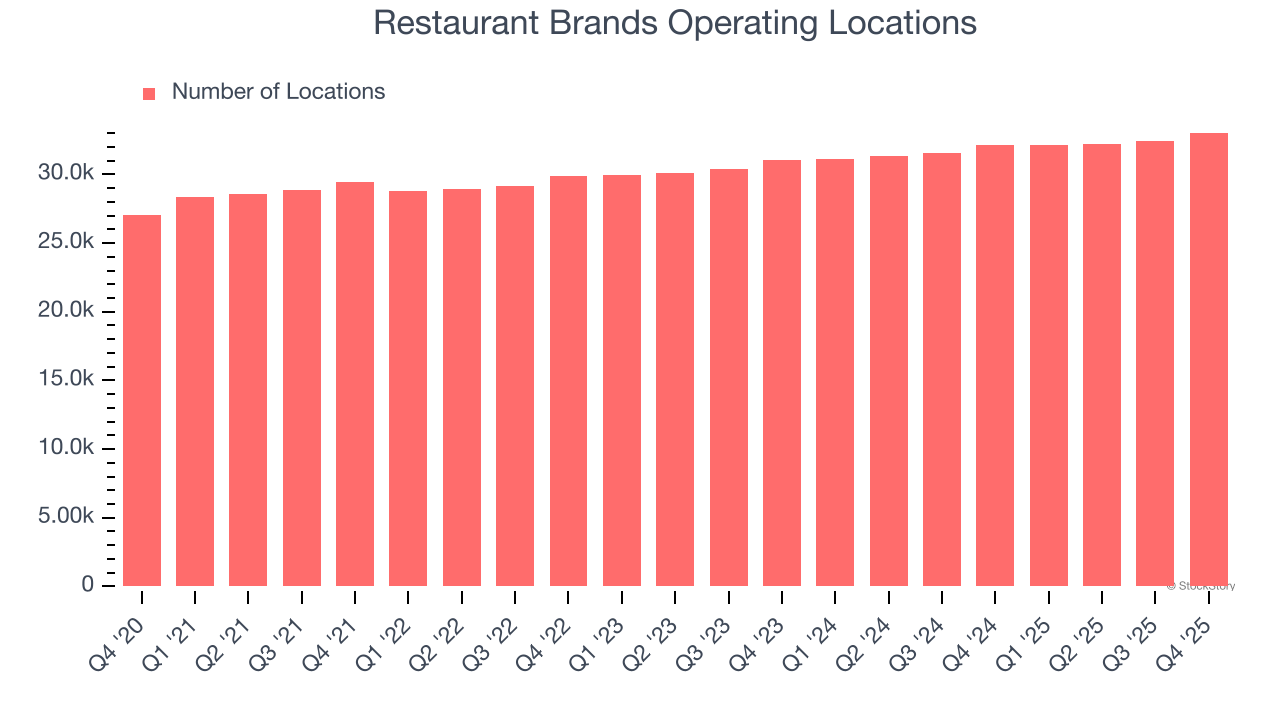
Restaurant Brands sported 33,041 locations in the latest quarter. Over the last two years, it has opened new restaurants quickly, averaging 3.4% annual growth. This was faster than the broader restaurant sector. Additionally, one dynamic making expansion more seamless is the company’s franchise model, where franchisees are primarily responsible for opening new restaurants while Restaurant Brands provides support.
When a chain opens new restaurants, it usually means it’s investing for growth because there’s healthy demand for its meals and there are markets where its concepts have few or no locations.
Same-Store Sales
A company's restaurant base only paints one part of the picture. When demand is high, it makes sense to open more. But when demand is low, it’s prudent to close some locations and use the money in other ways. Same-store sales gives us insight into this topic because it measures organic growth at restaurants open for at least a year.
Restaurant Brands’s demand rose over the last two years and slightly outpaced the industry. On average, the company’s same-store sales have grown by 2.4% per year. This performance suggests its rollout of new restaurants could be beneficial for shareholders. When a chain has demand, more locations should help it reach more customers and boost revenue growth.
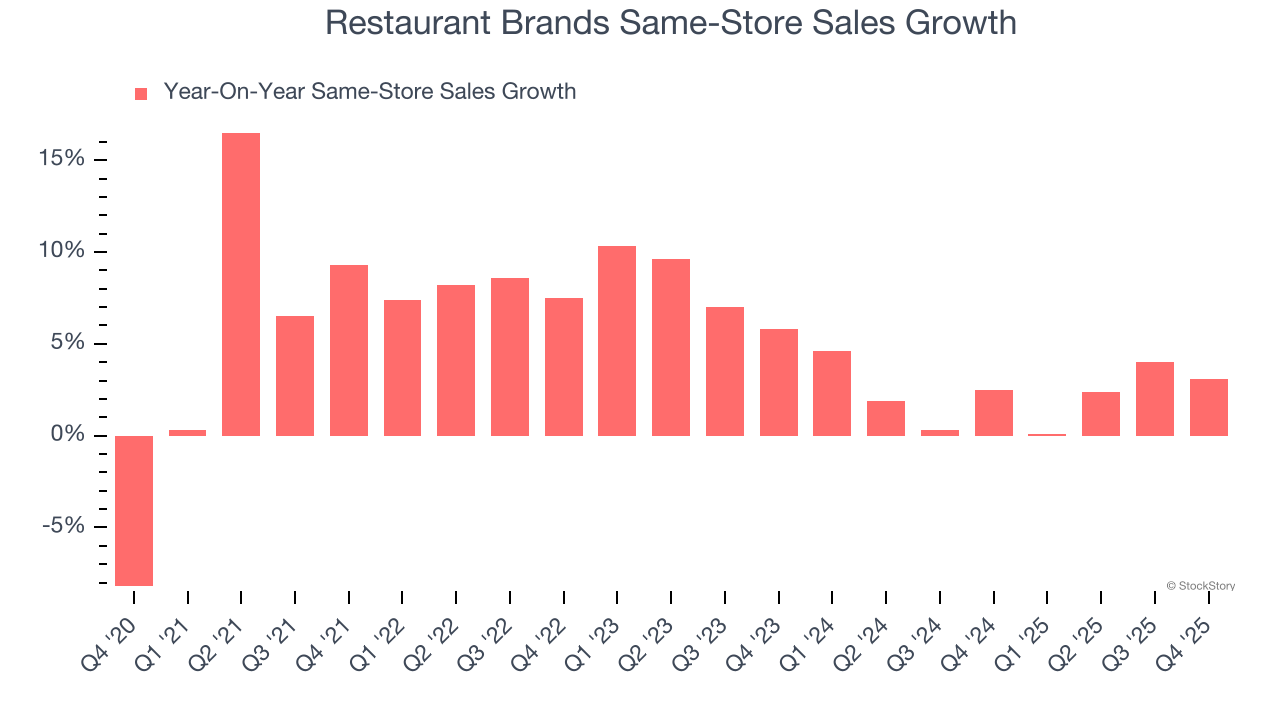
In the latest quarter, Restaurant Brands’s same-store sales rose 3.1% year on year. This performance was more or less in line with its historical levels.
Key Takeaways from Restaurant Brands’s Q4 Results
We enjoyed seeing Restaurant Brands beat analysts’ revenue expectations this quarter. We were also happy its same-store sales narrowly outperformed Wall Street’s estimates. Overall, we think this was still a solid quarter with some key areas of upside. The market seemed to be hoping for more, and the stock traded down 3.8% to $68.04 immediately after reporting.
So should you invest in Restaurant Brands right now? If you’re making that decision, you should consider the bigger picture of valuation, business qualities, as well as the latest earnings. We cover that in our actionable full research report which you can read here (it’s free).