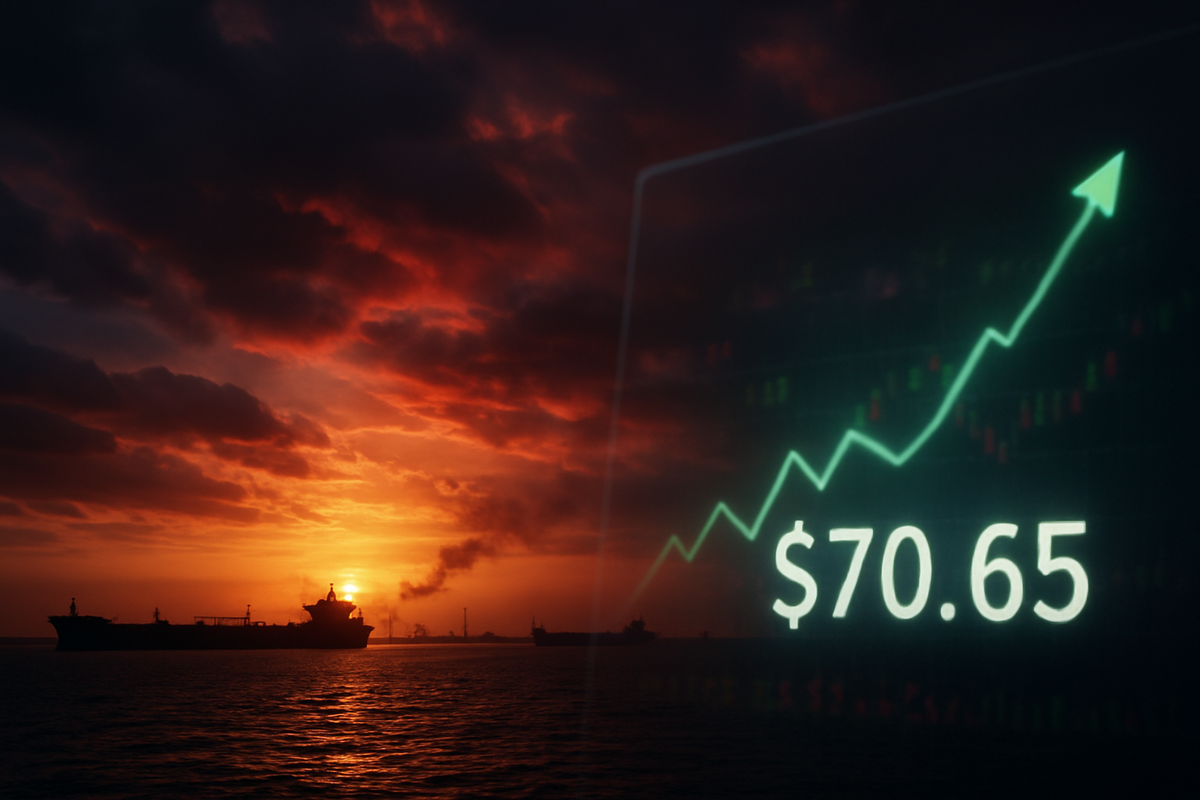
Energy markets shifted into a state of high alert on March 2, 2026, as West Texas Intermediate (WTI) crude oil prices surged past the $70.65 per barrel mark. The dramatic jump follows a weekend of intense military escalation in the Middle East, characterized by targeted strikes against Iranian infrastructure and subsequent retaliatory threats that have left the global energy supply chain in its most precarious state in years.
The immediate implications of this price spike are being felt across global exchanges, as traders scramble to price in a significant geopolitical risk premium. With the potential for a prolonged closure of the Strait of Hormuz—the world’s most vital oil transit chokepoint—market analysts are warning that the current rally may only be the beginning of a sustained period of volatility that could reshape the global economic outlook for 2026.
The Escalation of "Operation Epic Fury"
The catalyst for the current market chaos began on the evening of February 28, 2026, with the launch of "Operation Epic Fury," a coordinated military campaign led by U.S. and Israeli forces. The operation targeted several high-value Iranian military installations, command centers, and nuclear research facilities. Reports emerging from the region on March 1 confirmed that the strikes were more extensive than initially anticipated, causing significant damage to Iran's domestic infrastructure and reportedly affecting senior leadership.
Following the initial strikes, Iran launched a series of retaliatory drone and missile barrages targeting regional airbases and naval assets belonging to Western allies. The timeline of the escalation accelerated rapidly over the weekend, leading to an emergency meeting of the UN Security Council on Sunday evening. By the time markets opened on Monday, March 2, the "fog of war" had firmly descended upon the Persian Gulf, prompting a massive sell-off in risk assets and a flight to commodities.
Initial market reactions were swift. Beyond the jump in WTI to $70.65, Brent Crude also saw a nearly 9% spike, reflecting the international market's sensitivity to Middle Eastern supply. The primary concern among stakeholders is no longer just the immediate loss of Iranian production, but the risk of a regional conflagration that could pull in other major producers like Saudi Arabia and the United Arab Emirates.
Winners and Losers in a High-Oil Environment
The sudden price appreciation has created a stark divide across the corporate landscape. In the "winner" column, integrated oil majors are seeing their share prices buoyed by the prospect of higher margins and increased asset valuations. Exxon Mobil (NYSE: XOM) and Chevron (NYSE: CVX) both saw early trading gains of over 4%, as investors bet on their domestic production capabilities and diversified global portfolios to weather the storm. Similarly, European giants like Shell (NYSE: SHEL) and BP (NYSE: BP) have benefited from the upward pressure on Brent, despite the logistical complexities of navigating the current crisis.
Conversely, the aviation sector has emerged as the primary "loser" in this scenario. Shares of Delta Air Lines (NYSE: DAL), United Airlines (NASDAQ: UAL), and American Airlines (NASDAQ: AAL) tumbled by 5-7% in pre-market trading. These companies face a "double whammy" of soaring jet fuel costs and operational disruptions. The closure of Middle Eastern airspace has forced long-haul carriers to reroute dozens of flights between Europe and Asia, significantly increasing fuel burn and labor costs at a time when energy prices are already peaking.
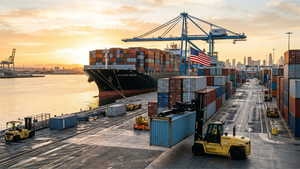
Logistics and shipping companies are also feeling the heat. While some specialized tankers may see higher spot rates due to the increased risk, the broader maritime industry is struggling with a sudden withdrawal of "War Risk Coverage" by major insurers. This has left hundreds of vessels in a state of limbo, unable to secure the necessary protection to transit the Persian Gulf, effectively paralyzing a segment of the global trade network.
The Shadow of the Strait of Hormuz
The wider significance of this event lies in the geographical reality of the Strait of Hormuz. Roughly 20% of the world's total oil consumption—approximately 20 million barrels per day—passes through this narrow waterway. Any sustained disruption here is not merely a regional issue but a global economic threat. Analysts have noted that a $4-$10 "geopolitical risk premium" is now firmly embedded in every barrel of crude. This premium represents the market's assessment of the probability of a total blockade, which would necessitate a massive rerouting of global supply around the Cape of Good Hope.
This event fits into a broader trend of "energy fragmentation" that began in the early 2020s. Following the 2022 invasion of Ukraine, global energy markets became increasingly politicized. The current strikes in Iran represent a continuation of this trend, where energy supplies are used as both a target and a weapon in geopolitical conflicts. Regulatory and policy implications are likely to follow, with Western governments expected to release strategic petroleum reserves (SPR) in an attempt to cap the price surge and prevent a spike in domestic inflation.
Historical precedents, such as the tanker wars of the 1980s or the 2019 attacks on Saudi Aramco facilities, show that while the physical damage can often be repaired, the psychological impact on the market lingers. The current risk premium reflects a fear that the "rules-based order" in maritime trade is being fundamentally challenged, leading to a long-term increase in the cost of doing business globally.
Future Scenarios and Market Adaptations
In the short term, the market will remain hyper-sensitive to any news regarding a potential ceasefire or further escalation. If Iran follows through on its threat to formally mine the Strait of Hormuz, the $70.65 WTI price could quickly become a floor rather than a ceiling, with some analysts predicting a push toward the $100 level. Strategic pivots will be required from energy-intensive industries; we may see a renewed and aggressive push into alternative energy sources as a national security imperative rather than just an environmental goal.
Long-term, this crisis may accelerate the decoupling of Western economies from Middle Eastern energy dependencies. We could see a surge in investment for domestic shale production in the United States and a faster transition toward nuclear and renewable energy in Europe. However, the immediate challenge remains the potential for "demand destruction"—where prices become so high that economic activity slows, leading to a global recession.
Market opportunities may emerge for companies specializing in maritime security and defense technology. As the Persian Gulf becomes a "high-risk" zone, the demand for advanced surveillance, drone defense, and autonomous shipping solutions is expected to skyrocket. Investors will be closely watching the earnings calls of defense contractors to see how this regional instability translates into new procurement contracts.
Navigating the New Energy Reality
The surge in oil prices following the military strikes in Iran marks a turning point for global markets in 2026. The crossing of the $70.65 threshold for WTI is a clear signal that the era of relatively stable, low-cost energy may be over for the foreseeable future. The combination of a $4-$10 risk premium and the de facto closure of the Strait of Hormuz has created a volatile environment where traditional market fundamentals are being overshadowed by geopolitical maneuvers.
As the market moves forward, investors must brace for continued fluctuations. The key takeaways from this event are the vulnerability of the global supply chain and the rapid divergence between energy producers and consumers. The lasting impact will likely be felt in the form of higher "sticky" inflation and a reshuffling of global trade routes.
In the coming months, the most critical factors to watch will be the OPEC+ response to the supply vacuum, the effectiveness of SPR releases, and any signs of a diplomatic off-ramp. Until the security of the Strait of Hormuz can be guaranteed, the geopolitical risk premium will remain a permanent fixture of the oil market, dictating the pace of the global economic recovery in 2026.
This content is intended for informational purposes only and is not financial advice.