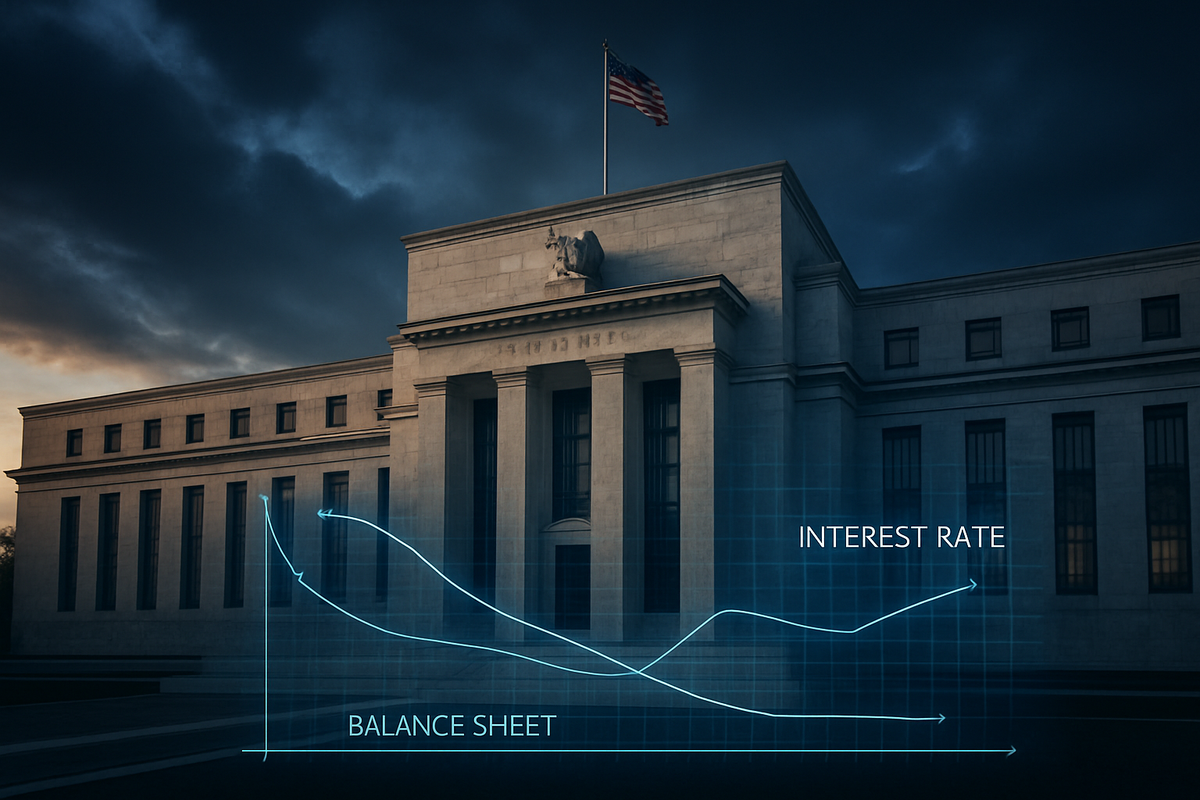
As the sun begins to set on the era of Jerome Powell, the landscape of American finance is bracing for a tectonic shift. The nomination of Kevin Warsh to succeed Powell as the Chair of the Federal Reserve (NYSEARCA:SPY) marks a pivotal moment in the history of the central bank. Announced in late January 2026, the selection of the former Fed Governor and Morgan Stanley executive suggests a move away from the "data-dependent" discretionary style of the last decade toward a more rigid, rule-based approach to governing the world’s most powerful economy.
The immediate implications are already being felt across global markets. With Powell’s term set to expire on May 15, 2026, Warsh has effectively entered a period of "Shadow Chairmanship," where his past academic writings and public statements are being dissected as the new blueprint for the 2026-2030 term. For investors, the "Warsh Doctrine" represents a complex cocktail: a commitment to shrinking the Fed’s massive balance sheet while simultaneously opening the door for interest rate cuts to support productivity gains driven by Artificial Intelligence.
The road to Warsh’s nomination was paved with significant institutional friction. Throughout late 2025 and into early 2026, the relationship between the White House and the Powell-led Fed grew increasingly strained. This culminated in a reported Department of Justice inquiry into the central bank’s internal operations, which many observers viewed as an attempt to pressure Powell into an early retirement. Despite the noise, the official announcement on January 30, 2026, brought a sense of clarity to a market that had been oscillating between fears of persistent inflation and hopes for a "soft landing."
Kevin Warsh is no stranger to the Eccles Building, having served as a Governor during the 2008 financial crisis. However, he is perhaps best known for his 2010 dissents against the second round of Quantitative Easing (QE2), where he warned of the long-term inflationary risks of unconventional monetary policy. This historical stance has earned him a reputation as an "independent hawk," though his recent alignment with Treasury Secretary Scott Bessent suggests a more nuanced, pro-growth philosophy tailored for the post-2024 economic environment.
Initial market reactions to the nomination were swift and brutal for safe-haven assets. On the day of the announcement, silver experienced a historic one-day plunge of 26.7%, and gold fell by over 9%, as traders bet that a "rule-based" Fed would prioritize a strong dollar. Meanwhile, the S&P 500 (NYSEARCA:SPY), which had touched the 7,000 mark earlier that week, saw a modest pullback of 0.5% as the market began the difficult task of pricing in a new leadership that intends to cut rates while aggressively selling off the Fed’s bond holdings.
The banking sector stands as the most immediate beneficiary of the Warsh nomination. Large institutions like JPMorgan Chase & Co. (NYSE: JPM) and Goldman Sachs Group Inc. (NYSE: GS) have expressed cautious optimism about the shift toward a "rule-based" framework. Warsh’s background at Morgan Stanley (NYSE: MS) gives him a unique understanding of market plumbing, and his focus on financial stability could lead to more predictable regulatory environments. Goldman Sachs analysts noted that Warsh’s deep institutional roots may actually help preserve Fed independence by providing a credible buffer against direct political interference.
However, the technology sector faces a more volatile outlook. While Warsh is a vocal proponent of supply-side growth—arguing that productivity from AI could allow the economy to grow faster without triggering inflation—his "Warsh Rule" suggests that a $1 trillion reduction in the Fed's balance sheet is equivalent to 50 basis points of tightening. This has created a "tug-of-war" for high-growth companies like Microsoft Corp. (NASDAQ: MSFT) and Alphabet Inc. (NASDAQ: GOOGL). These firms benefit from lower rates, but the reduction in global liquidity (Quantitative Tightening) could compress the high valuation multiples they currently enjoy.
The crypto and commodity markets have emerged as early "losers" in the Warsh era. Companies with significant exposure to digital assets, such as Coinbase Global Inc. (NASDAQ: COIN), saw their valuations tumble alongside Bitcoin, which dropped over 25% from its 2025 highs following the nomination. The prospect of a Fed Chair who views the balance sheet as a primary tool for "inflation-fighting credibility" has signaled a sharp reduction in the "excess liquidity" that fueled the speculative rallies of the previous two years.
Warsh’s appointment represents a significant "regime change" in how the Federal Reserve interacts with the broader economy. For years, the Fed has operated under a model that prioritizes the "Phillips Curve"—the idea that low unemployment inevitably leads to high inflation. Warsh has publicly rejected this model, arguing instead that the Fed should look forward and account for structural shifts in the economy. This evolution mirrors the historical shift from the discretionary policies of the 1970s to the inflation-targeting era of Paul Volcker, though Warsh’s challenge is uniquely modern: managing the transition into an AI-driven economy.
The most controversial aspect of the nomination is the debate over central bank independence. Critics, including several prominent members of the Senate Banking Committee, have raised concerns that Warsh’s close ties to the executive branch could lead to a "coordinated" policy where the Fed cuts rates to accommodate fiscal spending. Warsh has countered this by advocating for a narrower mission for the Fed, arguing that it should stop being a "repair shop" for every economic or social ill and return to its core mandate of price stability and financial discipline.
This shift has profound implications for global competitors and partners. If the U.S. successfully implements a "QT plus rate cuts" strategy, it could create a massive divergence in policy between the Fed and the European Central Bank or the Bank of Japan. A stronger dollar, backed by a leaner Fed balance sheet, would likely force other nations to recalibrate their own monetary strategies to prevent capital flight, potentially sparking a new era of currency volatility and trade realignments.
The next several months will be a period of high-stakes theater in Washington. Warsh must navigate Senate confirmation hearings, where his previous dissents and his relationship with the current administration will be under intense scrutiny. Market participants are currently pricing in two to three interest rate cuts for 2026, but the timing remains a "wild card." Much depends on whether Warsh chooses to "front-load" these cuts in the second half of the year to balance the ongoing reduction of the Fed's balance sheet.
Investors should prepare for a strategic pivot in their portfolios. The "Warsh Era" likely favors domestic manufacturing and productivity-focused industries over speculative assets. If the "Warsh Rule" of thumb holds true, the market will need to adjust to a world where "tightening" happens through the back door of the balance sheet while "easing" happens through the front door of the federal funds rate. This "Shadow Fed" period leading up to May will be characterized by heightened volatility as the market tries to predict which lever Warsh will pull first.
The nomination of Kevin Warsh marks the end of the "Powell Pivot" era and the beginning of a more structured, rule-based approach to American monetary policy. The key takeaway for the market is a shift in focus from "backward-looking" data to "forward-looking" growth. While the initial reaction has seen a sell-off in commodities and crypto, the long-term impact on equities and the banking sector remains a subject of intense debate among institutional giants like JPMorgan and Goldman Sachs.
Moving forward, the market’s trajectory will be defined by how successfully Warsh can maintain the Fed’s independence while executing a delicate balance between shrinking the balance sheet and lowering rates. Investors should closely watch for any signs of "coordination" between the Treasury and the Fed during the confirmation process, as this will be the ultimate litmus test for the central bank’s autonomy. In the coming months, the focus will remain squarely on inflation prints and AI-driven productivity gains, which will serve as the justification for the first "Warsh Cut" in late 2026.
This content is intended for informational purposes only and is not financial advice.