As the first week of 2026 draws to a close, the financial world is witnessing a historic milestone that few would have predicted with such certainty just two years ago. On January 7, 2026, the S&P 500 and the Nasdaq Composite both surged to fresh all-time highs, driven by a relentless wave of optimism surrounding artificial intelligence. At the heart of this rally is Nvidia (NASDAQ: NVDA), which has officially cemented its status as the world’s most valuable public company, with its market capitalization eclipsing the staggering $5 trillion mark.
The immediate implications of this "Nvidia Effect" are profound. The broader market's health has become increasingly tethered to the performance of a single semiconductor giant, creating a landscape where Nvidia’s technical breakthroughs—most notably the transition to its new Vera Rubin architecture—dictate the trajectory of trillions of dollars in investor capital. As the S&P 500 eyes the 7,000 level and the Nasdaq pushes deeper into the 23,000s, the question for market participants is no longer if AI is a bubble, but how much further this AI-driven industrial revolution can carry the global economy.
The $5 Trillion Milestone and the Dawn of the Rubin Era
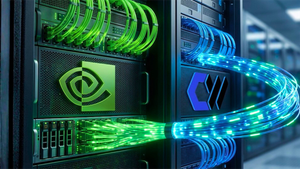
The current market surge reached a fever pitch during the first trading sessions of January 2026. On January 6, the S&P 500 set a new record of 6,944.82, while the Nasdaq Composite climbed to 23,547.17. This rally was catalyzed by Nvidia’s dominant showing at the Consumer Electronics Show (CES) 2026, where the company showcased its next-generation Vera Rubin platform. Succeeding the highly successful Blackwell architecture that defined 2025, the Rubin chips offer a 5x boost in AI inference and utilize cutting-edge HBM4 (High Bandwidth Memory 4), effectively silencing critics who suggested that AI hardware gains might be plateauing.
The timeline leading to this moment has been one of consistent "beat and raise" performance. Throughout 2025, Nvidia’s data center business grew at an exponential clip, generating over $51 billion in a single quarter by late autumn. This financial muscle allowed Nvidia to enter 2026 with a market share estimated at 92% of the AI GPU space. While the Dow Jones Industrial Average (INDEXDJX: .DJI) also flirted with the historic 50,000 mark this week, analysts noted that the momentum was overwhelmingly tech-heavy, with Nvidia’s stock trading near $191—a 39% gain over the past twelve months.
Winners and Losers in the Wake of the AI Surge
The "rising tide" of Nvidia’s success has lifted several key sectors, most notably data storage and infrastructure. Companies like Western Digital (NASDAQ: WDC) and Seagate Technology (NASDAQ: STX) have seen their shares hit all-time highs in early 2026, as the massive data requirements of the Vera Rubin chips necessitate a total overhaul of global storage capacity. Likewise, "Hyperscalers" such as Microsoft (NASDAQ: MSFT), Amazon (NASDAQ: AMZN), and Meta Platforms (NASDAQ: META) continue to benefit from the AI infrastructure they have built, though they now face the challenge of proving that their massive capital expenditures are translating into sustained software revenue.
Conversely, the gap between Nvidia and its traditional rivals has widened into a chasm. Advanced Micro Devices (NASDAQ: AMD) has managed to hold onto an 8% market share, but it remains in a defensive posture, struggling to compete with Nvidia’s proprietary CUDA software ecosystem. Intel Corporation (NASDAQ: INTC), despite a strategic $5 billion investment from Nvidia intended to diversify the latter's supply chain, continues to lag with a mere 1% share of the AI chip market. For these legacy players, the challenge in 2026 is no longer just about hardware specifications, but about breaking the "software moat" that Nvidia has spent a decade fortifying.
The Wider Significance: AI Efficiency and the New Industrial Revolution
Beyond the ticker symbols, Nvidia’s dominance represents a fundamental shift in the global industrial landscape. One of the most significant aspects of the new Rubin architecture is its 40% improvement in energy efficiency per watt. In a world where data center power consumption has become a primary regulatory and environmental concern, Nvidia’s ability to deliver more "intelligence per kilowatt" has turned a potential headwind into a competitive advantage. This focus on efficiency is now a key metric for institutional investors, who are increasingly viewing AI as the "new electricity."
Historically, market concentration of this magnitude has been met with skepticism, drawing comparisons to the dot-com era. However, the 2026 rally differs in its underlying fundamentals; unlike the speculative fervor of 1999, Nvidia’s valuation is backed by massive, realized earnings and a forward P/E ratio that remains surprisingly grounded at 25x. The broader significance lies in the transition from Large Language Models (LLMs) to "Physical AI" and "Agentic AI"—systems that can interact with the physical world and perform complex tasks autonomously. Nvidia is no longer just a chipmaker; it is the architect of the infrastructure for this new era.
What Lies Ahead: Robotics and Sovereign AI
Looking toward the remainder of 2026, the market is bracing for the next leg of the AI journey: the integration of AI into robotics and autonomous systems. Nvidia’s Alpamayo model family is expected to be a major revenue driver as "Physical AI" moves from the lab to the factory floor. Furthermore, the concept of "Sovereign AI"—where nations build their own domestic AI infrastructure to ensure data security and economic independence—is creating a new class of customers for Nvidia beyond the traditional Big Tech firms.
However, challenges remain. Supply chain diversification is a top priority for Nvidia, as evidenced by its recent partnerships and investments in domestic manufacturing. Any geopolitical tension that threatens the production of HBM4 or advanced logic chips could send shockwaves through the S&P 500. Investors should also watch for potential "AI fatigue" if the enterprise adoption of AI agents does not scale as quickly as the hardware deployment. The strategic pivot for many companies in 2026 will involve moving away from simply "buying GPUs" to "deploying solutions" that yield a clear return on investment.
Navigating the $5 Trillion Era
As we move further into 2026, the key takeaway for investors is the sheer indispensability of Nvidia in the modern portfolio. The company has successfully navigated the transition between product cycles, proving that its innovation engine can keep pace with—and even exceed—market expectations. The S&P 500 and Nasdaq’s record-breaking start to the year is a testament to the belief that the AI revolution is still in its early-to-mid innings, with the "Rubin era" promising even greater leaps in capability.
Moving forward, the market will be hyper-focused on quarterly earnings reports to ensure that the "capex-to-revenue" pipeline remains intact. Investors should keep a close eye on energy costs, regulatory developments regarding AI safety, and the progress of competitors in the inference space. For now, the "Nvidia Engine" shows no signs of stalling, and as long as it continues to hum, the broader markets appear destined to explore even higher altitudes.
This content is intended for informational purposes only and is not financial advice.