Looking back from the vantage point of January 2026, few events in recent financial history have been as surreal or as transformative as the meme stock "second coming" of May 2024. What began with a single, cryptic social media post from Keith Gill—better known as "Roaring Kitty"—ignited a firestorm of retail enthusiasm that temporarily decoupled market prices from fundamental reality. For the second time in less than four years, institutional short sellers found themselves retreating in the face of a digital populist movement, though this time, the corporate targets were ready to catch the lightning in a bottle.
The immediate implications were profound: GameStop Corp. (NYSE: GME) and AMC Entertainment Holdings, Inc. (NYSE: AMC) leveraged the sudden surge in their share prices to execute massive capital raises and debt restructurings that would forever alter their corporate trajectories. While critics dismissed the rally as a "dead cat bounce" or a reckless game of musical chairs, the event forced a permanent shift in how regulators and market makers approach retail-driven volatility, ultimately leading to the implementation of the T+1 settlement cycle just weeks later.
A Timeline of Digital Insurgency: The Return of the King
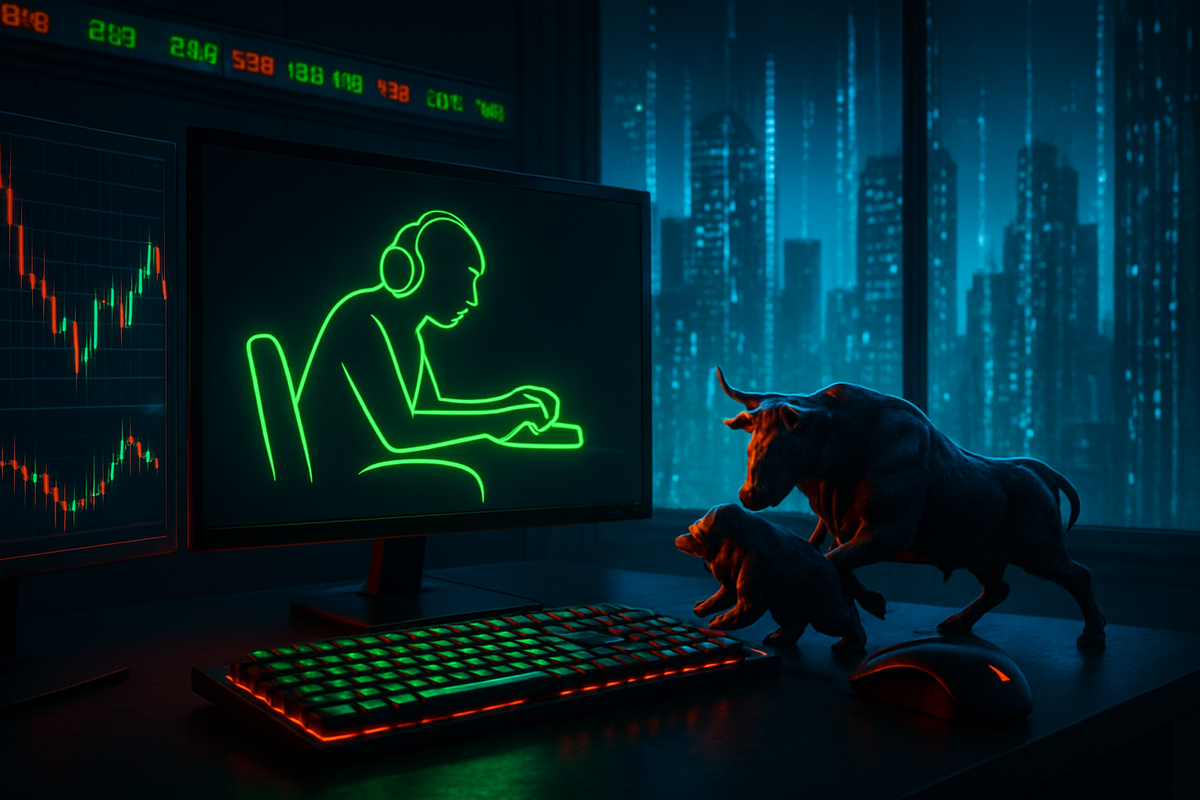
The spark that lit the May 2024 fuse was deceptively simple. At 8:00 PM ET on Sunday, May 12, 2024, Keith Gill posted an image on X (formerly Twitter) of a man leaning forward in a chair—a common meme indicating a video game player has stopped "casual" play and is now "focusing." It was Gill’s first post in nearly three years, and the reaction was instantaneous. By Monday morning, GameStop (NYSE: GME) opened at $26.34, nearly double its previous close, and trading was halted 17 times throughout the day as the stock rocketed toward a 74% gain.
The frenzy reached its fever pitch on Tuesday, May 14, 2024. GameStop hit an intraday high of $64.83, while AMC Entertainment Holdings, Inc. (NYSE: AMC) surged to $11.88, a 308% increase from its closing price just days prior. Unlike the 2021 rally, which took weeks to build, the 2024 "resurgence" was a concentrated burst of energy. Roaring Kitty fueled the fire with a continuous stream of cinematic clips from films like The Avengers and Braveheart, signaling a "final battle" narrative that resonated with a new generation of retail investors on platforms like Reddit and TikTok.
Behind the scenes, the mechanics of the market were straining. Market makers like Virtu Financial (NASDAQ: VIRT) and Citadel Securities had to process record-breaking volumes of retail order flow, while institutional short sellers faced paper losses exceeding $1 billion on GameStop alone in a single day. However, the companies themselves did not wait for the dust to settle. By Friday, May 17, GameStop had filed for an "at-the-market" equity offering, signaling that CEO Ryan Cohen intended to use the volatility as a strategic weapon to recapitalize the struggling retailer.
Capitalizing on Chaos: Winners, Losers, and the Great Recapitalization
The primary winners of the May 2024 event were the corporate treasuries of the meme stocks themselves. GameStop successfully completed a share sale of 45 million shares by May 24, raising approximately $933.4 million in gross proceeds. This was merely the beginning of a larger strategy that, through subsequent offerings in June 2024, eventually swelled GameStop’s cash reserves to over $4 billion. By early 2026, this "war chest" has allowed GameStop to pivot away from its legacy brick-and-mortar business toward a holding company model, even integrating Bitcoin into its balance sheet as a hedge against inflation.
AMC Entertainment Holdings, Inc. (NYSE: AMC) also emerged as a survivor. CEO Adam Aron moved with predatory speed, completing a $250 million equity raise on the very first day of the rally. Perhaps more critically, AMC executed a debt-for-equity swap on May 14, retiring over $163 million in high-interest debt in exchange for shares at the peak of the rally. This move provided AMC with the breathing room necessary to avoid the bankruptcy rumors that had plagued the theater chain throughout 2023 and early 2024.
On the losing side, traditional short sellers were once again bloodied, though not broken. While firms like Citron Research—led by Andrew Left—publicly announced they were shorting GameStop again during the peak, the 2024 rally did not produce a "Melvin Capital-style" total collapse. Institutional players had learned to use "stop-loss" orders more effectively, though the financial sting remained. In a poetic turn of events, Andrew Left was later charged by the SEC and DOJ in July 2024 for an unrelated $20 million fraud scheme, a move many retail investors viewed as delayed justice for the 2021 era.
Breaking the T+0 Barrier: Trends and Regulatory Aftershocks
The May 2024 rally was the final catalyst for a major structural change in the U.S. financial system: the transition to a T+1 (one-day) settlement cycle. On May 28, 2024, the SEC officially moved to shorten the time it takes for trades to settle, a direct response to the liquidity crunches that had paralyzed retail brokers like Robinhood Markets, Inc. (NASDAQ: HOOD) during previous volatility events. This shift reduced the collateral requirements for brokers, making the "buy button" much harder to turn off in future rallies.
Furthermore, the 2024 resurgence signaled a maturation of the "retail trade." No longer seen as a one-time anomaly, "social-sentiment-driven trading" became a recognized asset class. By 2026, many quant funds have integrated LLM-based (Large Language Model) sentiment analysis to track Roaring Kitty-style movements in real-time, effectively trying to "front-run the retail crowd." This has led to an "arms race" of information, where the speed of a meme can move billions of dollars faster than a 10-K filing.
Historically, the May 2024 event is now compared to the "VolksWagen Squeeze" of 2008 in terms of technical intensity, but it remains unique for its cultural impact. It proved that in the age of digital connectivity, a single individual with a loyal following can disrupt the pricing mechanisms of the world's most liquid markets. It also highlighted a growing divide in the market: the "fundamentalists" who trade on earnings, and the "momentumists" who trade on narrative and community.
The Road to 2026: What Lies Ahead for the Meme Giants
As we look toward the remainder of 2026, the short-term future of GameStop (NYSE: GME) looks less like a retailer and more like an investment vehicle. With a cash pile that has reportedly grown toward $8 billion through savvy capital management, GameStop is now operating as a "mini-Berkshire," seeking acquisitions that could diversify its revenue streams away from physical game discs. The primary challenge for Ryan Cohen will be proving that he can generate a return on this capital that justifies the stock's still-elevated valuation.
For AMC Entertainment Holdings, Inc. (NYSE: AMC), the challenge is operational. Having survived the 2024 debt crisis, the company must now contend with a shifting cinematic landscape and the long-term impact of the 2023 Hollywood strikes on the 2025-2026 release schedule. The "Apes"—the loyal band of AMC retail shareholders—remain a double-edged sword: providing a high floor for the stock price but also demanding constant communication and theatrical innovation from leadership.
Market participants should expect a new era of "intraday margin" rules. As of early 2026, FINRA and the SEC are considering even stricter oversight of social media "influencer" traders. The question remains: can the market ever truly be "regulated" against a meme? As long as there is high-speed internet and a sense of collective purpose among retail traders, the potential for another "Roaring Kitty" moment remains a permanent fixture of the modern market landscape.
Summary of a New Financial Reality
The May 2024 meme stock resurgence was far more than a nostalgic trip down memory lane; it was a stress test for a modernized financial system. GameStop and AMC did not just survive the volatility—they harnessed it to fix their balance sheets, proving that in the 21st century, "memetic value" is a tangible asset that can be converted into cold, hard cash. The event forced the hand of regulators, accelerated the settlement of trades, and changed the risk-management playbook for every major hedge fund on Wall Street.
Moving forward, investors should watch for GameStop's first major acquisition using its multi-billion dollar war chest, as well as the ongoing legal developments surrounding the SEC's scrutiny of social media-driven trading. The ghost of 2021 returned in 2024 not to haunt the market, but to reshape it. In the high-stakes game of global finance, the gamer in the chair is no longer just leaning forward—they are now leading the charge.
This content is intended for informational purposes only and is not financial advice.