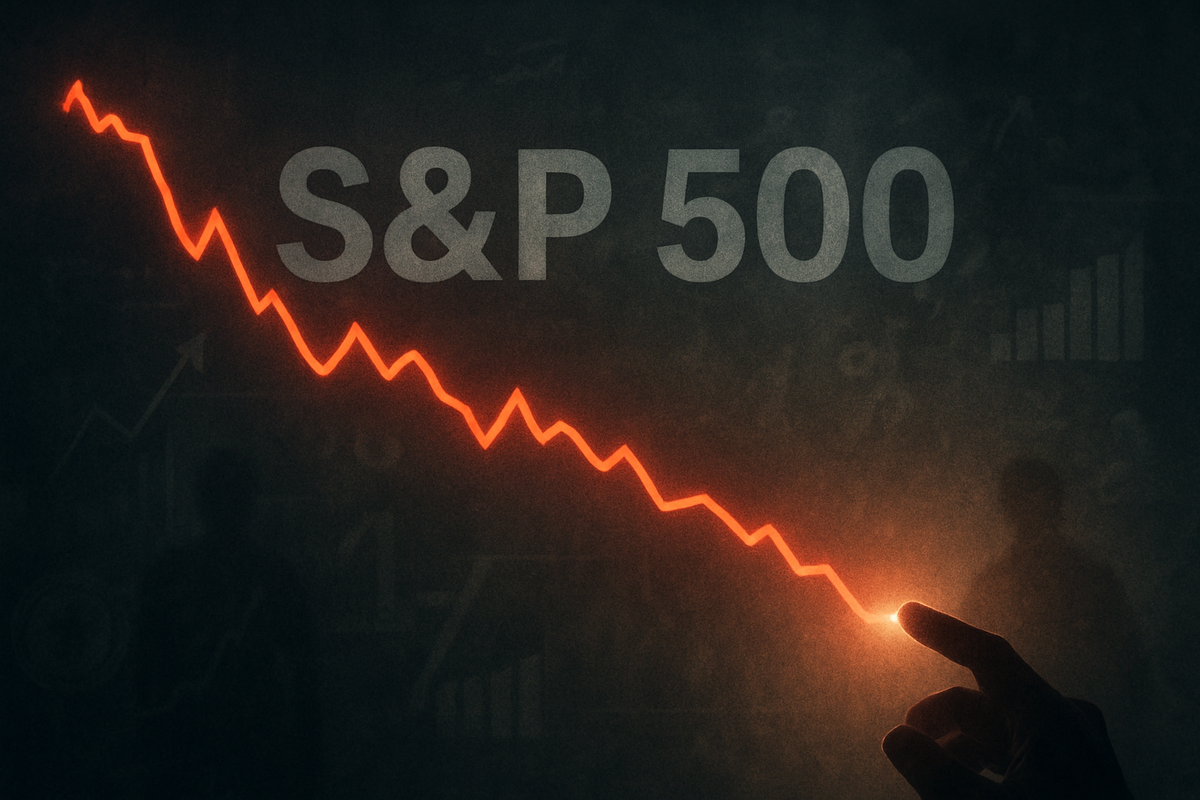
The S&P 500, a bellwether for the broader U.S. economy, is facing a critical juncture on December 17, 2025, as it attempts to halt a three-day slide that has wiped billions off market valuations. Investors are keenly watching today's trading session, hoping for a rebound that could signal a return to stability after a period marked by escalating concerns over inflation, interest rates, and geopolitical tensions. This potential turning point comes as analysts debate whether the recent downturn is a healthy correction or a precursor to a more significant market pullback, with implications for everything from retirement accounts to corporate investment strategies.
Market Under Pressure: A Deeper Dive into the S&P 500's Recent Struggles
The recent three-day losing streak for the S&P 500 has been characterized by broad-based selling across various sectors, signaling a significant shift in investor sentiment. Over the past three trading days leading up to December 17, 2025, the index has shed approximately 2.5%, translating into substantial paper losses for portfolios heavily weighted in U.S. equities. The decline began amidst a confluence of factors, including the release of higher-than-expected inflation data for November, which reignited fears that the Federal Reserve might adopt a more hawkish stance on interest rates in its upcoming meetings. This was compounded by disappointing earnings reports from several bellwether technology companies, casting a shadow over the growth outlook for the broader market.
The timeline of events saw initial jitters on Friday, December 12, 2025, following the inflation report, with a modest decline. Monday, December 15, 2025, witnessed accelerated selling pressure as major investment banks revised their economic forecasts downwards, citing persistent supply chain disruptions and geopolitical uncertainties in Eastern Europe. Tuesday, December 16, 2025, saw a continuation of the trend, exacerbated by a decline in consumer confidence data, suggesting a potential slowdown in consumer spending, a crucial driver of economic growth.
Key players involved in this market movement include the Federal Reserve, whose monetary policy decisions are heavily anticipated; major institutional investors like BlackRock (NYSE: BLK) and Vanguard, whose trading activities often influence market direction; and influential market analysts from firms such as Goldman Sachs (NYSE: GS) and JPMorgan Chase (NYSE: JPM), whose pronouncements shape investor perceptions. Initial market reactions have been predominantly risk-off, with investors rotating out of growth-oriented stocks and into more defensive sectors, while the CBOE Volatility Index (VIX) has seen a notable spike, indicating heightened fear in the market.
Winners and Losers: Corporate Fortunes Hinge on Market Direction
A prolonged downturn or a sharp rebound in the S&P 500 will inevitably create distinct winners and losers among public companies. In a declining market, defensive sectors typically outperform. Companies in consumer staples, such as Procter & Gamble (NYSE: PG) and Coca-Cola (NYSE: KO), often see their stocks hold up better as demand for their products remains relatively stable regardless of economic conditions. Similarly, utilities like Duke Energy (NYSE: DUK) and healthcare giants such as Johnson & Johnson (NYSE: JNJ) are considered defensive plays due to their consistent revenue streams and essential services. These companies might experience less severe declines, or even modest gains, as investors seek safe havens.
Conversely, technology and growth stocks, which have often led market rallies, are usually the hardest hit during periods of market uncertainty and rising interest rates. Companies like Apple (NASDAQ: AAPL), Microsoft (NASDAQ: MSFT), and Amazon (NASDAQ: AMZN), while fundamentally strong, are sensitive to higher discount rates applied to their future earnings and can see significant pullbacks. Cyclical sectors, including industrials like General Electric (NYSE: GE) and materials companies such as Dow Inc. (NYSE: DOW), are also vulnerable as economic slowdowns directly impact demand for their products and services. A sustained losing streak would erode investor confidence in these companies, potentially impacting their ability to raise capital or fund expansion plans.
Should the S&P 500 successfully break its losing streak and stage a recovery, these growth and cyclical stocks are often the first to rebound sharply, offering significant upside for investors willing to take on more risk. However, the immediate impact of the current downturn has put pressure on corporate valuations across the board, leading many companies to re-evaluate their capital expenditure plans and potentially tighten their financial outlooks for the upcoming quarters.
Wider Significance: A Bellwether for Broader Economic Health
The S&P 500's recent struggle is more than just a blip on the radar; it serves as a critical indicator of broader industry trends and the overall health of the global economy. This losing streak fits into a larger narrative of persistent inflation, supply chain vulnerabilities, and the ongoing debate surrounding central bank policy. If the S&P 500 continues its descent, it could signal a deeper economic malaise, potentially pushing the U.S. economy closer to, or even into, a recession. This would have ripple effects on international markets, as global trade and investment flows are heavily intertwined with U.S. economic performance.
Competitors and partners across various industries would feel the squeeze. Companies reliant on consumer discretionary spending, for instance, might see reduced demand, impacting their revenue and profitability. International partners, especially those with significant export ties to the U.S., could face headwinds as American purchasing power diminishes. Regulatory bodies, particularly the Federal Reserve, are under intense scrutiny. A sustained market downturn could prompt calls for policy adjustments, potentially influencing the pace of interest rate hikes or even leading to considerations of quantitative easing if economic conditions deteriorate significantly.
Historically, periods of sustained market volatility, especially after prolonged bull runs, often precede significant economic shifts. Comparisons can be drawn to market corrections seen in the early 2000s or during the 2008 financial crisis, though the underlying causes and current economic context are distinct. The current situation highlights the delicate balance between controlling inflation and maintaining economic growth, a challenge central banks globally are grappling with. The S&P 500's performance thus becomes a crucial barometer for how effectively these challenges are being managed.
What Comes Next: Navigating the Path Ahead
The immediate future for the S&P 500 hinges on whether it can find a footing and reverse the current negative momentum. In the short term, market participants will be closely watching upcoming economic data releases, particularly consumer price index (CPI) revisions and unemployment figures, for any signs of stabilization or further deterioration. Positive data could spark a relief rally, while continued negative news could deepen the correction. The Federal Reserve's next policy meeting and subsequent statements will also be paramount, as investors seek clarity on the trajectory of interest rates.
Long-term possibilities include a gradual recovery as inflation cools and supply chains normalize, leading to renewed investor confidence. Alternatively, a more prolonged period of market consolidation or even a bear market could ensue if economic headwinds intensify. Companies may need to implement strategic pivots, focusing on cost efficiencies, strengthening balance sheets, and diversifying supply chains to weather potential economic storms. Industries heavily reliant on discretionary spending might explore new product lines or market segments to maintain revenue streams.
Market opportunities could emerge for contrarian investors looking to buy undervalued assets, particularly in sectors that have been oversold. Conversely, challenges will include managing increased volatility, navigating tighter credit conditions, and adapting to potentially slower economic growth. Potential scenarios range from a "soft landing" where inflation is tamed without a significant recession, to a more severe "hard landing" involving a deeper economic contraction. The outcome will largely depend on the interplay of monetary policy, geopolitical stability, and the resilience of corporate earnings.
Comprehensive Wrap-up: A Market at a Crossroads
The S&P 500's attempt to break its three-day losing streak on December 17, 2025, underscores a period of significant uncertainty and volatility in the financial markets. Key takeaways from this event include the pervasive influence of inflation fears and interest rate expectations on investor sentiment, the vulnerability of growth stocks to economic headwinds, and the critical role of central bank policy in shaping market direction. The recent downturn serves as a stark reminder of the interconnectedness of global economic factors and their immediate impact on corporate valuations and investor portfolios.
Moving forward, the market remains at a crossroads. While a technical rebound is always possible after a losing streak, the underlying economic challenges suggest that volatility may persist in the coming months. Investors should prepare for a potentially bumpy ride, characterized by rapid shifts in sentiment based on incoming economic data and policy announcements. The long-term trajectory of the S&P 500 will be determined by the successful navigation of inflation, the resolution of geopolitical tensions, and the adaptability of corporations in a changing economic landscape.
What investors should watch for in coming months includes the Federal Reserve's interest rate decisions, quarterly earnings reports from major corporations, and key economic indicators such as GDP growth, inflation rates, and employment figures. Furthermore, any developments in global supply chains and geopolitical events will continue to exert significant influence. Prudent investors will likely prioritize diversification, risk management, and a long-term perspective, rather than reacting impulsively to short-term market fluctuations.
This content is intended for informational purposes only and is not financial advice