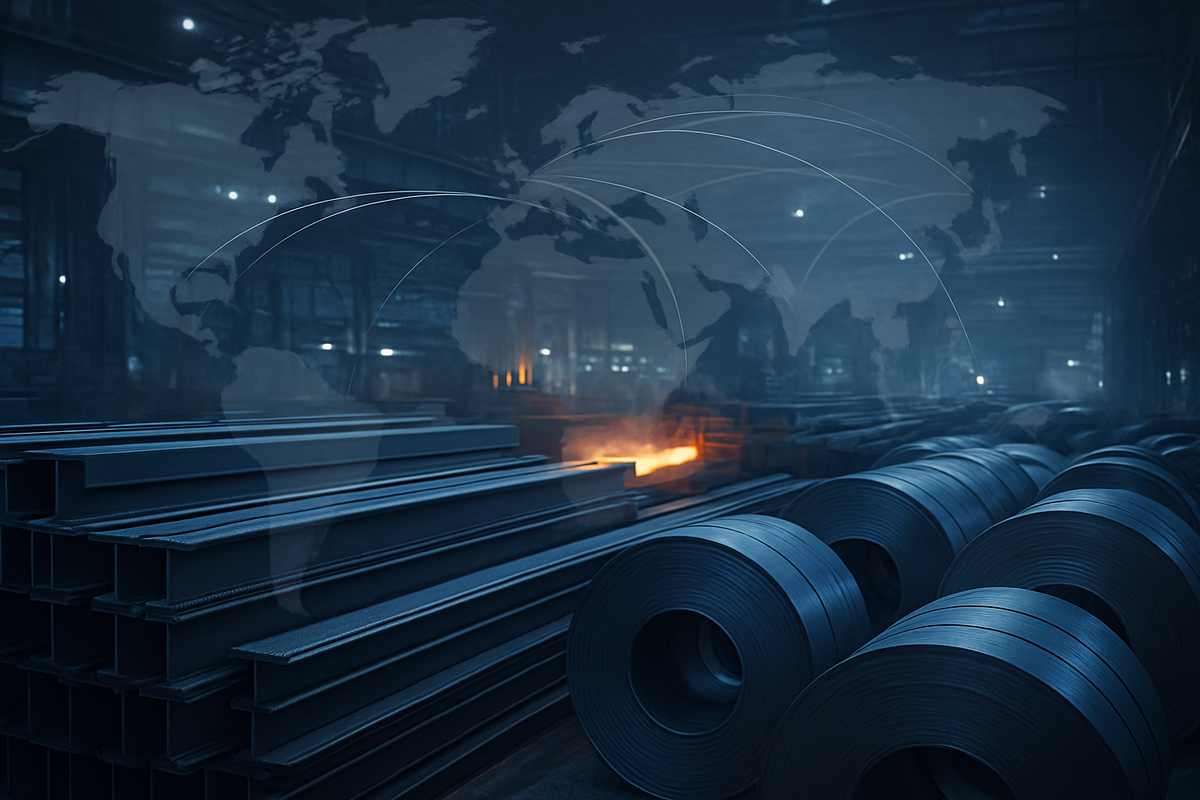
Beijing is set to dramatically reshape the global steel landscape with the implementation of stringent new export controls, effective January 1, 2026. This landmark policy shift, formalized by China's Ministry of Commerce (MOFCOM) and the General Administration of Customs (GACC) on December 9, 2025, signals a decisive move away from an "unrestricted exports" approach towards "proactive regulation and license-based management." The immediate implications are profound, threatening to curb the flow of Chinese steel into international markets and potentially driving up global prices, while simultaneously recalibrating trade relations worldwide.
The new controls are poised to send ripples across the entire commodity market, affecting everything from construction projects to manufacturing supply chains. As the world's largest producer and exporter of steel, China's policy adjustments inevitably carry significant weight, and this latest move suggests a strategic reorientation aimed at domestic stability, industrial upgrading, and navigating persistent international trade frictions.
Beijing's Iron Grip: The Mechanics of China's New Steel Export Policy
The core of China's new policy lies in a mandatory export licensing system for a vast array of steel products. Foreign trade companies will now be required to obtain specific export licenses, a process contingent on presenting a valid export contract and a quality certificate issued by the manufacturer. These licenses will be issued by both central and regional trade authorities, introducing a layer of administrative oversight previously absent.
The scope of products subject to these controls is comprehensive, encompassing approximately 300 specific steel items. This extensive list includes foundational materials like pig iron, ferroalloys, and semi-finished steel products such as slabs and billets. It also extends to a wide range of finished goods, including flat-rolled products, long-rolled products, and critical infrastructure components like seamless pipes, rails, and sheet piles, even incorporating stainless steel. This broad coverage underscores Beijing's intention to exert control across the entire steel value chain.
The timeline leading up to this moment has been swift. The official announcement, Announcement No. 79-2025, was made on December 9, 2025, giving the industry mere weeks to prepare for the January 1, 2026, effective date. While the official announcement refrained from explicitly stating the rationale, analysts widely interpret the move as a multi-pronged strategy. Domestically, it aims to safeguard supply-chain stability and encourage the steel industry to transition towards higher-end, greener production methods, addressing long-standing issues of overcapacity and weakened demand, particularly from China's struggling property sector. China's crude steel production is expected to fall below 1 billion tons in 2025 for the first time in six years, highlighting these internal pressures. Internationally, the controls are seen as a proactive measure to manage export volumes and potentially mitigate escalating trade tensions. For much of 2025, China's steel exports surged, reaching record highs of 107.72 million tons in the first 11 months, with full-year projections around 117 million metric tons, surpassing the 2015 record. This surge has exacerbated accusations of "dumping" from major trading partners like the United States and the European Union, leading to increased tariffs and anti-dumping duties on Chinese steel products. The new licensing regime could be an attempt to address these grievances by controlling the volume and potentially the pricing of exports.
Market Movers: Winners and Losers in the New Steel Order
China's steel export controls are set to create a significant redistribution of fortunes across the global industrial landscape. The immediate impact will be felt by companies reliant on affordable Chinese steel, while domestic producers in other nations and Chinese manufacturers of high-value steel products stand to gain.
On the losing side, global importers and downstream manufacturers who have historically relied on the competitive pricing and vast supply of Chinese steel will face increased costs and potential supply chain disruptions. This includes sectors such as automotive, construction, and machinery manufacturing in regions heavily dependent on Chinese imports. For instance, European and Southeast Asian construction firms that frequently source structural steel from China may see project costs rise significantly. Companies like ArcelorMittal (AMS: MT), while a global producer, could face increased competition in certain markets if Chinese supply is constrained, but also opportunities if global prices rise. Meanwhile, smaller trading firms specializing in brokering Chinese steel exports will likely see their business models challenged by the new licensing requirements and potential volume reductions.
Conversely, domestic steel producers outside of China are poised to be significant beneficiaries. With a potentially tighter global supply and higher international prices, companies in countries like India, Japan, South Korea, and even the United States could see increased demand for their products and improved profit margins. Nippon Steel Corporation (TYO: 5401) and POSCO Holdings (KRX: 005490), major players in Asia, could leverage their established production capacities to fill any void left by reduced Chinese exports. In the U.S., companies like Nucor Corporation (NYSE: NUE) and Cleveland-Cliffs Inc. (NYSE: CLF) might experience a boost as domestic demand shifts away from more expensive or less available imported Chinese steel. Furthermore, Chinese steel manufacturers that focus on high-end, specialized, and environmentally friendly steel products, aligning with Beijing's industrial upgrading goals, may find themselves in a stronger position within the new controlled export framework. The policy implicitly favors producers capable of meeting stricter quality and environmental standards, pushing the industry towards greater sophistication.
Beyond the Border: Wider Implications for Global Industry and Trade
This policy shift by China extends far beyond the immediate impact on steel prices; it represents a significant move in broader industry trends and global trade dynamics. Firstly, it underscores China's commitment to decarbonization and industrial upgrading. By controlling exports, Beijing can better manage its domestic steel production, which is a major contributor to carbon emissions, and encourage its steel mills to invest in cleaner technologies and higher-value-added products. This aligns with global environmental goals and could set a precedent for other carbon-intensive industries.
Secondly, the controls will inevitably have ripple effects on global supply chain resilience. For years, the world has relied on China as a primary, often low-cost, supplier of industrial commodities. This new policy forces importers to diversify their sourcing strategies, potentially leading to increased investment in steel production capacity in other regions or a renewed focus on regional supply chains. This could benefit emerging steel-producing nations and foster greater self-sufficiency in various economies, though it will come with initial disruption and higher costs. The policy also intensifies trade tensions, particularly with nations that have previously accused China of "dumping." While China might argue this is an internal regulatory measure, it could be perceived by some as another form of trade manipulation, potentially leading to further retaliatory measures or disputes at the World Trade Organization.
Historically, China has used export controls on various commodities, such as rare earths, to achieve strategic objectives. While steel is a different commodity with a broader global production base, the underlying principle of leveraging control over key industrial inputs remains consistent. The current move can be compared to past instances where major commodity producers have restricted supply to influence global prices or achieve domestic policy goals. This policy also fits into a broader trend of economic nationalism and supply chain localization that has gained traction globally, particularly in the wake of recent geopolitical events and the COVID-19 pandemic. Governments worldwide are increasingly prioritizing domestic production and control over critical resources, and China's steel export controls are a prominent example of this evolving global economic landscape.
The Road Ahead: Navigating the New Steel Paradigm
The implementation of China's steel export controls on January 1, 2026, ushers in a period of significant adjustment and strategic re-evaluation for global commodity markets. In the short term, the most immediate consequence will likely be increased volatility and upward pressure on international steel prices as the market grapples with potential supply constraints. Importers will scramble to secure alternative sources, leading to price hikes and potentially longer lead times. Steel-intensive industries, from automotive to construction, will need to rapidly assess their supply chains and potentially absorb higher material costs or pass them on to consumers.
Longer term, the policy is expected to accelerate a fundamental restructuring of the global steel industry. We could see increased investment in steel production capacity outside of China, particularly in regions like Southeast Asia, India, and even North America and Europe, as nations seek to reduce their reliance on Chinese imports. This could foster the growth of regional steel hubs and more diversified supply chains. Strategic pivots will be crucial for companies; Chinese steel producers will need to adapt to a more regulated export environment, potentially focusing on higher-value products for export or prioritizing domestic demand. Global buyers will need to forge new relationships with non-Chinese suppliers and potentially engage in more long-term contracts to ensure supply stability.
Market opportunities will emerge for steel producers in other countries to expand their market share and for innovative companies to develop new steel-making technologies that offer cost efficiencies or environmental benefits. Conversely, challenges will arise for industries heavily dependent on low-cost steel, potentially impacting their competitiveness. Potential scenarios range from a moderate tightening of supply and gradual price increases to more severe disruptions if China's controls prove to be very restrictive. The ultimate outcome will depend on the stringency of license approvals, China's domestic demand evolution, and the responsiveness of global alternative suppliers.
Conclusion: A New Chapter for Global Steel
China's decision to implement comprehensive steel export controls marks a pivotal moment for global commodity markets, signaling an end to the era of unrestricted Chinese steel exports. The policy, effective January 1, 2026, is a multi-faceted move by Beijing aimed at bolstering domestic supply chain stability, driving industrial upgrading towards higher-end and greener production, and proactively addressing international trade frictions. The immediate impact will be felt through potential supply constraints and upward pressure on global steel prices, compelling industries worldwide to re-evaluate their sourcing strategies.
Moving forward, the market will witness a significant recalibration. Domestic steel producers outside of China are poised to benefit from increased demand and improved pricing, while global importers and downstream manufacturers reliant on cheap Chinese steel will face higher costs and the imperative to diversify their supply chains. This event fits into broader trends of decarbonization, supply chain localization, and economic nationalism, highlighting a global shift towards greater control over critical resources.
Investors in the coming months should closely monitor the actual implementation of the licensing system and the volume of steel exports from China. Key indicators to watch include international steel price movements, the investment plans of non-Chinese steel producers, and any further policy announcements from Beijing or retaliatory measures from major trading partners. The long-term significance of this policy lies in its potential to fundamentally reshape the global steel industry, fostering greater regionalization of supply and encouraging a worldwide focus on sustainable and high-value steel production.
This content is intended for informational purposes only and is not financial advice