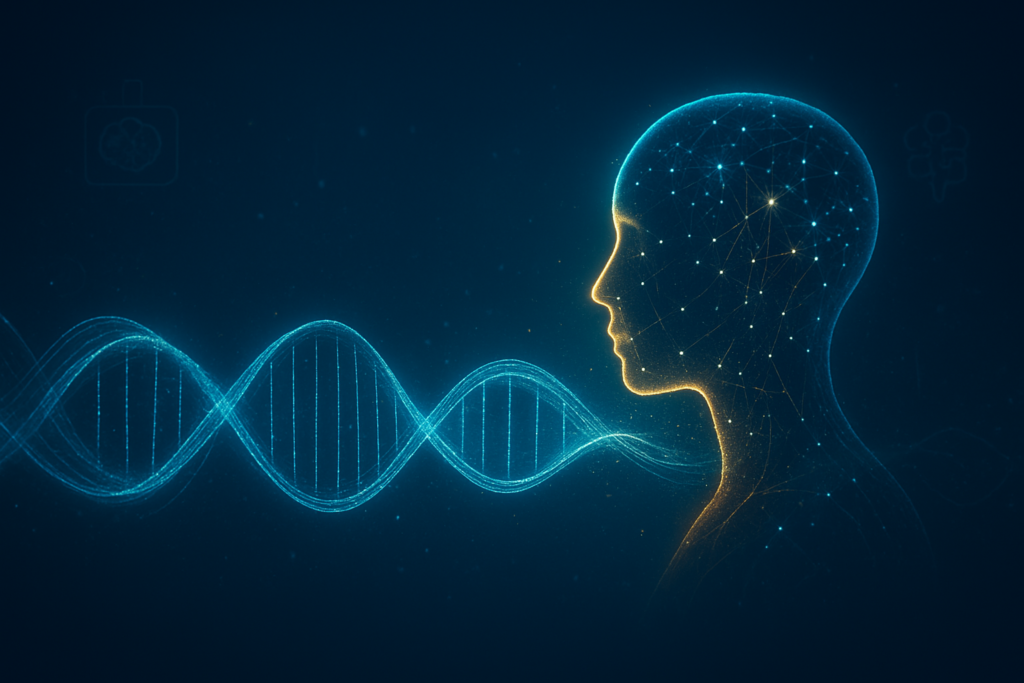
The rapid evolution of generative artificial intelligence has often been framed through the lens of creative disruption, yet its most profound impact is increasingly found in the restoration of human dignity. ElevenLabs, the global leader in AI audio research, has moved beyond its origins as a tool for content creators to become a cornerstone of modern accessibility. Through its "ElevenLabs Impact" program, the company is now providing high-fidelity digital voice clones to patients diagnosed with Amyotrophic Lateral Sclerosis (ALS) and Motor Neuron Disease (MND), ensuring that as their physical voices fade, their digital identities remain vibrant and distinct.
This initiative represents a pivotal shift in assistive technology, moving away from the robotic, monotonic synthesizers of the past toward "hyper-realistic" vocal replicas. By early 2026, ElevenLabs has successfully bridged the gap between medical necessity and emotional preservation, offering a free lifetime "Pro" infrastructure to those facing permanent speech loss. This development is not merely a technical milestone; it is a fundamental preservation of the "self" in the face of progressive neurodegenerative disease.
The Technical Restoration of Identity
The technical backbone of this movement is ElevenLabs’ Professional Voice Cloning (PVC) and its sophisticated Speech-to-Speech (STS) models. Unlike traditional "voice banking" systems—which often required patients to record thousands of specific phrases over several hours—ElevenLabs’ system can create a virtually indistinguishable replica from as little as ten minutes of audio. Crucially for ALS patients, this audio can be harvested from pre-symptomatic sources such as old home videos, voicemails, or podcasts, allowing even those who have already lost vocal function to "speak" again.
The most significant breakthrough in 2026 is the "slurred-to-clear" capability enabled by the Flash v2.5 model. This STS technology allows a patient with advanced dysarthria (slurred speech) to speak into a microphone; the AI then analyzes the intended emotional cadence, prosody, and intent of the slurred input and maps it onto the high-fidelity digital clone in real-time. With latencies now reduced to a near-instant 75ms to 150ms, the transition between thought and audible expression feels natural, eliminating the awkward "type-wait-play" delay of previous generations.
Initial reactions from the medical and AI research communities have been overwhelmingly positive. Dr. Andrea Wilson, a clinical speech pathologist, noted that "the ability to maintain the 'vocal smile'—the subtle cues that signal a joke or a sign of affection—is what separates ElevenLabs from every predecessor. We are no longer just providing a means of communication; we are preserving a personality."
A Competitive Landscape Focused on Care
The success of ElevenLabs has sent ripples through the tech industry, forcing giants like Apple (NASDAQ: AAPL), Microsoft (NASDAQ: MSFT), and Google (NASDAQ: GOOGL) to accelerate their own accessibility roadmaps. While Apple has integrated "Personal Voice" directly into iOS, allowing for rapid 10-phrase training, ElevenLabs maintains a strategic advantage in vocal nuance and "identity-first" fidelity. ElevenLabs’ decision to offer these tools for free through its Impact Program has disrupted the specialized voice-banking market, putting pressure on established players like Acapela and ModelTalker to modernize or pivot.
Microsoft has responded by positioning its Custom Neural Voice as a "career preservation" tool within the Windows ecosystem, allowing professionals with speech impairments to continue using their own voices in high-stakes environments like Microsoft Teams. Meanwhile, Google’s Project Relate continues to lead in the understanding of atypical speech, integrating seamlessly with smart home environments. However, ElevenLabs’ specialized focus on the "texture" of human emotion has made it the preferred partner for organizations like the ALS Association and the Scott-Morgan Foundation. This competitive pressure is ultimately a win for the consumer, as it has driven a "race to the top" for lower latency and better emotional intelligence across all platforms.
The Broader Significance: AI as a Human Bridge
The broader significance of this technology lies in its contribution to the "humanity" of the AI landscape. For decades, the AI narrative was dominated by fears of the "Uncanny Valley" and the dehumanization of interaction. ElevenLabs has flipped this script, using AI to solve a quintessentially human problem: the loss of connection. By allowing a father with ALS to read a bedtime story to his children in his own voice, or a professor to continue lecturing with her distinct regional accent, the technology serves as a bridge rather than a barrier.
However, this breakthrough does not come without concerns. The rise of high-fidelity voice cloning has intensified the debate over "digital legacy" and consent. In a world where a person's voice can live on indefinitely after their passing, the ethical implications of who "owns" that voice are more pressing than ever. ElevenLabs has addressed this by implementing strict biometric safeguards and human-in-the-loop verification for its Professional Voice Cloning, ensuring that identity theft is mitigated while identity preservation is prioritized. This mirrors previous milestones like the invention of the cochlear implant, where a technological intervention fundamentally changed the quality of life for a specific community while sparking a wider societal dialogue on what it means to be "whole."
The Next Frontier: Neuro-Vocal Convergence
Looking ahead, the next frontier for voice preservation is the integration with Brain-Computer Interfaces (BCI). Companies like Neuralink and Synchron are already working on "vocal-free" digital experiences. In early 2026, clinical trials have shown that BCI implants can decode the intended movements of the larynx directly from the motor cortex. When paired with ElevenLabs’ high-fidelity clones, "locked-in" patients—those with no muscle control at all—can "think" a sentence and have it spoken aloud in their original voice with 97% accuracy.
Furthermore, the expansion into multilingual clones is a near-term reality. ElevenLabs’ Multilingual v2 model already allows an ALS patient’s clone to speak over 32 languages, maintaining their unique vocal timbre across each one. Experts predict that the next two years will see these models moving to "edge computing," where the AI runs entirely offline on local devices. This will ensure that patients in hospitals or remote areas can maintain their voice even without a stable internet connection, further cementing voice cloning as a permanent, reliable medical utility.
Conclusion: A Legacy Restored
In conclusion, ElevenLabs’ commitment to ALS and MND patients marks a defining moment in the history of artificial intelligence. By transitioning from a creative curiosity to a life-altering medical necessity, the company has demonstrated that the true power of AI lies in its ability to enhance, rather than replace, the human experience. The key takeaway for the industry is clear: accessibility is no longer a niche feature; it is the ultimate proving ground for AI’s value to society.
As we move through 2026, the focus will shift toward scaling these programs to reach the "1 million voices" goal set by CEO Mati Staniszewski. Watch for further announcements regarding BCI partnerships and the deployment of local, offline models that will make high-fidelity voice preservation a standard of care for every patient facing speech loss. In the coming months, the dialogue will likely evolve from "what can AI do?" to "how can AI help us stay who we are?"
This content is intended for informational purposes only and represents analysis of current AI developments.
TokenRing AI delivers enterprise-grade solutions for multi-agent AI workflow orchestration, AI-powered development tools, and seamless remote collaboration platforms.
For more information, visit https://www.tokenring.ai/.