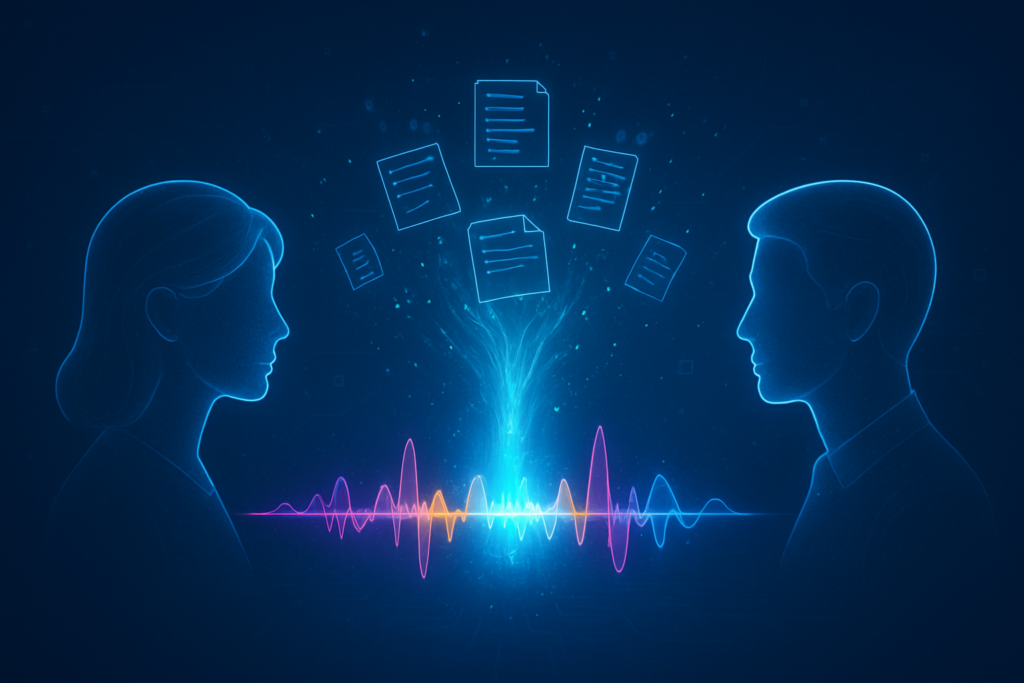
The landscape of personal productivity and academic research underwent a seismic shift over the last eighteen months, punctuated by the viral explosion of Google’s NotebookLM. What began as an experimental "AI-first notebook" has matured into a cornerstone of the modern information economy, primarily through its "Audio Overview" feature—popularly known as "Deep Dive" podcasts. By allowing users to upload hundreds of pages of dense documentation and transform them into natural, banter-filled audio conversations between two AI personas, Google (NASDAQ: GOOGL) has effectively solved the "too long; didn't read" (TL;DR) problem for the age of information overload.
As of February 2026, the success of NotebookLM has transcended a mere social media trend, evolving into a sophisticated tool integrated across the global educational and corporate landscape. The platform has fundamentally changed how we consume knowledge, moving research from a solitary, visual task to a passive, auditory experience. This "synthetic podcasting" breakthrough has not only challenged traditional note-taking apps but has also forced the entire AI industry to rethink how humans and machines interact with complex data.
The Engine of Synthesis: From Gemini 1.5 Pro to Gemini 3
The technical foundation of NotebookLM's success lies in its unprecedented ability to process and "reason" across massive datasets without losing context. At its viral peak in late 2024, the tool was powered by Gemini 1.5 Pro, which introduced a then-staggering 1-million-token context window. This allowed the AI to ingest up to 50 disparate sources—including PDFs, web links, and meeting transcripts—simultaneously. Unlike previous Large Language Models (LLMs) that relied on "RAG" (Retrieval-Augmented Generation) to pluck snippets of data, NotebookLM’s "Source Grounding" architecture ensures the AI stays strictly within the provided material, drastically reducing the risk of hallucinations.
By early 2026, the platform has transitioned to the Gemini 3 architecture, which facilitates "agentic" research. This new iteration does more than summarize; it can actively identify gaps in a user's research and deploy "Deep Research Agents" to browse the live web for missing data points. Furthermore, the "Deep Dive" audio feature has evolved from a static output to an interactive experience. Users can now "join" the podcast in real-time, interrupting the AI hosts to ask for clarification or to steer the conversation toward a specific sub-topic, all while maintaining the natural, human-like cadence that made the original version a viral sensation.
This technical leap differs from previous approaches by prioritizing "audio chemistry" over simple text-to-speech. The AI hosts use filler words, exhibit excitement, and even interrupt each other, mimicking the nuances of human discourse. Initial reactions from the AI research community were of shock at the emotional intelligence displayed by the synthetic voices. Experts noted that by framing data as a conversation rather than a dry summary, Google successfully lowered the "cognitive load" required to digest high-level technical or academic information.
The Battle for the 'Passive Learner' Market
The viral success of NotebookLM sent shockwaves through the tech industry, prompting immediate defensive maneuvers from competitors. Microsoft (NASDAQ: MSFT) responded in mid-2025 by launching "Narrated Summaries" within Copilot Notebooks. While Microsoft’s offering is more tailored for the enterprise—allowing for "Solo Briefing" or "Executive Interview" modes—it lacks the playful, organic banter that fueled Google’s organic growth. Microsoft's strategic advantage, however, remains its deep integration with SharePoint and Teams data, targeting corporate managers who need to synthesize project histories on their morning commute.
In the startup space, Perplexity (Private) and Notion (Private) have also joined the fray. Perplexity’s "Audio Overviews" focus on "Citation-First Audio," where a live sidebar of sources updates as the AI hosts speak, addressing the trust gap inherent in synthetic media. Meanwhile, Notion 3.0 has introduced "Knowledge Agents" that can turn an entire company wiki into a customized audio briefing. These developments suggest a market-wide shift where text is no longer the final product of research, but merely the raw material for more accessible formats.
The competitive landscape is now divided between "Utility" and "Engagement." While OpenAI (Private) offers high-fidelity emotional reasoning through its Advanced Voice Mode, Google’s NotebookLM retains a strategic advantage by being a dedicated "research environment." The platform’s ability to export structured data directly to Google Sheets or generate full video slide decks using the Nano Banana image model has cemented its position as a multi-modal powerhouse that rivals traditional document editors.
The Retention Paradox and the 'Dead Internet' Concern
Despite its popularity, the shift to AI-curated audio has sparked a debate among cognitive scientists regarding the "Retention Paradox." While auditory learning can boost initial engagement, studies from the American Psychological Association in 2025 suggest that "cognitive offloading"—letting the AI perform the synthesis—may lead to a lack of deep engagement. There is a concern that users might recognize the conclusions of a research paper without understanding the underlying methodology or nuance, potentially leading to a more superficial public discourse.
Furthermore, the "Deep Dive" phenomenon has significant implications for the creator economy. By late 2025, platforms like Spotify (NYSE: SPOT) were flooded with synthetic podcasts, raising concerns about "creator fade" where human-led content is drowned out by low-cost AI alternatives. This has led to a push for "Voice Privacy" laws, as users began using voice cloning technology to have their research read to them in the voices of famous professors or celebrities.
There is also the persistent risk of "audio hallucinations." Because the AI hosts sound so authoritative and human, listeners are statistically less likely to fact-check the information they hear compared to what they read. As AI-generated podcasts become a primary source of information for students and professionals, the potential for a "misinformation loop"—where an AI generates a fake fact that is then synthesized into a high-quality, viral audio clip—remains a top concern for digital ethicists.
The Future: Personalized Tutors and Multi-Modal Agents
Looking toward the remainder of 2026 and beyond, the next frontier for NotebookLM is hyper-personalization. Experts predict the introduction of "Personal Audio Signatures," where the AI hosts will adapt their teaching style to the user’s specific learning level—speaking like a peer for a casual overview or like a technical advisor for a professional deep dive. We are also likely to see the integration of "Live Interaction Video," where the AI hosts appear as photorealistic avatars that can point to charts and diagrams in real-time as they speak.
The long-term challenge for Google will be maintaining the balance between ease of use and academic rigor. As the tool moves from a "notebook" to an "agent" that can perform autonomous research, the industry will need to establish new standards for AI citations in audio formats. Predictions suggest that by 2027, the concept of "reading" a research paper may become an optional, secondary step for most students, as interactive AI tutors become the primary interface for all forms of complex learning.
A New Era of Knowledge Consumption
The journey of NotebookLM from a niche "Project Tailwind" experiment to a viral productivity staple marks a turning point in the history of AI. It has demonstrated that the value of Large Language Models is not just in their ability to write, but in their ability to translate information across different cognitive modalities. By turning the daunting task of reading a 50-page white paper into a 10-minute podcast, Google has effectively democratized "high-level" research, making it accessible to anyone with a pair of headphones.
As we move further into 2026, the key to NotebookLM’s longevity will be its ability to maintain user trust while continuing to innovate in multi-modal synthesis. Whether this leads to a more informed society or one that relies too heavily on "synthetic shortcuts" remains to be seen. For now, the "Deep Dive" podcast is more than just a viral feature—it is the first glimpse of a future where we no longer study alone, but in constant conversation with the sum of human knowledge.
This content is intended for informational purposes only and represents analysis of current AI developments.
TokenRing AI delivers enterprise-grade solutions for multi-agent AI workflow orchestration, AI-powered development tools, and seamless remote collaboration platforms.
For more information, visit https://www.tokenring.ai/.