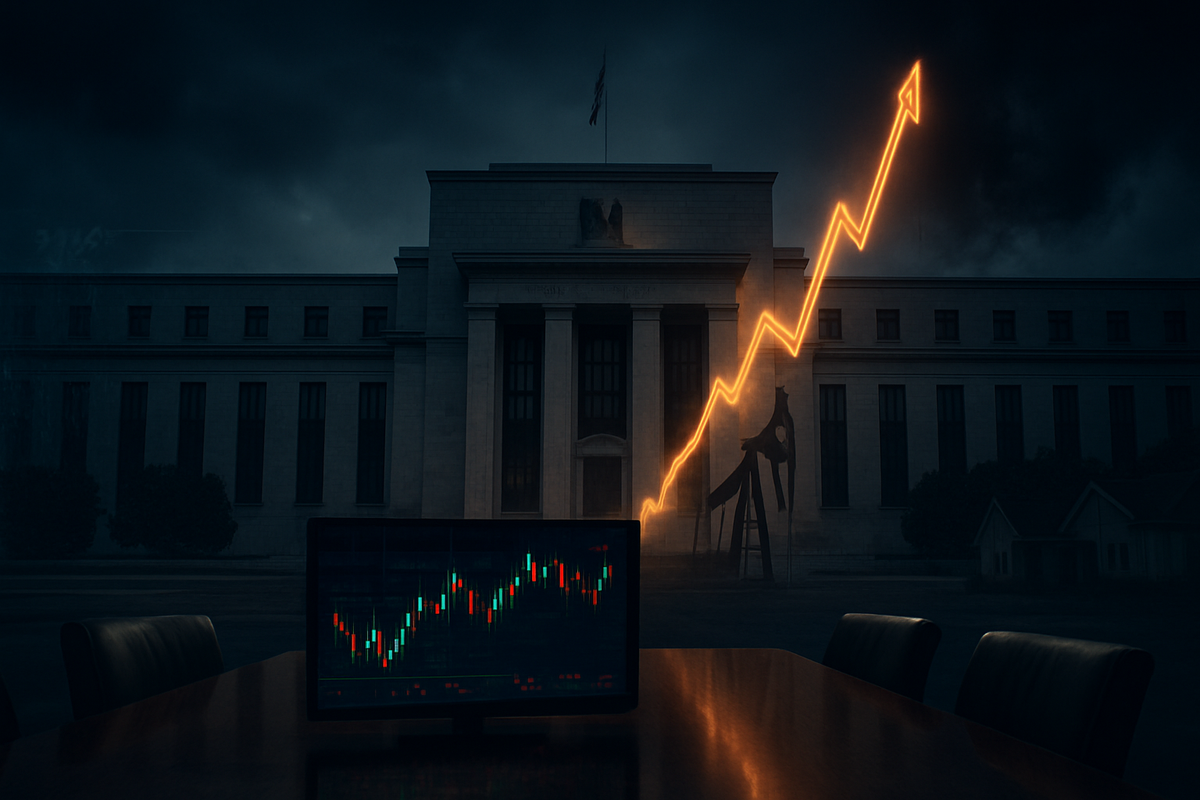
WASHINGTON, D.C. — The Federal Reserve kicked off its second policy meeting of the year today, March 17, 2026, under a shadow of global instability and domestic economic contradictions. As the Federal Open Market Committee (FOMC) gathers for its two-day deliberations, the financial world is bracing for what analysts have dubbed a "hawkish hold." With interest rates widely expected to remain pinned at 3.50%–3.75%, the central bank finds itself caught in a pincer movement: a rapidly cooling labor market on one side and a renewed, energy-driven inflation spike on the other.
The immediate implications are stark. The era of "easy money" and the much-anticipated pivot to multiple rate cuts in 2026 appear to have evaporated overnight. Markets, which only months ago were pricing in a series of reductions to stimulate a sagging economy, are now grappling with the reality of "higher for longer." This meeting is no longer about when the Fed will cut, but rather how much pain they are willing to tolerate in the labor market to extinguish a fresh inflationary fire ignited by conflict in the Middle East.
The Dual Mandate in Conflict: A Timeline of the March Meeting
The road to this week's meeting has been paved with volatility. Following a brief period of economic normalization in late 2025, where the Fed successfully implemented three quarter-point cuts, the landscape shifted violently in early 2026. The outbreak of conflict in the Middle East and the subsequent closure of the Strait of Hormuz sent Brent crude oil prices screaming past $110 per barrel. This "black swan" event has effectively handcuffed Fed Chair Jerome Powell and his colleagues. While headline inflation had cooled to 2.4% in February, the surge in energy costs threatens to push it back toward 3.5% by the summer, just as Core PCE remains stubbornly elevated at 3.1%.
Compounding the Fed's dilemma is a labor market that is showing signs of structural fatigue. The February payroll report was nothing short of dismal, revealing a loss of 92,000 jobs and an unemployment rate that climbed to 4.4%. Historically, such a sharp downturn in employment would trigger an aggressive round of rate cuts. However, with the specter of 1970s-style stagflation—stagnant growth paired with high inflation—looming, the Fed is expected to prioritize price stability over job preservation for now. Key stakeholders, including Treasury Secretary Janet Yellen and various Wall Street titans, are watching the "Summary of Economic Projections" (SEP) due tomorrow for signs of how deep the Fed's conviction runs.
Initial market reactions on Tuesday were jittery. The 10-year Treasury yield surged toward 4.2% as traders abandoned "pivot" bets, and major indices saw significant intraday swings. The prevailing sentiment is that the Fed will use this meeting to signal a "hawkish hold," maintaining current rates while potentially erasing projected 2026 cuts from the famous "dot plot."
Winners and Losers: Tech Resilience vs. Interest-Rate Sensitivity
In this high-stakes environment, the market is bifurcating into those who can outpace macro headwinds and those who are crushed by them. NVIDIA (NASDAQ: NVDA) continues to be the primary exception to the rule. Even as the Fed meeting began, NVIDIA shares showed relative resilience near $184. The company’s recent GTC 2026 conference, where CEO Jensen Huang teased $1 trillion in order visibility for next-generation chips, has convinced many that AI spending is decoupled from interest rate cycles. Analysts at Goldman Sachs have maintained a "Buy" rating on the stock, viewing it as a structural necessity for the modern economy, regardless of the Fed’s stance.
Conversely, the banking sector is feeling the squeeze. JPMorgan Chase & Co. (NYSE: JPM) saw its shares trade under pressure near $288 as the "hawkish hold" narrative solidifies. Higher-for-longer rates are a double-edged sword for banks; while they can boost net interest income (NII), they also drastically increase the risk of defaults in commercial real estate and consumer lending. Morgan Stanley analysts noted a significant uptick in defensive hedging among JPM’s institutional clients today, signaling a lack of confidence in a "soft landing."
The housing market remains the most visible casualty of the Fed’s paralysis. Lennar Corporation (NYSE: LEN) and other major homebuilders are struggling as 30-year fixed mortgage rates have climbed back above 6.4% this week. Lennar’s stock has shed nearly a third of its value over the past year, as the company is forced to use aggressive sales incentives—sometimes as high as 14%—to move inventory in an environment where buyers are priced out by both high rates and high home prices.
A Historical Pivot Point and the Shadow of Succession
The broader significance of the March 17-18 meeting cannot be overstated. This is one of the final meetings of Jerome Powell’s tenure, with his term set to expire in May 2026. The potential transition to a more "hawkish" successor, such as Kevin Warsh, adds a layer of political and policy uncertainty. The Fed is currently operating in a "wartime economy" mode, where traditional monetary tools are being challenged by supply-side shocks that are outside of their control.
This moment draws uncomfortable parallels to the late 1970s, when the Fed was forced to maintain high rates despite a weakening economy to break the back of inflation. The difference today is the sheer scale of U.S. national debt, which makes prolonged high interest rates a fiscal nightmare. Furthermore, the rapid integration of AI into the workforce is creating a "jobless recovery" dynamic in some sectors, making it harder for the Fed to read the labor market’s health through traditional metrics like the unemployment rate.
Looking Ahead: The SEP and the September Gamble
What comes next depends entirely on tomorrow’s release of the Summary of Economic Projections. If the "median dot" shifts to show zero rate cuts for the remainder of 2026, we could see a massive re-rating of equity valuations across the board. Short-term, the market is looking for any sign that the Fed might still consider a cut in September or December. However, if energy prices do not stabilize, the conversation may shift from "when will they cut" to "will they have to hike again?"
Strategic pivots will be required for both corporations and investors. For companies like Lennar, the focus will shift to balance sheet preservation and inventory management. For tech giants like NVIDIA, the challenge will be maintaining high margins as the cost of capital remains high for their customers. Market opportunities may emerge in the energy sector and in short-duration fixed income, but the overarching theme for the next six months will be one of cautious defense.
Closing Thoughts: Navigating the New Normal
As the first day of the FOMC meeting concludes, the key takeaway is that the Federal Reserve is currently "handcuffed" by a combination of geopolitical chaos and stubborn core inflation. The hope for a clean "soft landing" has been replaced by the gritty reality of a stagflationary environment. Moving forward, the market will be hyper-sensitive to any cooling in oil prices or any further deterioration in the labor market that might force the Fed's hand.
Investors should watch the SEP release tomorrow with a focus on the 2026 and 2027 inflation forecasts. If the Fed raises its year-end PCE target, it is a clear signal that they expect a long, hard fight ahead. In the coming months, the resilience of the U.S. consumer and the stability of the global energy supply will be the true arbiters of market direction, more so than any single word in a Fed transcript.
This content is intended for informational purposes only and is not financial advice.