As the sun rises over Wall Street on Wednesday, March 11, 2026, the global financial landscape is characterized by a tense equilibrium. The 10-year Treasury yield has found a precarious footing at 4.15%, serving as a valuation anchor for a market caught between the immediate safe-haven demands of a widening conflict in the Middle East and the looming specter of a stagflationary shock. This morning, all eyes are fixed on the Labor Department’s release of the February Consumer Price Index (CPI) report, an event that could either validate the Federal Reserve's current pause or force a radical shift in monetary policy.
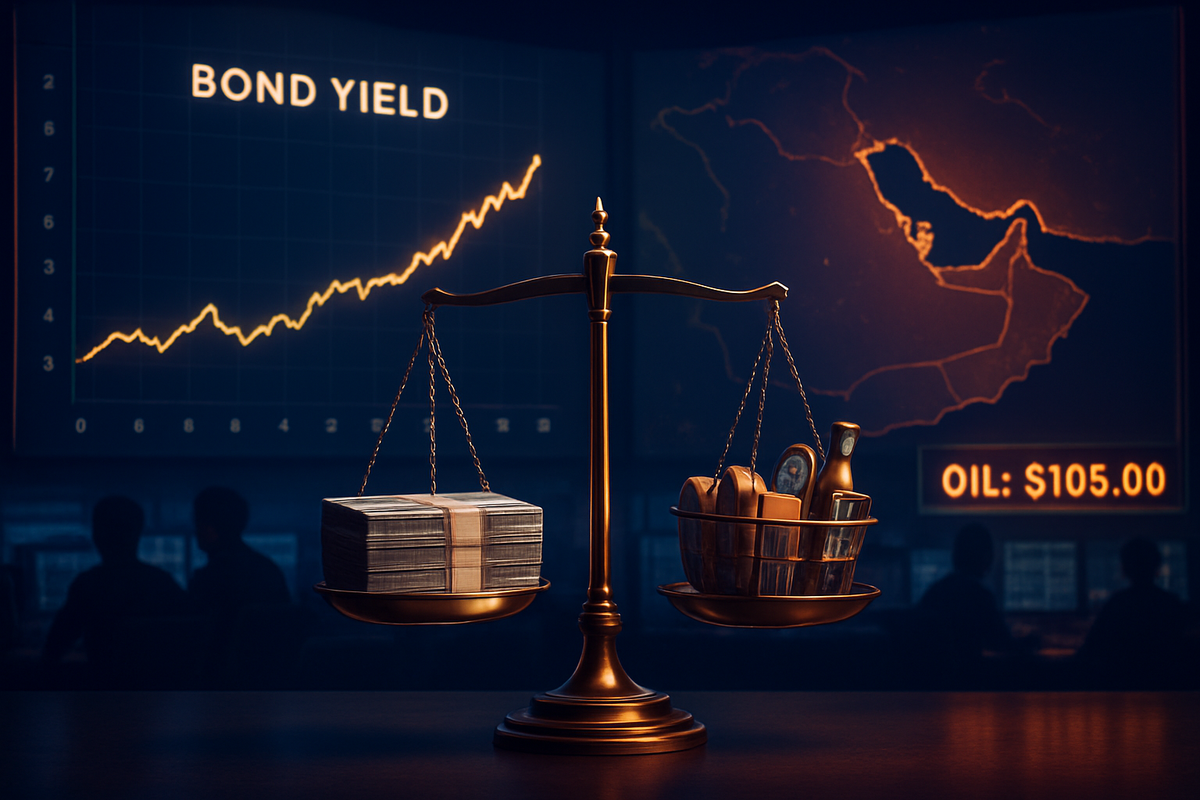
The immediate implications of this "4.15% anchor" are profound. It represents a temporary truce in the tug-of-war between bond buyers seeking safety and sellers fearing that $100-per-barrel oil will reignite the inflationary fires that the Fed spent years trying to extinguish. With the 10-year yield acting as a benchmark for everything from corporate debt to mortgages, its stability—or lack thereof—over the next 24 hours will likely dictate whether the 2026 market rally continues or if a significant correction is underway.
The Convergence of Geopolitics and Macroeconomics
The current market stability follows a tumultuous two-week period. The primary catalyst was the escalation of "Operation Epic Fury," the U.S.-Israeli military offensive against Iranian infrastructure that began on February 28, 2026. The conflict intensified significantly following the reported death of Iranian Supreme Leader Ayatollah Ali Khamenei on March 2, leading to the closure of the Strait of Hormuz and a dramatic spike in global energy prices. Initially, this geopolitical crisis triggered a classic "flight to quality," driving the 10-year Treasury yield down from its February highs as investors sought the perceived safety of U.S. government debt.
However, the narrative shifted as the economic consequences of $100 oil began to surface. Last Friday's employment report revealed a loss of 92,000 jobs in February, the first negative print in years, signaling that the "higher-for-longer" rate environment might finally be cracking the labor market. Typically, such weak data would send yields tumbling, but the inflationary threat posed by surging fuel costs has provided a floor. This has resulted in the current 4.15% stalemate, where the market is effectively paralyzed until the February CPI print provides a clearer picture of whether the energy shock has already permeated core inflation.
Key players, including the administration of President Donald Trump and Federal Reserve officials, have been vocal in their concern. While the White House has issued statements suggesting the conflict could "end soon," market participants remain skeptical, watching the Treasury department’s issuance schedule and the Fed’s balance sheet closely. The initial reaction across equities has been one of extreme caution, with trading volumes thinning as institutional players wait for the 8:30 AM ET data release.
Winners and Losers in the New Neutral
The current yield environment and the underlying geopolitical crisis have created a stark divide between sector leaders and laggards. In the energy space, the primary beneficiaries are the "upstream" giants. Exxon Mobil (NYSE: XOM) and Chevron (NYSE: CVX) have seen their valuations swell as crude prices remain stubbornly high. These companies are viewed as vital hedges against the very inflation that is currently spooking the bond market. Additionally, Constellation Energy (NASDAQ: CEG) has emerged as a unique winner; its nuclear fleet provides a stable, non-oil-dependent power source that is increasingly valuable as data centers continue to expand despite the broader economic cooling.
Conversely, the "losers" list is headlined by the airline and consumer discretionary sectors. American Airlines (NASDAQ: AAL) and United Airlines (NASDAQ: UAL) have faced significant selling pressure as jet fuel costs—their second-largest expense—skyrocket. The thin operating margins of these carriers make them highly sensitive to the double whammy of high fuel and high borrowing costs. In the financial sector, the impact is nuanced. While JPMorgan Chase (NYSE: JPM) has benefited from the volatility and a net interest income boost from the 4.15% yield level, smaller, more economically sensitive firms like Jefferies Financial Group (NYSE: JEF) have seen downgrades as investors fear a broader credit contraction.
The defense sector has arguably been the most consistent "war winner." Lockheed Martin (NYSE: LMT) and RTX Corporation (NYSE: RTX) have rallied to 52-week highs as military budgets are projected to surge. High-tech defense players like Palantir Technologies (NASDAQ: PLTR) have also seen increased interest as the conflict in the Middle East emphasizes the necessity of AI-enabled battle management and intelligence analytics.
The Significance of the 4.15% Threshold
The broader significance of the 10-year yield steadying at 4.15% cannot be overstated. It signifies a potential "New Neutral" in the post-pandemic, high-conflict era. This event fits into a wider trend of "deglobalization of energy," where geopolitical risks are no longer transient spikes but structural components of inflation. Unlike the oil shocks of the 1970s, the 2026 scenario is occurring in a world of high sovereign debt, making the Fed's job of balancing growth and price stability exponentially more difficult.
Ripple effects are already being felt among U.S. trading partners and competitors. The surge in oil is putting immense pressure on energy-importing nations, potentially weakening the Euro and the Yen, which in turn forces international central banks to sell their own Treasury holdings to defend their currencies. This "quantitative tightening" from abroad could put further upward pressure on yields, regardless of what the February CPI data shows. Historically, such conditions often precede a "Minsky Moment," where a long period of stability or moderate growth suddenly collapses under the weight of debt and escalating costs.
Looking Ahead: The Post-CPI Landscape
In the short term, the direction of the 10-year yield hinges entirely on the CPI decimal point. A print that exceeds the 3.4% consensus could see yields break toward 4.5%, as the market prices in the end of any hope for rate cuts in 2026. Conversely, a cooler-than-expected number might give the Fed the "cover" it needs to focus on the deteriorating jobs market, potentially dragging the 10-year back toward 3.8%.
Long-term, the strategic pivot for investors will likely involve moving away from traditional 60/40 portfolios toward "real assets" and defense. If the Strait of Hormuz remains closed for an extended period, the "inflationary floor" for yields will rise permanently. Companies will need to adapt to a world where capital is no longer cheap and energy security is the paramount corporate priority. Scenarios for the second half of 2026 range from a "soft landing" if the war concludes quickly, to a "deep stagflationary recession" if energy prices remain above $110 for more than two quarters.
Market Wrap-Up and Investor Outlook
The steadying of the 10-year Treasury yield at 4.15% on this March morning is the "quiet before the storm." The key takeaways are clear: the market is currently in a defensive crouch, balancing the geopolitical "safety" of bonds against the inflationary "risk" of $100 oil. The tug-of-war between these two forces has reached a stalemate that only hard data can break.
Moving forward, the market’s resilience will be tested by the Federal Reserve’s reaction to the upcoming CPI and the subsequent FOMC meeting. Investors should watch for signs of "yield curve steepening," which would indicate that the market is beginning to price in long-term inflation rather than short-term safe-haven demand. The lasting impact of this period may be the realization that the era of low-interest-rate, low-volatility growth is a relic of the past, replaced by a more volatile and expensive "New Neutral."
This content is intended for informational purposes only and is not financial advice.