In a move that solidifies the backbone of the next generation of artificial intelligence, NVIDIA and Meta Platforms have announced a landmark multi-year, multi-generational infrastructure partnership. The deal, revealed ahead of NVIDIA’s highly anticipated quarterly earnings next week, positions Meta Platforms (NASDAQ: META) as a lead adopter of NVIDIA’s cutting-edge Grace CPUs and the newly unveiled GB300 "Blackwell Ultra" systems. This collaboration represents a shift toward deeper vertical integration, with Meta moving beyond standalone GPUs to adopt NVIDIA’s full-stack hardware and networking ecosystem.
Market reaction was swift and positive for the semiconductor giant. Shares of NVIDIA (NASDAQ: NVDA) rose more than 2% following the announcement, trading near the $189 mark as investors cheered the sustained demand from "hyperscale" customers. The partnership comes at a critical juncture for the industry, as analysts at both Oppenheimer and Citi reiterated their bullish ratings on NVIDIA, signaling high expectations for the company’s financial performance and its dominant role in the evolving AI landscape.
Deepening the "AI Factory": The Specs Behind the Deal
The partnership is centered on a massive rollout of NVIDIA’s Grace CPUs and GB300 systems, a combination designed to handle the "agentic" AI workloads and massive reasoning models that Meta is currently developing. Unlike previous years where Meta primarily sourced discrete GPUs, this new phase of the partnership sees the social media titan deploying the Grace CPU—an Arm-based processor—on a massive scale. These chips are reportedly delivering a 2x performance-per-watt improvement over traditional x86 architectures, a crucial metric for Meta as it manages the soaring energy costs of its global data center footprint.
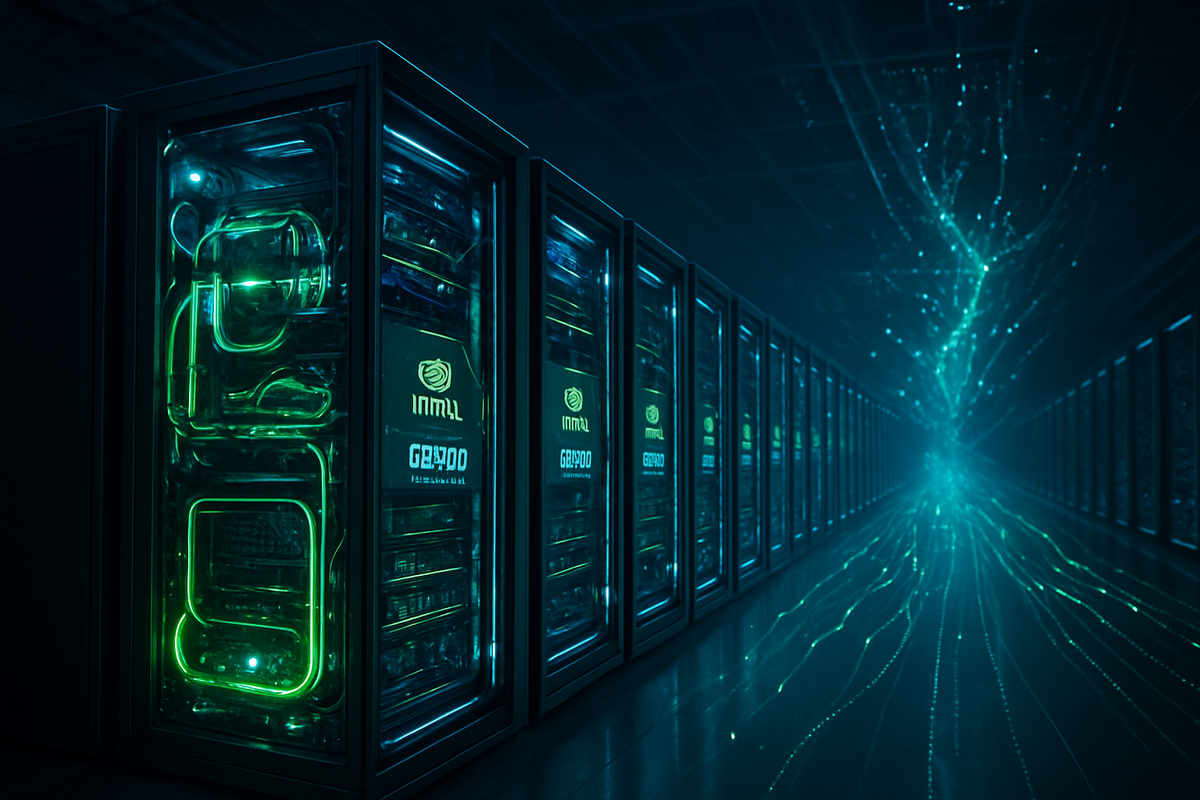
The crown jewel of this agreement is the integration of the GB300 "Blackwell Ultra" systems. These units represent a significant leap over the previous generation, offering 1.1 exaFLOPS of FP4 compute in a single liquid-cooled rack. With 288GB of high-bandwidth memory (HBM3e) per GPU, the GB300 provides the necessary memory capacity to run models with tens of trillions of parameters. Meta is also adopting NVIDIA’s Spectrum-X Ethernet networking to connect these clusters, ensuring ultra-low latency for its upcoming Llama 4 family of large language models.
The timeline for this rollout is aggressive, with millions of chips expected to be deployed across Meta’s "gigawatt-scale" campuses throughout 2026 and 2027. This follows a period of heavy capital expenditure by Meta, which has faced scrutiny from some investors. However, this strategic pivot suggests Meta is doubling down on "Personal Superintelligence," seeking to bring sophisticated AI agents to its more than 3.5 billion users across Facebook, Instagram, and WhatsApp.
Initial industry reactions have been overwhelmingly positive for NVIDIA, though Meta’s stock saw a brief period of volatility as investors recalculated the company’s capital expenditure (CAPEX) outlook. However, the sentiment quickly shifted as the long-term efficiency gains of the Grace-Blackwell architecture became clear. By utilizing liquid-cooled racks that draw upwards of 130kW, Meta is effectively maximizing its compute density, allowing it to stay ahead in the AI arms race while staying within its power constraints.
Winners and Losers in the New Hardware Hierarchy
NVIDIA (NASDAQ: NVDA) is the undisputed winner of this partnership. By securing Meta as a full-stack customer—using not just GPUs but also CPUs and networking—NVIDIA has effectively "locked in" one of the world’s largest buyers of silicon. This deal serves as a powerful rebuttal to the narrative that hyperscalers would successfully pivot toward their own in-house custom silicon. While Meta continues to develop its own Meta Training and Inference Accelerator (MTIA) chips, this massive order suggests that NVIDIA’s performance lead remains too great to ignore for high-end frontier model training.
On the losing end of this specific deal are traditional CPU manufacturers like Intel (NASDAQ: INTC) and AMD (NASDAQ: AMD). Meta’s large-scale transition to the Grace CPU for AI-adjacent workloads signals a diminishing role for x86 processors in the modern data center. While AMD remains a key supplier for many of Meta's general-purpose servers, the "Grace-only" deployment for AI agents represents a significant loss of market share in the high-growth AI infrastructure segment.
Other winners include the high-bandwidth memory suppliers, specifically SK Hynix and Micron (NASDAQ: MU), which provide the 12-layer HBM3e stacks required for the GB300. As NVIDIA moves toward the even more advanced "Vera Rubin" (R100) generation in the coming years, these memory providers are expected to see sustained, high-margin demand. Conversely, some cloud service providers (CSPs) that compete with NVIDIA’s own "NVIDIA Cloud" offerings may feel pressure, as the unified architecture allows Meta to move workloads seamlessly between its own sites and NVIDIA-partnered clouds.
The Global AI Trend: From Inference to Reasoning
This partnership fits into a broader industry shift from simple generative AI toward "reasoning" and "agentic" AI. The GB300 is specifically optimized for "test-time scaling," a process where models spend more compute time "thinking" or reasoning during the inference phase. As Meta prepares to launch Llama 4, the demand for this type of compute is expected to grow tenfold. This event underscores the reality that the AI boom is not cooling down, but rather entering a more hardware-intensive phase where efficiency and memory bandwidth are the primary bottlenecks.
Furthermore, the integration of NVIDIA’s Confidential Computing technology into Meta’s messaging apps highlights a growing regulatory and policy trend. As governments around the world increase scrutiny over data privacy and AI safety, the ability to process AI tasks in a "secure enclave" becomes a competitive advantage. This partnership allows Meta to meet stringent global privacy standards while still deploying powerful AI models at scale, a move that could set a precedent for other consumer tech companies.
Historically, this deal draws comparisons to the early 2000s when tech giants standardized on specific server architectures to win the web-scale era. Just as the industry once consolidated around x86 and Linux, we are now seeing a consolidation around the "NVIDIA Stack." This has long-term implications for the competitive landscape, as rivals must now decide whether to build their own equivalent full-stack ecosystems or risk falling behind the performance curve established by the NVIDIA-Meta alliance.
The Road to NVIDIA’s Earnings and Beyond
Looking ahead, all eyes are on NVIDIA’s Q4 FY2026 earnings report, scheduled for February 25. Analysts at Oppenheimer, led by Rick Schafer, expect a significant beat—potentially $2 billion to $3 billion above consensus estimates. The Meta partnership provides a strong tailwind for NVIDIA’s forward guidance, as it demonstrates that the "Blackwell" generation is already seeing robust follow-up demand in the form of the GB300 Ultra. Investors will be listening closely for any updates on the "Vera Rubin" R100 architecture, which is rumored to carry a 40–50% price premium over the current generation.
For Meta, the challenge will be translating this massive infrastructure investment into tangible revenue. The company is betting heavily that AI agents will revolutionize advertising and user engagement. In the short term, Meta will need to demonstrate that Llama 4 can outperform rivals like OpenAI’s latest models and that its AI-driven features are driving growth in its core ad business. The market will likely remain sensitive to Meta’s CAPEX updates, but for now, the promise of increased efficiency via NVIDIA’s latest tech has pacified the bears.
Strategic pivots may still be required if the energy crisis worsens or if power delivery to data centers becomes a harder bottleneck than chip availability. However, the adoption of liquid-cooled systems and high-density Grace-Blackwell racks suggests that Meta is already planning for a future where power is the scarcest resource. In the long run, this partnership may be remembered as the moment when "AI Factories" became the standard infrastructure for the digital age.
Summary and Investor Outlook
The NVIDIA-Meta partnership marks a significant milestone in the AI era, signaling that the demand for high-end compute remains insatiable. By integrating Grace CPUs and GB300 systems, Meta is securing its position at the forefront of AI development, while NVIDIA solidifies its grip on the hyperscale market. With analysts at Oppenheimer and Citi maintaining their "Buy" ratings and high price targets, the momentum heading into next week's earnings is decidedly bullish.
Key takeaways for investors include:
- Full-Stack Dominance: NVIDIA is no longer just a GPU company; its Grace CPU and Spectrum-X networking are now foundational to AI infrastructure.
- Hyperscale CAPEX: Fears of a slowdown in AI spending by major tech firms appear premature as they race to build out "reasoning" capabilities.
- Efficiency as a Moat: The shift to liquid cooling and high-performance-per-watt architectures is the new battleground for data center operators.
In the coming months, investors should monitor NVIDIA’s supply chain for any constraints on HBM3e and watch for Meta’s official launch of Llama 4, which will serve as the ultimate test of this multi-billion dollar infrastructure gamble.
This content is intended for informational purposes only and is not financial advice.