Global financial markets were jolted on Thursday, February 19, 2026, as escalating tensions between Washington and Tehran reached a critical flashpoint. Crude oil prices jumped 2% during midday trading following reports that the United States is actively considering military strikes against Iranian nuclear infrastructure and strategic assets. The move comes after a complete breakdown in diplomatic negotiations and a significant buildup of U.S. naval forces in the Persian Gulf, sparking fears of a broader regional conflict that could disrupt global energy supplies.
The immediate market reaction has been a swift flight to safety, with investors dumping riskier assets in favor of energy stocks and precious metals. As speculation of a strike as early as this weekend intensifies, the "fear premium" in the oil market has returned with a vengeance. Analysts warn that any kinetic action could lead to a retaliatory closure of the Strait of Hormuz, a move that would effectively choke off 20% of the world’s oil supply and send global economies into a tailspin.
A Decisive Countdown: Naval Mobilization and Diplomatic Failure
The current crisis follows months of deteriorating relations and a series of failed indirect talks in Geneva and Oman. On Thursday, President Donald Trump, speaking at a "Board of Peace" meeting, indicated that a final decision regarding military intervention would be made within the next 10 days. The President emphasized that while he remains open to a "fair deal," the window for diplomacy has nearly closed, stating that Tehran would be "wise" to reconsider its current trajectory to avoid "very bad things."
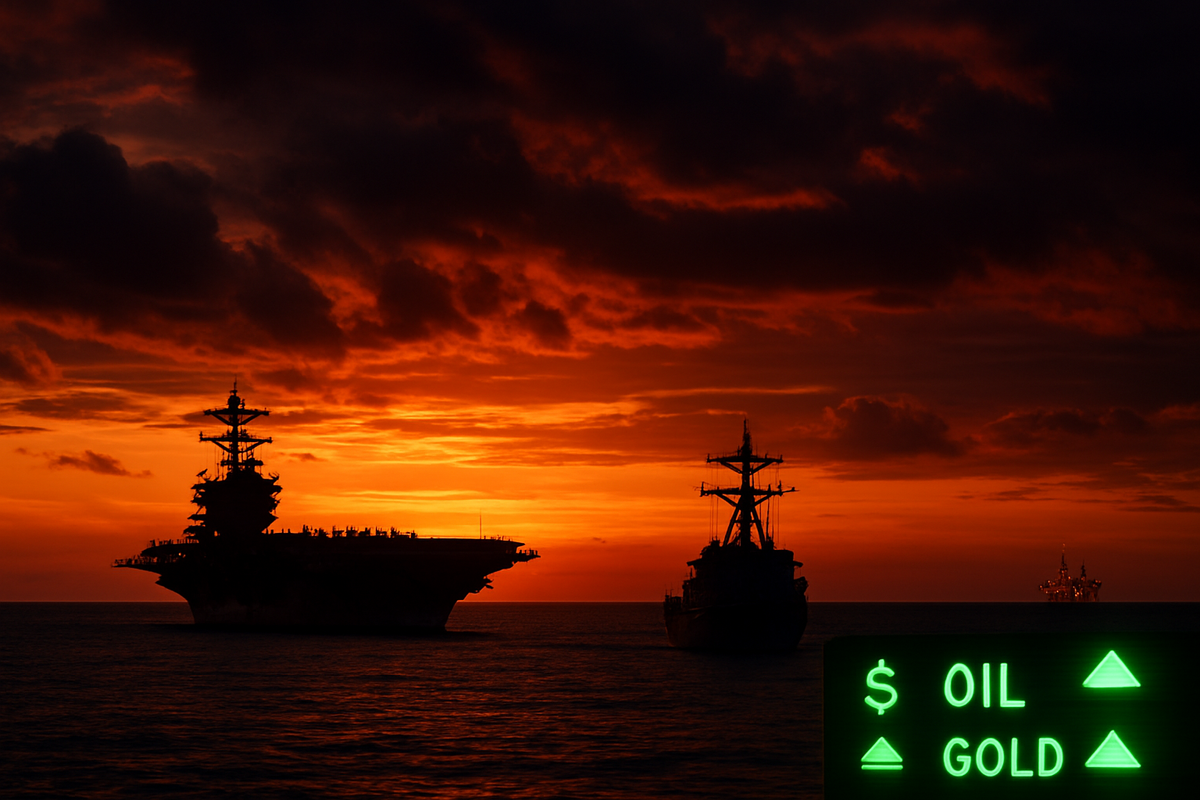
Military movements in the region have added weight to the administration's rhetoric. The USS Gerald Ford (CVN-78) has officially joined the USS Abraham Lincoln (CVN-72) in the Persian Gulf, creating one of the most formidable concentrations of American naval and air power in the region since the 2003 invasion of Iraq. This mobilization coincides with a provocative "notice to airmen" (NOTAM) issued by Iran regarding rocket launches in its southern provinces, alongside joint naval exercises between Iranian and Russian forces.
The timeline leading to this moment has been marked by increasing volatility. Earlier this week, Iran briefly closed the Strait of Hormuz for "military drills," a move widely interpreted as a warning shot to the West. In response, crude oil prices began a steady climb, culminating in today's 2% surge. Brent Crude rose $1.23 to trade near $71.58 per barrel, while West Texas Intermediate (WTI) climbed $1.34 to reach $66.53. This follows a more substantial 4% jump on Wednesday, as the market began pricing in the reality of a potential hot war.
Energy Giants and Safe Havens Rally Amid Uncertainty
As the broader market slipped under the weight of geopolitical uncertainty, the energy sector emerged as the clear beneficiary. Exxon Mobil (NYSE: XOM) saw its shares trade near $152, representing a massive 25% surge since the beginning of 2026. Investors have flocked to Exxon as a "safe harbor" within the energy space, citing its massive production capacity in the Permian Basin and Guyana, which offers protection against physical disruptions in the Middle East while still allowing the company to reap the rewards of higher global crude prices.
Chevron (NYSE: CVX) similarly reached a new 52-week high of $186.59 on Thursday, gaining approximately 1.7% on the day. Analysts point to Chevron's "fortress balance sheet" and disciplined capital allocation as key reasons for its outperformance. Beyond the oil majors, defense contractors have also seen a spike in interest, as the prospect of prolonged military engagement suggests increased procurement and logistics demand.
In the commodities market, precious metals have staged a significant recovery after a period of extreme volatility. Gold, which had suffered a "historic rout" earlier this month due to a hawkish shift in Federal Reserve policy, found a "geopolitical floor" near the $5,000 per ounce mark. The SPDR Gold Shares (NYSE Arca: GLD) rose as investors sought shelter from potential currency devaluations and market instability. Silver (NYSE Arca: SLV) also saw a bounce, rising to approximately $78 per ounce. While still below its January record highs, the renewed threat of conflict has halted the recent deleveraging cycle in metals.
Inflationary Pressures and the "Warsh Fed"
The timing of this geopolitical escalation is particularly fraught for the U.S. economy. The Federal Reserve, under the recent leadership of nominated Chair Kevin Warsh, has been signaling a more aggressive stance toward curbing inflation. A sustained spike in oil prices could complicate the Fed's "higher-for-longer" interest rate strategy by introducing a supply-side inflationary shock that interest rate hikes are poorly equipped to fix. The market is now grappling with the possibility of "stagflation"—slowing economic growth combined with rising costs for energy and transport.
Historically, Middle Eastern conflicts have led to significant shifts in global energy policy. The 2026 crisis is already echoing the oil shocks of the 1970s, forcing a renewed focus on domestic energy independence. However, unlike previous decades, the U.S. is now a major exporter of liquefied natural gas (LNG) and crude, which may insulate the domestic market slightly more than its peers in Europe and Asia. Nevertheless, the ripple effects on global shipping and insurance costs are already being felt, as major maritime carriers reconsider routes through the Suez Canal.
Furthermore, the involvement of Russia in joint exercises with Iran adds a layer of complexity to the situation. This "axis of defiance" suggests that any U.S. strike could have diplomatic and economic repercussions far beyond the borders of Iran. Competitors in the tech and consumer discretionary sectors, such as Amazon (NASDAQ: AMZN) and Apple (NASDAQ: AAPL), are under pressure as investors worry that rising fuel costs and supply chain bottlenecks will erode consumer spending power and corporate margins in the coming quarters.
The Road Ahead: Diplomacy or Escalation?
The next 10 days are expected to be some of the most critical for the global markets in recent memory. If the U.S. proceeds with targeted strikes, the short-term reaction will likely be a parabolic move in oil prices, with some analysts forecasting Brent could breach the $100 mark for the first time in years. Conversely, if a diplomatic breakthrough occurs at the eleventh hour, the "fear premium" could evaporate just as quickly, leading to a sharp correction in energy stocks and a rotation back into growth and technology sectors.
For the public companies involved, the strategic pivot is already underway. Energy firms are accelerating production in non-OPEC regions to capitalize on the price surge, while transportation companies like Delta Air Lines (NYSE: DAL) and United Airlines (NASDAQ: UAL) are bracing for higher jet fuel costs by adjusting their hedging strategies and potentially raising ticket prices. Market participants should also watch for potential cyber-retaliation from Tehran, which could target financial institutions and energy infrastructure, adding a "digital front" to the physical conflict.
The potential for a "Black Swan" event remains high. A full blockage of the Strait of Hormuz remains the ultimate "doomsday scenario" for energy markets. While the U.S. Navy is confident in its ability to keep the channel open, the cost of doing so in a contested environment would be immense. Investors are advised to maintain diversified portfolios with exposure to both defensive commodities and inflation-protected securities as the situation remains fluid.
Market Outlook: Navigating a High-Stakes Environment
The events of February 19, 2026, serve as a stark reminder of how quickly geopolitical realities can override economic fundamentals. The 2% jump in oil and the rally in safe-haven assets reflect a market that is no longer asking "if" a conflict will occur, but "when" and "how large." The outperformance of giants like Exxon Mobil and Chevron underscores the value of scale and geographic diversity in a fragmented global order.
Moving forward, the market will be hyper-sensitive to any headlines regarding the 10-day decision window set by the White House. Investors should closely monitor the "Board of Peace" briefings and any further NOTAMs from the Persian Gulf. The ability of the Federal Reserve to balance its inflation-fighting mandate with a potential energy-driven slowdown will be the defining challenge for the remainder of the year.
In summary, the immediate outlook is one of heightened vigilance. While the energy sector offers a hedge against the current volatility, the broader market remains vulnerable to the cascading effects of a Middle Eastern conflict. Key indicators to watch in the coming months include the price of Brent Crude, the movement of the U.S. Dollar Index (DXY), and the operational status of the Strait of Hormuz. For now, the world waits to see if the drums of war will lead to action or if a last-minute diplomatic exit remains possible.
This content is intended for informational purposes only and is not financial advice.