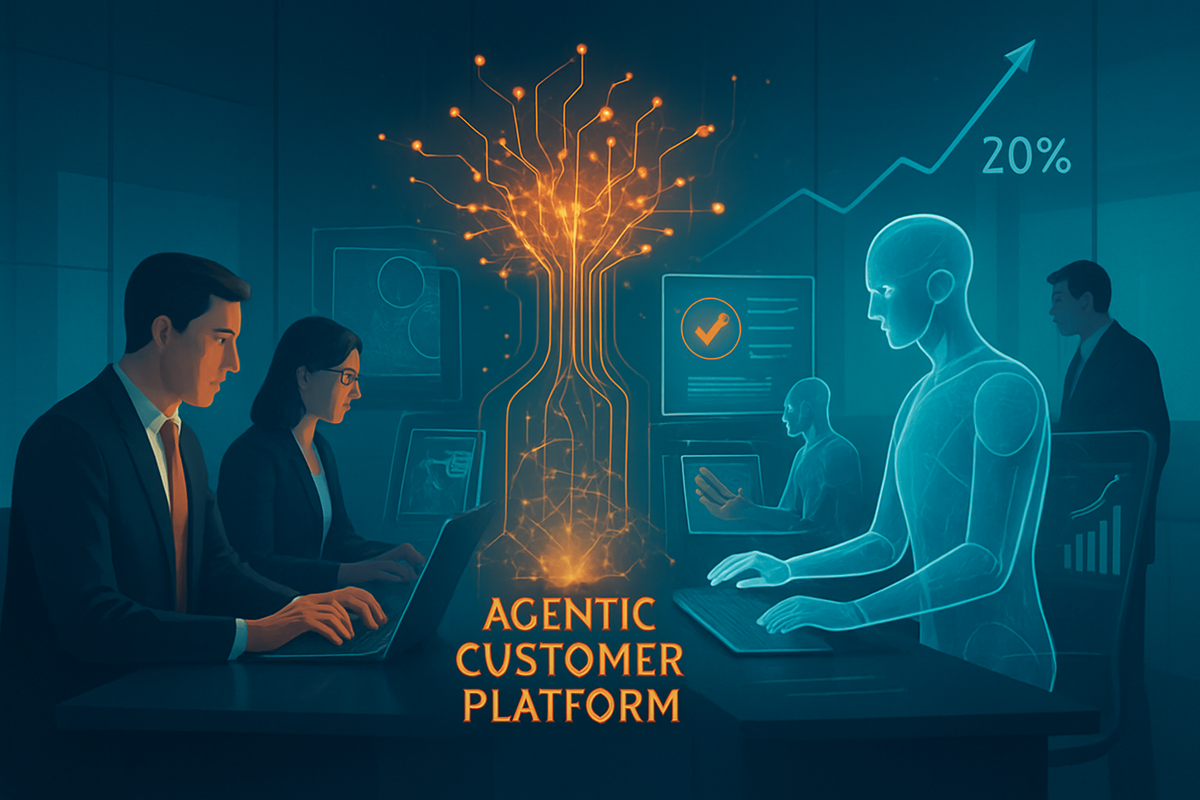
While the broader software-as-a-service (SaaS) sector reels from a historic market correction dubbed the "SaaSpocalypse," HubSpot (NYSE: HUBS) has emerged as a resilient outlier. In its latest earnings report released on February 11, 2026, the company posted a staggering 20% year-over-year revenue growth, fueled by its aggressive pivot to an "agentic customer platform." This performance stands in stark contrast to legacy competitors who are currently struggling to justify their seat-based pricing models in an era where artificial intelligence increasingly performs the work of human employees.
The divergence marks a fundamental shift in how enterprise software is valued. As autonomous AI agents begin to replace human workflows in sales, marketing, and customer support, the traditional "per-seat" revenue model has come under intense pressure. HubSpot’s ability to maintain high growth while shifting its monetization strategy toward agent-led outcomes suggests that the company has found the "holy grail" of the AI transition: turning potential disruption into a scalable growth engine.
HubSpot’s Strategic Pivot: From Software to "Service-as-Software"
HubSpot’s Q4 2025 financial results, reported earlier this week, surpassed even the most optimistic analyst expectations. The company recorded $846.7 million in quarterly revenue, a 20% increase that outperformed the industry average of roughly 12%. Key to this success was a 41% surge in enterprise-level deals—those with a monthly recurring revenue (MRR) of over $10,000—indicating that larger firms are abandoning fragmented legacy systems in favor of HubSpot's unified, AI-native architecture.
The centerpiece of this growth is the "Breeze AI" ecosystem, which HubSpot rebranded in 2025 as its "Agentic Customer Platform." Unlike the "copilots" of 2024, which acted as assistants to human users, HubSpot’s new suite of "Breeze Agents" operates autonomously. The company revealed that its Customer Agent now resolves over 50% of support tickets without human intervention, while its Prospecting Agent acts as a 24/7 sales development representative, researching leads and drafting personalized outreach. By February 2026, HubSpot had expanded its library to over 20 specialized agents, up from just four a year prior.
This technological shift was paired with a bold pricing evolution. Recognizing that AI "doesn't need a seat," HubSpot introduced "HubSpot Credits," a consumption-based model that charges customers based on the volume of work performed by agents rather than the number of human logins. This strategic move has allowed HubSpot to grow its revenue even as some clients reduce their human headcount, effectively capturing the value of the labor the AI is performing.
Winners and Losers in the Agentic Era
The market's reaction to the "agentic" shift has created a clear divide between innovators and legacy incumbents. HubSpot is firmly in the winners' circle, with its stock trending upward following the announcement of a $1 billion share buyback program and a bullish 2026 revenue guidance of $3.7 billion. Investors are increasingly viewing HubSpot as the primary beneficiary of mid-market consolidation, where companies want a single, integrated source of truth for their customer data.
On the other side of the ledger, Salesforce (NYSE: CRM) has faced a difficult start to 2026. The CRM giant saw its stock decline 26% since the beginning of the year as it grappled with the departure of key AI leadership and a wave of customer "seat compression." As AI agents take over CRM data entry and lead management, Salesforce’s massive reliance on seat-based licensing has become a liability. Similarly, Workday (NASDAQ: WDAY) saw shares plunge 14% this month after reporting that customer headcount reductions—driven by AI automation—were impacting their long-term subscription renewals.
Zendesk, though now private, has also become a cautionary tale in the industry. As its customers utilize AI to resolve the bulk of their support tickets, the need for dozens of human support seats has evaporated. While these legacy firms are now rushing to implement "Agentic Enterprise License Agreements" to stem the bleeding, HubSpot’s early adoption of a hybrid credit-based model has given it a significant head start in the race to monetize "Service-as-Software."
Wider Significance: The Death of the SaaS Seat
The events of early 2026 represent more than just a good quarter for one company; they signal the end of the "SaaS Era" as we knew it. For two decades, the software industry grew by selling more seats to more people. However, the release of advanced agentic platforms, such as Anthropic’s Claude Cowork and OpenAI’s Frontier, has enabled AI to operate software directly. This has rendered the "human-to-software" interface—and the seats that come with it—partially obsolete.
HubSpot’s success fits into a broader industry trend where the value is shifting from the tool itself to the outcome the tool provides. This is a historic precedent similar to the shift from on-premise software to the cloud in the early 2010s. Just as companies like Microsoft (NASDAQ: MSFT) had to reinvent themselves for the cloud, today’s software firms must reinvent themselves for autonomous agents.
Regulatory bodies are also beginning to take notice. As AI agents increasingly manage customer data and execute transactions, there are growing calls for "Agentic Transparency" policies. HubSpot has positioned itself ahead of this curve by integrating a "Breeze Intelligence" layer, which provides a verifiable audit trail for every action an agent takes, a feature that has become a major selling point for enterprise legal and compliance teams.
What Comes Next for the Market
In the short term, the industry should expect a wave of consolidation. Smaller SaaS firms that cannot afford the massive compute costs required to power autonomous agents will likely be acquired by larger platforms like HubSpot or Adobe (NASDAQ: ADBE). For HubSpot, the challenge will be maintaining its 20% growth rate as it moves further upmarket into the territory of large enterprises that have historically been Salesforce strongholds.
Long-term, the "Agentic Customer Platform" model will likely become the standard. We are moving toward a scenario where a company’s "headcount" may consist of 50% human employees and 50% digital agents. The market opportunities for companies that provide the "operating system" for these agents are immense. HubSpot’s pivot suggests it is building the foundation for a future where software doesn't just help you do the work—it is the worker.
However, risks remain. If the "SaaSpocalypse" deepens and broader corporate spending slows due to economic uncertainty, even resilient players like HubSpot could see a deceleration. Investors will need to watch for "agent adoption rates" and "credit utilization" as the new key performance indicators, replacing traditional metrics like "daily active users."
Summary and Investor Outlook
HubSpot's ability to deliver 20% growth in a climate where other software giants are shrinking is a testament to the power of a unified data architecture and a proactive AI strategy. By moving from a seat-based model to an agentic platform powered by consumption-based credits, HubSpot has effectively future-proofed its revenue against the very AI disruption that is currently cannibalizing its competitors.
Moving forward, the market will likely continue to punish companies that remain tethered to the "human seat" while rewarding those that successfully transition to "Service-as-Software." Investors should keep a close eye on HubSpot’s 2026 margins; while the growth is impressive, the cost of running autonomous agents at scale is significantly higher than traditional software hosting.
The primary takeaway for the months ahead is clear: the AI revolution in software has moved past the "chat" phase and into the "agent" phase. Companies that can demonstrate, as HubSpot has, that they can automate entire workflows while capturing the resulting value will be the new leaders of the technology sector.
This content is intended for informational purposes only and is not financial advice.