McDonald’s Corporation (NYSE: MCD) has silenced skeptics with a powerful fourth-quarter earnings report, signaling a robust recovery and a successful pivot to what executives call a "Value Leadership" strategy. As of February 13, 2026, the fast-food giant has reported a significant "double beat," surpassing Wall Street’s expectations for both top-line revenue and bottom-line profit, even as the broader restaurant industry grapples with shifting consumer habits and persistent inflation.
The Chicago-based titan saw its consolidated revenue climb to $7.01 billion, marking a 10% year-over-year increase that comfortably cleared the $6.83 billion analyst consensus. Perhaps more impressively, global comparable sales grew by 5.7%, significantly outpacing the 3.9% forecast. This performance marks a definitive turnaround for the brand, which faced traffic headwinds and localized health concerns in late 2024, proving that the Golden Arches remain the primary destination for price-sensitive diners in an uncertain economy.
A Masterclass in 'Value Leadership'
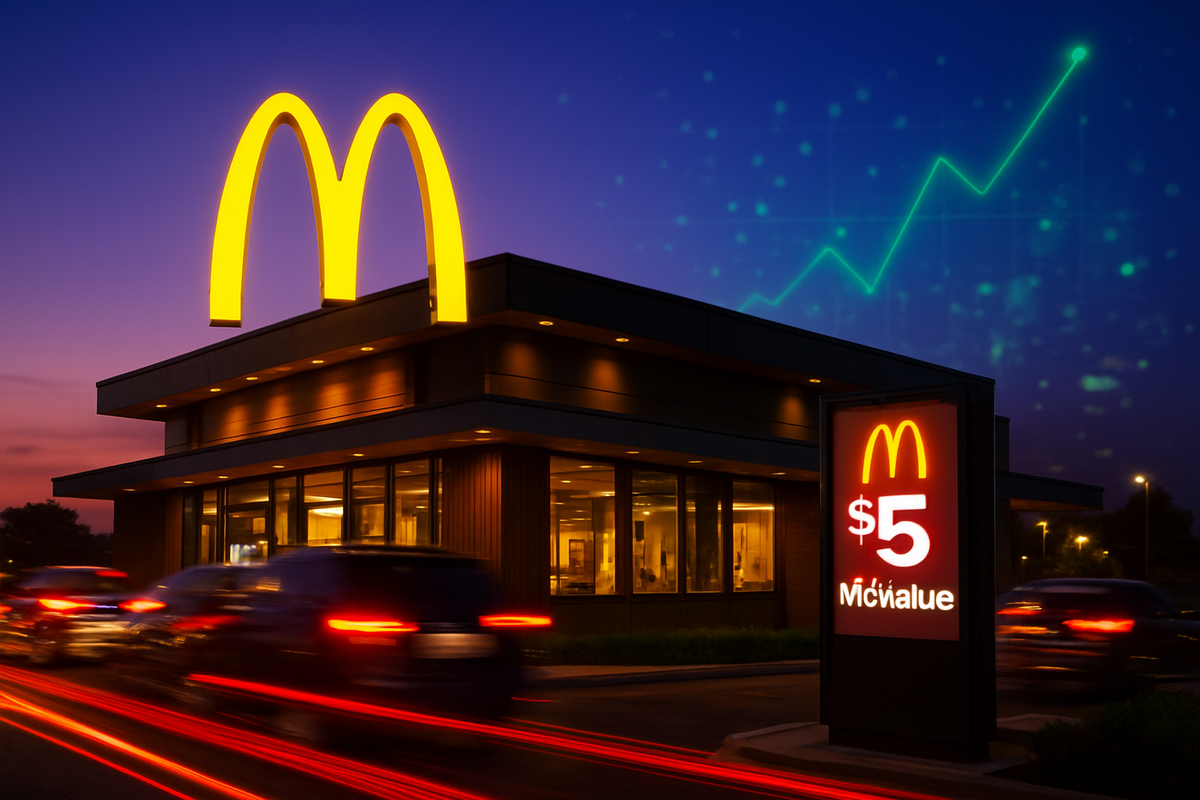
The cornerstone of this quarter’s success was a deliberate, aggressive return to McDonald’s roots as the undisputed leader in affordable dining. Following a period where fast-food prices were criticized for nearing sit-down restaurant levels, CEO Chris Kempczinski doubled down on the "McValue Platform." This digital-first initiative consolidated the company’s deals into a single, accessible hub, most notably extending the popular $5 Meal Deal well into 2025 and early 2026. The strategy successfully recaptured the "low-income" demographic—households earning under $45,000—who had briefly retreated from the brand.
The timeline of this resurgence began in mid-2025 with the high-profile return of the Snack Wrap for $2.99, a move that sparked social media frenzies and boosted afternoon traffic among younger demographics. This was followed by the "Buy One, Add One for $1" promotion, which encouraged higher check averages without alienating budget-conscious patrons. The momentum peaked in December 2025 with the "Grinch Meal" marketing campaign; including collectible merchandise, the promotion resulted in the highest single-day sales in the company’s storied history.
Initial market reactions have been overwhelmingly positive. Shares of McDonald’s (NYSE: MCD) surged over 4% in pre-market trading following the announcement, as investors cheered the company’s ability to drive traffic volume rather than just relying on price hikes. Adjusted earnings per share (EPS) landed at $3.12, beating the $3.05 forecast, providing a clear signal that the company’s operational efficiency is keeping pace with its ambitious discounting strategies.
Winners and Losers in the Value Wars
While McDonald’s basks in Q4 glory, the landscape for its primary competitors is increasingly fractured. Wendy’s (NASDAQ: WEN) appears to be the most significant casualty of the current environment, reporting what analysts described as their "worst quarter in 20 years." With U.S. same-store sales plunging 11.3%, Wendy’s is now entering a defensive retreat, announcing plans to shutter between 300 and 350 underperforming locations in 2026. Despite launching their own "Biggie Deals Menu" in early January, they have struggled to match the marketing muscle and scale of the Golden Arches.
Restaurant Brands International (NYSE: QSR), the parent company of Burger King, managed to navigate the quarter with more resilience, posting a modest 3.1% increase in U.S. same-store sales. Burger King’s success has been largely attributed to its "Reclaim the Flame" modernization program, though management cautioned that beef inflation and "deep discounting" by competitors squeezed franchisee margins by nearly 10% in 2025. Other players in the Quick Service Restaurant (QSR) space, like Yum! Brands (NYSE: YUM), continue to see mixed results, as brands like Taco Bell maintain momentum while KFC faces stiffer competition from McDonald’s revitalized chicken portfolio.
The Bifurcated Consumer and the 'K-Shaped' Recovery
McDonald’s success is a microcosm of a larger "K-shaped" recovery in the American consumer landscape of 2026. While higher-income households continue to spend on premium items, the vast middle-and-lower-income tiers are experiencing "inflation fatigue." With "food away from home" prices rising at nearly 6%—double the rate of grocery store inflation—fast food has lost much of its historical price advantage. McDonald's ability to maintain a 5.7% comp sales beat in this climate suggests that they are effectively "winning the trade-down," capturing customers who might have previously frequented casual dining establishments like Darden Restaurants (NYSE: DRI).
Furthermore, the industry is witnessing a widening "technology moat." McDonald’s reported that its loyalty program has ballooned to 210 million active users, allowing the company to utilize "Agentic AI" for personalized, real-time pricing and automated drive-thru operations. This level of data-driven precision is something that smaller regional chains and struggling national competitors like Wendy’s simply cannot replicate at scale. The regulatory environment has also begun to shift, with several states eyeing "junk food taxes," making McDonald’s "Value Leadership" not just a marketing choice, but a necessary survival tactic against potential policy-driven price increases.
Future Outlook: Expansion and Digital Dominance
Looking ahead to the remainder of 2026, McDonald’s has no plans to decelerate. The company issued aggressive expansion guidance, targeting the opening of 2,600 new restaurants globally this year alone, including 750 in the United States. With a capital expenditure budget of nearly $3.9 billion, the focus remains on "Experience of the Future" layouts that prioritize mobile ordering and delivery—segments that now account for over 40% of total sales in top markets.
Strategic pivots are likely to include an even deeper integration of AI to manage labor costs, which remain a persistent challenge across the service sector. There is also potential for the "CosMc’s" pilot program to move beyond its testing phase into a more prominent national role, targeting the high-margin beverage and snacking market currently dominated by Starbucks (NASDAQ: SBUX). However, the primary challenge will be maintaining franchisee profitability as the "Value Wars" escalate; if beef prices continue to climb, the 15% discounts on "Extra Value Meals" may become harder to sustain without eroding bottom-line margins.
Closing Thoughts and Investor Takeaways
The Q4 2025 earnings report confirms that McDonald’s remains the "gold standard" of the QSR industry. By successfully navigating the "value trap" and leveraging its massive digital ecosystem, the company has proven it can grow even when the consumer's wallet is under pressure. The 10% revenue growth and 5.7% comp sales beat are not just numbers—they are a validation of the company's "DNA" as a price leader.
Moving forward, investors should keep a close eye on the performance of the new U.S. store openings and the continued growth of the digital loyalty program. While the "Value Leadership" strategy has won the battle for Q4, the long-term war will be won through operational efficiency and the successful deployment of AI technology. For now, the Golden Arches are shining brighter than they have in years, casting a long shadow over a competitive field that is struggling to keep up with the pace of the leader.
This content is intended for informational purposes only and is not financial advice.