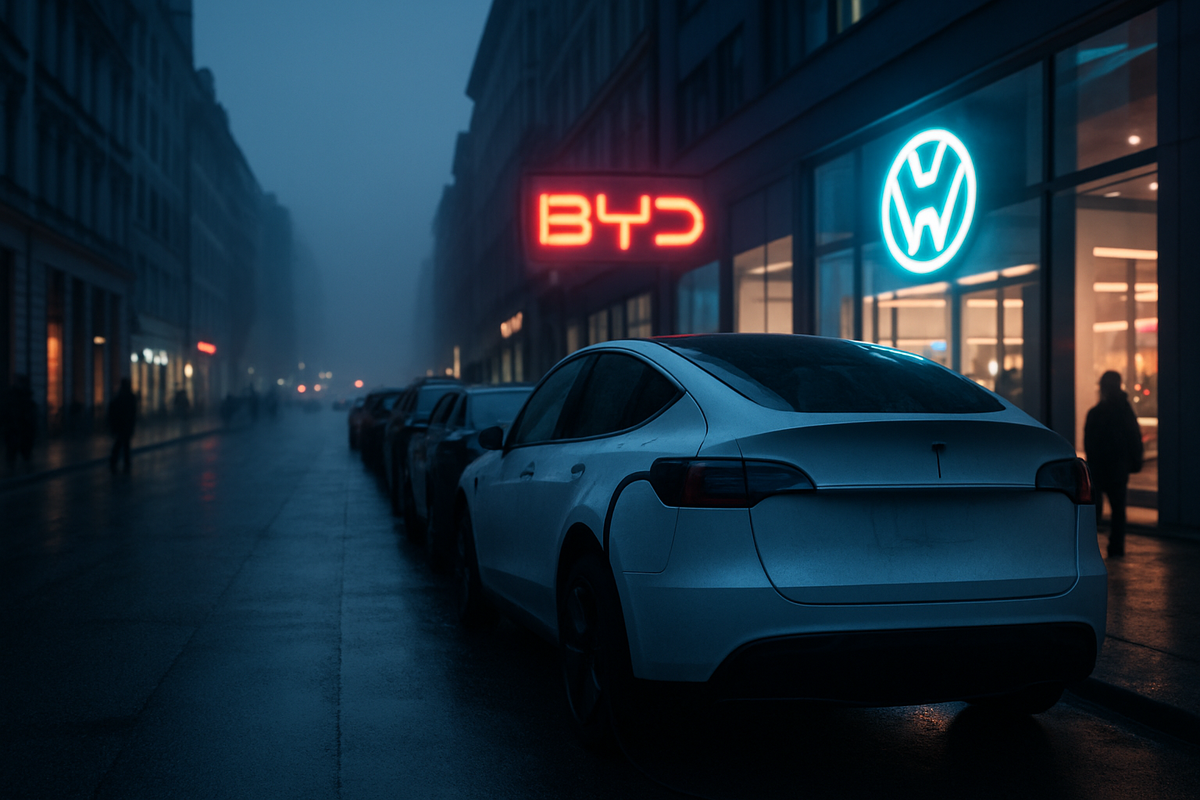
OSLO, Norway — Tesla, Inc. (NASDAQ: TSLA) is facing a historic reckoning in the European theater as registration data for the first quarter of 2026 reveals a catastrophic collapse in demand across its most critical strongholds. Once the undisputed king of the electric vehicle (EV) revolution, the Austin-based automaker is now grappling with a "demand cliff" that has seen registrations vanish by double digits in key markets. The downturn is not merely a cooling of interest but a full-scale retreat, as preliminary data for the quarter shows staggering declines in France, the Netherlands, and Norway, sending shockwaves through the global investment community and raising existential questions about the brand's premium status in Europe.
The immediate implications are stark. The sharp contraction in sales has forced analysts to slash earnings estimates, while the company’s stock price has mirrored the volatility of its sales charts. On January 27, 2026, following the release of the January European Automobile Manufacturers' Association (ACEA) data, Tesla’s shares plummeted 8% in a single trading session. For investors, the European slump is the clearest signal yet that the "growth story" of Tesla as a pure-play automaker may be reaching its plateau, forcing the company into a high-stakes pivot toward artificial intelligence and robotics to justify its valuation.
A Perfect Storm of Policy and Competition
The data coming out of Northern and Western Europe is nothing short of grim for Tesla. In Norway—traditionally the world's most mature EV market and a bellwether for Tesla’s regional health—registrations for the brand fell by a jaw-dropping 88% in January and February 2026 compared to the same period in 2025. This collapse followed the total termination of long-standing EV tax exemptions on January 1, 2026, a policy shift that led to a massive "pull-forward" of sales into late 2025, leaving a vacuum of demand in the new year. Similarly, in the Netherlands, registrations cratered by 67%, despite the lack of a major policy catalyst, suggesting a deeper erosion of consumer interest.
The situation in France is equally alarming, with registrations down 42% in the first weeks of the quarter. This decline is attributed in part to the French government’s "lifecycle carbon" subsidies, which prioritize vehicles with low production and shipping emissions. These rules have effectively penalized Tesla’s Shanghai-manufactured imports and even raised questions about the carbon footprint of battery packs used in Giga Berlin. This trend marks the culmination of a multi-year slide; Tesla’s European market share has halved from 11.1% in 2024 to a projected 6% in 2026, as the Volkswagen Group (OTC: VWAGY) officially surpassed Tesla as the region’s largest EV seller in 2025.
Winners and Losers in the New European Order
The primary beneficiaries of Tesla’s European retreat are the aggressive Chinese manufacturers and resurgent European legacy brands. BYD (OTC: BYDDY) has emerged as the most significant threat, with its registrations in Germany jumping tenfold at the start of 2026. By offering a diverse lineup ranging from the budget-friendly Dolphin to high-end SUVs, BYD has successfully undercut Tesla on price while offering more modern interiors and tech features. In Spain, BYD captured a 13.6% market share in January, ranking as the top EV brand while Tesla fell to fourth place. Other winners include MG (owned by SAIC Motor), which has successfully positioned itself as the "affordable premium" alternative for European families.
On the legacy front, the Volkswagen Group and BMW (OTC: BMWYY) have successfully capitalized on a growing "Elon effect" backlash. Market research indicates that some European buyers have become wary of the Tesla brand due to CEO Elon Musk’s polarizing political commentary and public disputes. This has benefited "neutral" luxury brands like Audi and BMW, which have seen a resurgence in their EV registration numbers as traditional luxury buyers return to heritage brands. Tesla remains the primary loser in this shift, as its aging fleet—the Model 3 and Model Y—struggles to compete with a deluge of over 40 new EV models launched by competitors in the last 18 months.
A Crisis of Identity and Overcapacity
The European slump highlights a broader industry trend where the "first mover advantage" is being neutralized by infrastructure maturity and price wars. Tesla’s Giga Berlin facility, designed to be the heart of its European dominance, is now a symbol of the company's overcapacity crisis. Capable of producing over 375,000 Model Ys annually, the factory is currently operating well below capacity as demand fails to meet output. Labor tensions have exacerbated the issue, with the IG Metall union gaining significant leverage as workers express concern over potential layoffs and the company’s pivot away from traditional automotive manufacturing.
Furthermore, the European market is increasingly becoming a fortress of regulation. The shift toward "lifecycle carbon" scores in France and the potential for similar EU-wide tariffs on Chinese-made EVs have complicated Tesla's logistics. While Tesla does produce cars in Germany, many of its battery components and higher-end models still originate from China or the U.S., making them vulnerable to shifting geopolitical tides. This regulatory environment is favoring regional champions who can prove a domestic, low-carbon supply chain—a metric where Tesla, despite its mission, is currently falling behind its more localized European rivals.
The Robotics Pivot: Tesla’s New Frontier
Looking ahead, Tesla appears to be preparing for a radical strategic pivot to offset its automotive stagnation. During the Q4 earnings call on January 28, 2026, Musk announced a dramatic shift in focus, revealing plans to discontinue production of the aging Model S and Model X to repurpose factory space for the production of the Optimus humanoid robot. This "all-in" bet on AI and robotics is designed to transform Tesla from a car company with declining margins into a software and robotics powerhouse. Short-term, this will likely lead to further revenue volatility as the company exits established product lines to chase unproven tech.
In the long term, Tesla’s survival in Europe may depend on the regulatory approval of its Full Self-Driving (FSD) software. There is cautious optimism regarding a pilot program for FSD in the Netherlands, which could serve as a gateway for a wider European rollout. If Tesla can successfully monetize its software stack through subscriptions or licensing to other manufacturers, the sales slump of its hardware may become secondary. However, the path to such a "software-first" future is fraught with regulatory hurdles in the EU’s strict safety and privacy environment, and competitors are already catching up with their own autonomous driving suites.
Navigating the European Demand Cliff
The first quarter of 2026 will likely be remembered as the moment the "Tesla Aura" finally dimmed in Europe. The double-digit declines in France, the Netherlands, and Norway represent more than just a bad quarter; they signify a fundamental shift in consumer behavior and market structure. The combination of intense competition from BYD, the loss of government subsidies, and a tarnished brand image has created a formidable barrier to the growth levels investors once took for granted. The market is no longer just buying "the future"—it is buying the best value, and currently, that value is being found elsewhere.
For investors, the coming months will be a period of intense scrutiny. The primary focus will shift from quarterly delivery numbers to the progress of the Optimus program and the margins of the newly launched "low-cost" Model Y variant. While bulls like Morgan Stanley maintain high price targets based on Tesla’s AI potential, bears at JPMorgan point to a forecast of zero free cash flow for the next two years. As Tesla attempts to navigate this demand cliff, the market will be watching to see if the company can truly reinvent itself as a robotics titan, or if it will simply become another legacy automaker struggling to keep its headlights on in a crowded field.
This content is intended for informational purposes only and is not financial advice.