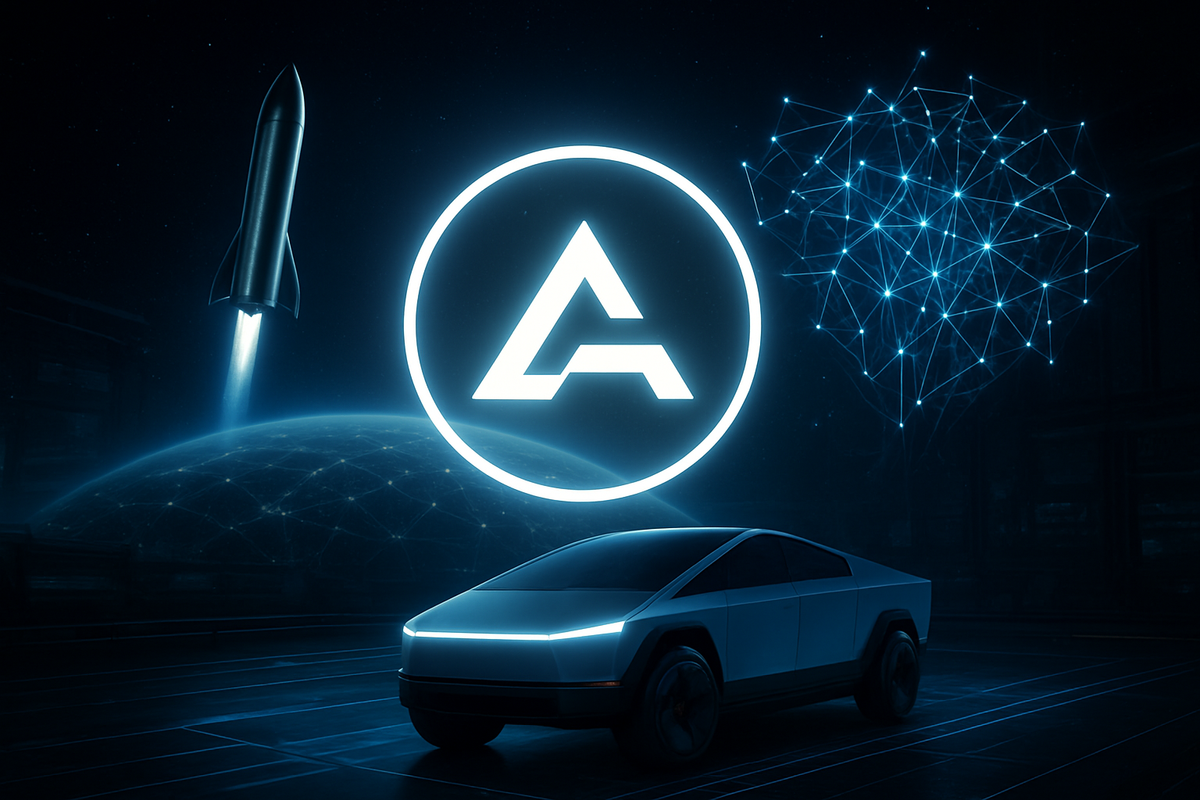
AUSTIN, TX — In a move that could redefine the global technology and aerospace landscape, reports have surfaced that Elon Musk is considering a massive corporate consolidation, potentially merging the private aerospace giant SpaceX with either Tesla (NASDAQ: TSLA) or his rapidly growing AI startup, xAI. The rumors, which reached a fever pitch in late January 2026, suggest Musk is looking to unify his disparate ventures into a single "everything company" to streamline capital and accelerate the development of "Physical AI."
This potential shift comes at a critical juncture for Musk’s empire. As Tesla faces its first annual revenue decline amidst fierce competition in the electric vehicle sector, SpaceX is reportedly gearing up for a historic initial public offering (IPO) in mid-2026 with a staggering target valuation of $1.5 trillion. A merger could serve as the ultimate catalyst for this flotation, branding the combined entity not just as a rocket company or an automaker, but as a dominant "orbital utility" providing AI, connectivity, and infrastructure from space.
The "Musk Metropolis": Inside the Merger Rumors
The speculation intensified following the discovery of two new corporate entities, "K2 Merger Sub Inc." and "K2 Merger Sub 2 LLC," registered in Nevada on January 21, 2026. These filings list Bret Johnsen, the Chief Financial Officer of SpaceX, as their sole officer—a classic hallmark of a pending acquisition or stock-for-stock swap. While Musk has historically kept his ventures separate to mitigate cross-company risk, his recent rhetoric at the 2026 World Economic Forum in Davos hinted at a change in philosophy. Musk noted that "the economics of AI favor high-altitude or orbital compute," suggesting that xAI’s large language models could soon be hosted on Starlink satellites to solve the energy and cooling constraints currently plaguing terrestrial data centers.
The timeline leading to this moment has been marked by increasing financial entanglement between Musk's firms. In late 2025, both Tesla and SpaceX reportedly contributed $2 billion each to xAI’s Series E funding round, creating a complex web of cross-ownership. Industry insiders suggest that Musk, feeling "spread too thin" across six major companies, views consolidation as a way to formalize these relationships. A merger would allow Tesla’s upcoming "Cybercab" robotaxi fleet and its Optimus humanoid robots to utilize Starlink’s global low-latency connectivity and xAI’s advanced reasoning capabilities natively, creating a vertically integrated ecosystem that no competitor could easily replicate.
Winners and Losers: A High-Stakes Financial Gamble
The primary winner in this consolidation could be Tesla (NASDAQ: TSLA), which has seen its identity as an EV manufacturer under pressure from Chinese rival BYD. By merging with or acquiring a stake in SpaceX and xAI, Tesla could pivot its market narrative entirely toward "Physical AI." Following the initial reports, TSLA shares surged 4.5% as investors bet that the "SpaceX halo" would revive the stock’s premium valuation. Long-term bulls argue that the integration of orbital data centers could provide the massive compute power needed for Tesla’s Full Self-Driving (FSD) software to finally achieve global Level 5 autonomy.
However, the potential "losers" in this scenario include institutional investors wary of governance risks. Critics point to the 2016 acquisition of SolarCity as a cautionary tale, fearing that a merger might be used as a "bailout" mechanism to funnel SpaceX’s cash flow from Starlink into Tesla’s capital-intensive AI projects. Furthermore, retail investors may face a "conglomerate discount" where the sheer complexity of the new entity makes it difficult for the market to value each component accurately. Competitors in the satellite internet sector, such as Amazon (NASDAQ: AMZN) with Project Kuiper, could also find themselves sidelined if the SpaceX-xAI-Tesla triad achieves a monopoly on space-based AI services.
A New Frontier in Industrial Consolidation
This event fits into a broader industry trend where technology is no longer confined to specific sectors like "automotive" or "software." Instead, we are entering an era of "sovereign tech stacks" where companies own everything from the raw materials to the satellite-based compute. If Musk succeeds, he will have created a precedent for the first truly global infrastructure company—one that operates beyond the reach of terrestrial energy grids and traditional telecommunications.
Comparisons are already being drawn to the industrial trusts of the early 20th century, but with a 21st-century digital twist. Regulatory implications are looming large, as the Federal Trade Commission (FTC) and Department of Justice (DOJ) may view such a massive consolidation of space, transport, and AI assets as a threat to competition. The move would likely trigger unprecedented antitrust scrutiny, particularly regarding how Starlink's dominance in the satellite market could give an unfair advantage to Tesla's autonomous vehicles and xAI's software.
The Road Ahead: April Milestones and the June IPO
The short-term focus for the market will be the upcoming launch of the Tesla "Cybercab" in April 2026. This event is widely seen as a "prove-it" moment for Musk's AI strategy. If the robotaxi demonstrates a seamless integration with xAI's "Grok" and Starlink connectivity, it will provide a powerful proof of concept for the merger. Conversely, any delay or technical failure could dampen enthusiasm for the SpaceX IPO and lead to a significant correction in Tesla’s stock price as the "merger premium" evaporates.
Looking further ahead, the proposed SpaceX IPO in June 2026 remains the "North Star" for this strategy. Analysts expect the flotation to occur on or around June 28, 2026, coinciding with Musk’s 55th birthday. The goal is to raise between $50 billion and $100 billion, capital that would be used to fund the first human missions to Mars. By merging with xAI or Tesla beforehand, Musk could present a unified "X Holdings" to the public, potentially achieving the $1.5 trillion valuation he seeks by convincing the market that they are buying into the future of human civilization, not just a rocket company.
Closing Assessment: The Birth of the Musk Metropolis
The reports of a SpaceX-Tesla-xAI merger represent more than just a corporate restructuring; they signal the birth of a unified industrial ecosystem designed for the next century. For investors, the takeaway is clear: Tesla is no longer just a car company, and SpaceX is no longer just a launch provider. They are the two halves of a singular vision for "Physical AI" and orbital infrastructure.
Moving forward, the market will be highly sensitive to any official confirmation from the "K2" merger entities or further statements from Musk. Investors should watch for the April Robotaxi reveal as the first major hurdle, followed by any regulatory filings that outline the specific terms of the consolidation. While the risks of self-dealing and "conglomerate bloat" are real, the potential for a $1.5 trillion "super-conglomerate" remains one of the most compelling—and controversial—financial stories of the decade.
This content is intended for informational purposes only and is not financial advice.