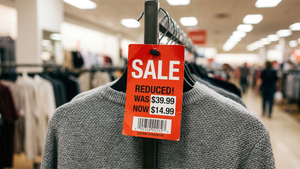
The American consumer has once again proven to be the engine of the domestic economy, as recently released data for November 2025 reveals a retail sector that is far more robust than analysts had initially feared. According to the delayed report from the U.S. Census Bureau, retail sales rose by 0.6% in November, significantly outpacing the 0.4% growth forecasted by Wall Street economists. This surge is particularly notable given the backdrop of economic uncertainty that characterized the final quarter of 2025.
The immediate implications of this "beat" are twofold: it signals a high level of consumer confidence leading into the critical holiday shopping season and complicates the Federal Reserve’s path toward potential interest rate cuts in early 2026. As the market digests these figures, the narrative has shifted from fears of a looming recession to concerns that a "hot" economy might keep inflation sticky, forcing the central bank to maintain higher borrowing costs for longer.
A Delayed Revelation: The November Comeback
The release of the November retail figures was uniquely delayed until mid-January 2026 due to a historic 43-day federal government shutdown that paralyzed data collection agencies from October 1 through November 12, 2025. During this period, investors were essentially "flying blind," relying on private-sector data and anecdotal evidence to gauge the health of the economy. When the official figures finally arrived, they depicted a sharp reversal from October, which saw a revised contraction of 0.1%.
The 0.6% gain was driven by broad-based spending across several key categories. Discretionary spending, often the first to be cut during times of economic stress, showed surprising strength. Sporting goods and hobby stores recorded a 1.9% surge, while clothing and accessory stores grew by 0.9%. Non-store retailers, primarily consisting of e-commerce giants, continued their multi-year dominance with a 7.2% year-over-year increase. Total retail volume for the month reached an estimated $735.9 billion, a record high that underscored the consumer's willingness to spend despite persistent price pressures.
Key stakeholders, including major retailers and credit card processors, have noted that the spending was not uniform across all demographics. While the headline number suggests a booming market, internal data indicates that the growth was heavily supported by high-income households. This "K-shaped" consumer behavior has become a defining characteristic of the post-shutdown landscape, where affluent shoppers continue to spend on luxuries and hobbies, while lower-income brackets prioritize essentials.
Market Winners and Losers in the Retail Rally
The surge in November sales created a clear divergence among the titans of the retail industry. Amazon.com, Inc. (NASDAQ: AMZN) emerged as a primary beneficiary of the 7.2% jump in non-store retail activity. Analysts have pointed to Amazon’s logistical dominance and early holiday promotions as key drivers that allowed it to capture a massive share of the November surge. The stock reached a peak of $254 in late 2025, and despite broader market volatility in early 2026, it remains a favorite among institutional investors with price targets extending toward the $300 mark.
On the brick-and-mortar side, Walmart Inc. (NYSE: WMT) demonstrated its role as a defensive powerhouse. Walmart’s third-quarter earnings, reported in late November, beat expectations as the company benefited from "trade-down" traffic—affluent shoppers moving from specialty grocers to Walmart for better value. However, the outlook for WMT in early 2026 has been tempered by management’s cautious guidance regarding potential new tariffs, which led to a 7-8% sell-off in early January as investors worried about rising import costs.
Conversely, Target Corporation (NYSE: TGT) has faced a more uphill battle. While Target managed to beat earnings estimates in November, its revenue missed expectations and comparable store sales fell by 2.7%. Target’s heavy reliance on discretionary goods, such as home decor and electronics, made it more vulnerable to the shift in consumer spending habits compared to Walmart’s grocery-heavy mix. Analysts currently view Target as a "cautionary tale" within the sector, struggling to maintain foot traffic as consumers become increasingly price-sensitive in non-essential categories.
The Broader Economic Significance and Fed Policy
The robust November performance has forced a major recalibration of the U.S. economic outlook. Prior to this data, many analysts were calling for a "soft landing" or even a mild recession in early 2026. However, the strength of the consumer led the Atlanta Fed to upwardly revise its fourth-quarter GDP growth forecast to a staggering 5.1% annualized rate. This level of growth, while positive for corporate earnings, poses a significant challenge for the Federal Reserve.
The "good news is bad news" paradox is currently in full effect. With consumer demand remaining high and the Producer Price Index (PPI) showing signs of firming up, the Fed is facing a "hawkish pause." As of late January 2026, the CME FedWatch Tool shows a 95% likelihood that the central bank will hold interest rates steady. The hope for early 2026 rate cuts has largely evaporated, with major institutions like J.P. Morgan now predicting that the federal funds rate will remain in the 3.5%–3.75% range for the foreseeable future.
Historically, this period draws comparisons to the post-pandemic recovery, where massive stimulus and pent-up demand led to prolonged inflationary cycles. The 2025 government shutdown served as a temporary cooling agent, but the November data suggests that the underlying demand was merely deferred rather than destroyed. This creates a ripple effect across the banking sector, where lenders like JPMorgan Chase & Co. (NYSE: JPM) must balance high interest income from loans against the rising risk of consumer defaults if the "K-shaped" recovery leaves lower-income households too far behind.
What Lies Ahead: Strategic Pivots and Scenarios
Moving into the remainder of 2026, retailers and investors alike must prepare for a landscape defined by volatility and strategic adaptation. The "wait-and-see" approach that characterized the shutdown period is being replaced by a race to secure supply chains. With the looming threat of new trade tariffs and persistent labor shortages, companies like The Home Depot, Inc. (NYSE: HD) and Lowe's Companies, Inc. (NYSE: LOW) are reportedly front-loading inventory to mitigate potential price hikes later in the year.
The short-term possibility remains that the holiday momentum will carry through the first quarter of 2026, providing a buffer for the economy. However, a potential scenario of "stagflation lite" exists—where growth slows but inflation remains above the Fed's 2% target. In this environment, market opportunities will likely favor "value" retailers and e-commerce platforms that can leverage artificial intelligence to optimize pricing and logistics.
Investors should watch for the February retail sales report, which will provide the first look at whether the November surge was a temporary "pop" following the shutdown or the start of a sustained trend. Any signs of a cooling labor market or a sharp decline in consumer credit availability could signal that the consumer's resilience is finally beginning to fray under the weight of sustained high interest rates.
Conclusion: A Market in Transition
The November retail sales report of a 0.6% increase has served as a wake-up call for the financial markets, proving that the American consumer is not yet ready to retreat. While the data has bolstered GDP expectations and provided a lifeline to e-commerce and discount retail giants, it has also complicated the inflation narrative and delayed the prospect of monetary relief from the Federal Reserve.
Moving forward, the market is likely to remain in a state of flux as it balances strong corporate earnings against the reality of "higher-for-longer" interest rates. The performance of stocks like Amazon and Walmart indicates that there is still growth to be found, but the struggles of Target and other discretionary-heavy retailers highlight the deepening divide in the consumer landscape.
For investors, the coming months will require a discerning eye. The key takeaways from the November surge are clear: demand is resilient, but it is also increasingly concentrated and sensitive to price. Watching for shifts in the "K-shaped" recovery and the Fed's reaction to upcoming inflation data will be essential for navigating the complex market of 2026.
This content is intended for informational purposes only and is not financial advice.