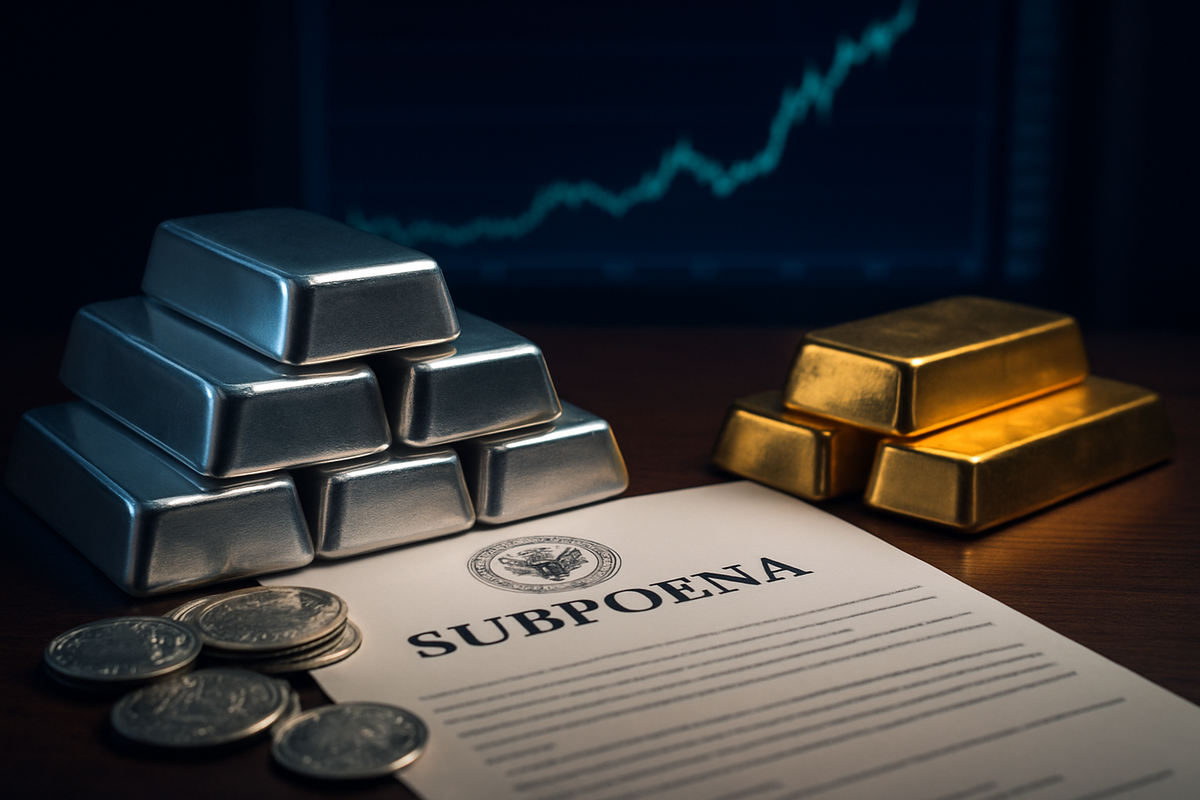
The global commodities market witnessed a historic upheaval on January 12, 2026, as silver prices skyrocketed by more than 5%, breaching the psychological barrier of $85 per ounce for the first time in history. This aggressive rally, which saw silver significantly outperform its yellow counterpart, gold, was triggered by a confluence of geopolitical instability and a direct legal challenge to the autonomy of the U.S. Federal Reserve. As investors scrambled for safe-haven assets, the "white metal" cemented its status as the premier hedge against both inflation and institutional instability.
The immediate implications of this surge are profound. In international spot markets, silver touched a peak of $85.49 per ounce, marking a staggering 14% gain in the first nine trading days of the year. In India, the Multi Commodity Exchange (MCX) witnessed unprecedented volatility, with silver contracts for March 2026 delivery surging by over ₹11,000 to reach a lifetime high of ₹2,68,257 per kg. This price action reflects a massive rotation of capital out of traditional fiat-denominated assets and into hard commodities, as the credibility of the U.S. dollar faces its sternest test in decades.
A Perfect Storm: Subpoenas, Scandals, and the Fed’s Independence
The primary catalyst for the January 12 volatility was the bombshell confirmation from Fed Chair Jerome Powell that the Department of Justice (DOJ) had served grand jury subpoenas on the central bank. The investigation centers on a controversial $2.5 billion renovation of two Federal Reserve office buildings—a project that has been a frequent target of political criticism since mid-2025. Market participants, however, view the subpoenas not as a simple audit of construction costs, but as a strategic maneuver by the executive branch to exert control over monetary policy.
The timeline leading to this crisis began in June 2025, when Powell’s testimony regarding the Fed’s spending was first challenged by Congressional leaders. By late 2025, the rhetoric had escalated, with public demands for the Fed to align its interest rate decisions with executive economic goals. The issuance of criminal subpoenas on the morning of January 12 sent shockwaves through the financial system, as the prospect of a politicized Federal Reserve led to a sharp decline in the U.S. Dollar Index (DXY), which slipped toward the 98.7 level. This institutional risk premium has forced investors to reconsider the "risk-free" status of U.S. Treasuries, driving them toward the iShares Silver Trust (NYSEARCA: SLV) and physical bullion.
Winners and Losers in the Precious Metals Frenzy
The primary beneficiaries of this price explosion are the major silver mining and streaming entities. Pan American Silver (NASDAQ: PAAS) and First Majestic Silver (NYSE: AG) saw their share prices surge in pre-market trading, as their margins expanded overnight. First Majestic, often considered a "pure-play" on silver, stands to gain the most from the compression of the gold-to-silver ratio, which has dropped to 56:1. Similarly, Wheaton Precious Metals (NYSE: WPM), a leading streaming giant, is positioned to reap massive rewards from its fixed-cost contracts as spot prices soar.
In the Indian market, Hindustan Zinc (NSE: HINDZINC), the country's only integrated silver producer and the world's third-largest, is expected to see a significant boost in its quarterly earnings. Conversely, the industrial sector faces a daunting challenge. With over 58% of silver demand now driven by high-tech industries, companies in the solar energy and electric vehicle (EV) sectors may face supply chain headwinds. The rising cost of silver—a critical component in photovoltaic cells and AI hardware—could squeeze the margins of green energy firms and technology manufacturers who have not sufficiently hedged their commodity exposure.
Geopolitics and the New Monetary Reality
This event fits into a broader trend of "de-dollarization" and the search for "neutral" assets. The silver rally is not happening in a vacuum; it is being amplified by intensifying unrest in Iran and the escalating military presence of the UK and Germany in Greenland, which has heightened Arctic security concerns. These geopolitical flashpoints, combined with the Fed’s legal woes, have created a "fear trade" that transcends traditional economic indicators.
Historically, silver has acted as a high-beta version of gold, but the 2026 rally is unique due to the structural supply deficit in the silver market. Unlike the Hunt Brothers' attempt to corner the market in 1980, the current surge is driven by a genuine scarcity of physical metal and a breakdown in institutional trust. The legal pressure on the Fed represents a historical precedent where the independence of the world's most powerful central bank is being openly challenged by the judiciary, creating a level of domestic political risk that hasn't been seen in the U.S. since the 1970s.
The Road to $100: What Lies Ahead
In the short term, the market will remain hyper-sensitive to any updates regarding the DOJ’s probe into the Federal Reserve. If the investigation leads to further executive interference or a change in the Fed’s leadership, silver could easily target the $100 per ounce mark before the end of the first quarter. Strategically, mining companies may look to accelerate production at dormant sites, though the lag time in mining operations means that supply is unlikely to catch up with demand in the immediate future.
Market opportunities are also emerging in the "silver-to-gold" arbitrage space. As the ratio continues to narrow, institutional investors may pivot their strategies to balance their precious metals portfolios. However, the risk of a "liquidity crunch" remains; if the dollar experiences a sudden, violent rebound due to a global flight to cash, even silver could see a temporary, sharp correction before continuing its long-term upward trajectory.
Summary and Investor Outlook
The events of January 12, 2026, mark a turning point for the global economy. Silver's 5% jump is more than just a price movement; it is a symptom of a deeper crisis in institutional confidence and a reflection of the metal's critical role in the modern industrial economy. The key takeaways for investors are clear: the era of low volatility in precious metals is over, and the "institutional risk premium" is now a permanent fixture of the market landscape.
Moving forward, the market will be watching the Fed’s response to the DOJ subpoenas and the upcoming December jobs data revisions. If the U.S. economy shows further signs of cooling while the central bank remains under legal siege, the flight to silver will likely intensify. For now, the "white metal" remains the ultimate barometer of global anxiety, and its journey toward triple digits seems increasingly inevitable.
This content is intended for informational purposes only and is not financial advice.