TOKYO/SAN FRANCISCO — In a move that has sent shockwaves through the global financial and technology sectors, SoftBank Group Corp. (TSE:9984) has officially completed its monumental $40 billion investment in OpenAI. Finalized in the closing days of December 2025, the deal represents the largest private equity injection into an artificial intelligence company to date, effectively valuing the creator of ChatGPT at a staggering $300 billion post-money valuation and signaling a new era of "Artificial Super Intelligence" (ASI) development.
The completion of this capital infusion marks the culmination of a year-long strategic pivot by SoftBank’s founder, Masayoshi Son, who has liquidated significant portions of his portfolio to fund this singular vision. The investment is expected to provide OpenAI with the necessary "war chest" to pursue its ambitious "Project Stargate"—a $500 billion infrastructure initiative aimed at building the world’s most advanced AI data centers. As the ink dries on the final $22 billion tranche, the market is bracing for a fundamental realignment of power among the "Magnificent Seven" and the broader AI ecosystem.
The Road to $40 Billion: Restructuring and Resolve
The path to this historic deal was paved by a series of complex corporate maneuvers and a radical shift in OpenAI’s foundational structure. Throughout 2025, the investment was executed in three distinct tranches, but the finalization was contingent upon OpenAI’s transition from a non-profit-controlled entity to a for-profit Public Benefit Corporation (PBC). This restructuring, completed in October 2025, was a non-negotiable demand from SoftBank Group Corp. (TSE:9984) to ensure long-term fiduciary clarity and to facilitate a potential $1 trillion initial public offering (IPO) rumored for 2026.
Masayoshi Son’s commitment to the deal has been described by insiders as a "bet the company" maneuver. To raise the necessary liquidity, Son made the high-stakes decision to sell SoftBank’s entire $5.8 billion stake in NVIDIA (NASDAQ: NVDA) and offload $9.1 billion in T-Mobile US (NASDAQ: TMUS) shares. During a Tokyo investment forum earlier this month, Son admitted to the emotional weight of divesting from NVIDIA but emphasized that the future of intelligence required a direct stake in the models themselves, rather than just the hardware. The deal was further bolstered by a $10 billion syndication to a group of co-investors, including Thrive Capital and Altimeter Capital, solidifying a broad coalition of Silicon Valley heavyweights behind the SoftBank-led charge.
Winners, Losers, and the Shifting Balance of Power
The primary winner in this transaction is undoubtedly OpenAI, which now possesses the capital to reduce its perceived "exclusive" reliance on Microsoft (NASDAQ: MSFT). While Microsoft participated in the current round to maintain its 27% stake, analysts suggest a "strain in the bromance" as OpenAI moves to diversify its compute providers. By partnering with Oracle (NYSE: ORCL) for data center capacity and pursuing custom silicon with Broadcom (NASDAQ: AVGO), OpenAI is asserting its independence from the Microsoft Azure ecosystem. Oracle, in particular, has emerged as a major beneficiary, with its shares surging on the news of its involvement in the $500 billion "Project Stargate" infrastructure build-out.
Conversely, NVIDIA (NASDAQ: NVDA) faced immediate market pressure, with its stock dipping 3% following the confirmation of SoftBank’s total exit. However, the chip giant is not sitting idly by; reports suggest NVIDIA is preparing a counter-move, potentially seeking to invest up to $100 billion directly in AI infrastructure to secure its role as the primary hardware provider for the next generation of OpenAI models. Meanwhile, competitors like Alphabet Inc. (NASDAQ: GOOGL) and Meta Platforms (NASDAQ: META) are now forced to accelerate their own capital expenditure plans to keep pace with the SoftBank-OpenAI juggernaut, leading to concerns about an escalating "AI arms race" that could squeeze margins across the sector.
A New Paradigm: The "Stargate" Significance
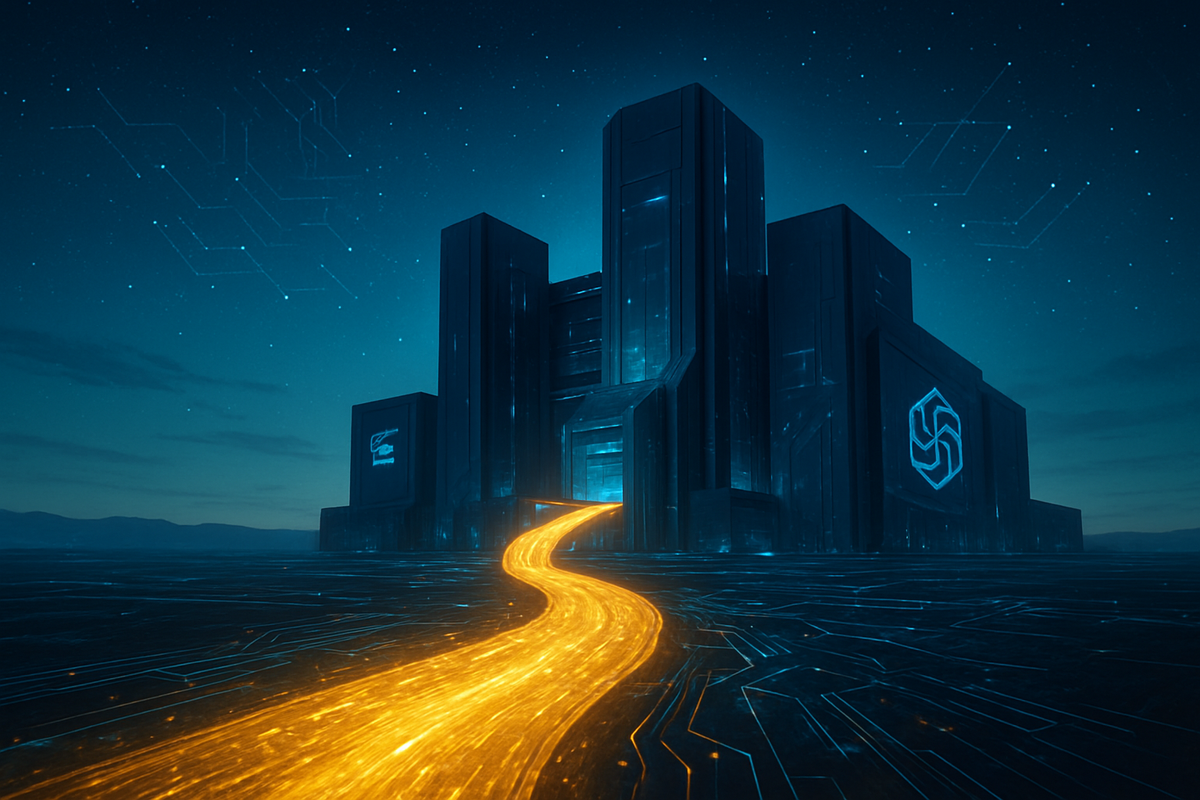
Beyond the sheer dollar amount, this investment signifies a shift in the AI industry from software-centric development to massive-scale physical infrastructure. The "Project Stargate" initiative, which SoftBank Group Corp. (TSE:9984) is now a lead financier of, aims to construct 10-gigawatt AI data centers across the United States and Japan. This move reflects a growing consensus that the path to Artificial Super Intelligence requires energy and compute resources on a scale previously reserved for national infrastructure projects. It also highlights the emergence of "Sovereign AI," as SoftBank leverages its Japanese roots to position OpenAI as a critical partner for national security and economic productivity in the Pacific.
However, the scale of the deal has also reignited fears of an "AI bubble." Critics point to the "circular funding loops" where major tech players invest in their own customers or partners to inflate valuations. The jump in OpenAI’s internal valuation—from $260 billion to nearly $500 billion in secondary markets within a single year—has drawn comparisons to the dot-com era. Regulators in both the U.S. and the EU are reportedly monitoring the deal closely, concerned that the concentration of capital and compute power could create a duopoly that stifles smaller innovators and raises antitrust concerns.
What Comes Next: The Path to a $1 Trillion IPO
In the short term, the market will be watching for the first "Stargate" groundbreakings and the performance of OpenAI’s next-generation models, which are expected to utilize the newly secured capital. The strategic partnership with DigitalBridge (NYSE: DBRG), which SoftBank recently acquired for $4 billion, will be crucial in securing the physical real estate and power permits required for these massive data centers. Investors should also keep a close eye on Apple (NASDAQ: AAPL) and Amazon (NASDAQ: AMZN); the latter is rumored to be in talks for a $10 billion to $50 billion stake in OpenAI to counter SoftBank’s influence and secure its own position in the generative AI landscape.
Longer-term, the focus will shift toward the 2026 IPO. If OpenAI can demonstrate a clear path to profitability as a Public Benefit Corporation while maintaining its lead in AGI research, it could become the first company to debut with a trillion-dollar valuation. However, the challenge will be managing the immense energy requirements and regulatory hurdles associated with "Project Stargate." Any delays in infrastructure deployment or a slowdown in model performance gains could quickly turn the current enthusiasm into a market correction.
Closing Thoughts: A Market Transformed
The completion of SoftBank’s $40 billion investment in OpenAI is more than just a financial transaction; it is a declaration of intent for the next decade of technological evolution. Masayoshi Son has once again placed a massive, high-conviction bet that could either cement his legacy as the greatest visionary in tech history or serve as a cautionary tale of late-cycle exuberance. For the broader market, the deal underscores the reality that AI is no longer a niche sector but the primary engine of global capital allocation.
Investors should move forward with a mix of optimism and caution. While the potential for ASI offers unprecedented upside, the sheer scale of the capital involved creates systemic risks. In the coming months, the key metrics to watch will be OpenAI’s revenue growth from enterprise services, the progress of the Broadcom (NASDAQ: AVGO) chip partnership, and any shifts in the regulatory landscape that could impede the "Stargate" vision. For now, the AI gold rush has its primary financier, and the stakes have never been higher.
This content is intended for informational purposes only and is not financial advice.