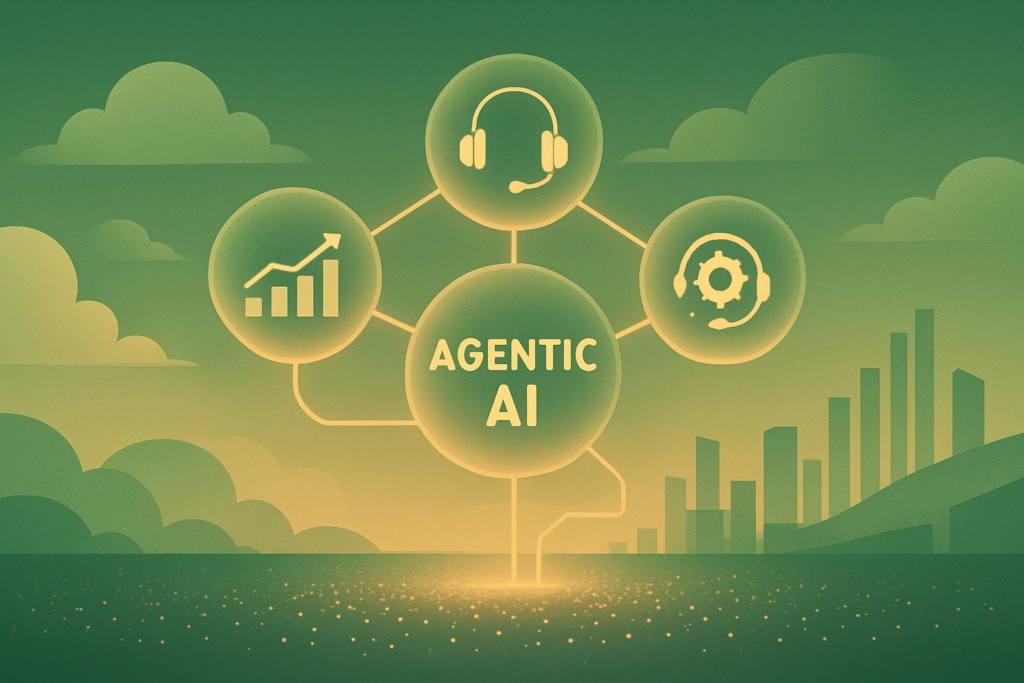
As of February 26, 2026, Salesforce Inc. (NYSE: CRM) stands at one of the most critical junctures in its 27-year history. The pioneer of the "Software as a Service" (SaaS) movement is attempting to disrupt itself before its competitors or the rapid evolution of artificial intelligence can do it first. While the company recently posted record-high operating margins, a mixed earnings outlook for the 2027 fiscal year has left investors weighing the reality of slowing "seat-based" growth against the blue-sky potential of "Agentic AI." Salesforce is no longer just selling a database for salespeople; it is positioning itself as the primary orchestrator of autonomous digital labor through its "Agentforce" platform.
Historical Background
Founded in 1999 by former Oracle executive Marc Benioff, Salesforce famously launched with the "End of Software" campaign, signaling the death of on-premise installations in favor of the cloud. Over the next two decades, the company evolved from a simple Customer Relationship Management (CRM) tool into a sprawling enterprise ecosystem. Key transformations were fueled by massive acquisitions: the $6.5 billion purchase of MuleSoft (2018) for data integration, the $15.7 billion acquisition of Tableau (2019) for analytics, and the $27.7 billion acquisition of Slack (2021) for collaboration. By 2024, the narrative shifted again as the "GenAI" craze forced Salesforce to pivot from assisting users (Copilots) to replacing tasks entirely (Agents).
Business Model
Salesforce’s business model is primarily subscription-based, organized into "Clouds"—Sales, Service, Marketing, and Commerce. Historically, revenue was driven by "seat-based" pricing: the more employees a customer had using the software, the more Salesforce made. However, in late 2024 and throughout 2025, the company began transitioning toward a "Consumption-Plus" model. This includes the Agentic Enterprise License Agreement (AELA), which blends traditional seat licenses with "Flex Credits" used to pay for autonomous AI agents. This model aims to capture the value of "digital labor," charging customers for the work an AI agent completes (e.g., resolving a customer service ticket) rather than just the human’s access to the tool.
Stock Performance Overview
The stock performance of CRM has been a journey of extreme cycles.
- 1-Year: Over the past twelve months, the stock has traded in a volatile range, up roughly 12%, trailing the broader AI-driven gains of the Nasdaq.
- 5-Year: Looking back to 2021, the stock has faced a recovery arc. After peaking during the pandemic and crashing in late 2022 due to slowing growth and activist investor pressure, it has climbed back as margins improved from the low 20s to the mid-30s.
- 10-Year: For long-term holders, Salesforce has been a juggernaut, delivering over 400% returns as it became the dominant force in enterprise software, though the "hyper-growth" phase of 20-30% annual revenue increases has clearly transitioned into a more mature 9-11% phase.
Financial Performance
In its most recent earnings report, Salesforce delivered a complex set of numbers. Revenue for the fiscal year ending January 31, 2026, reached $41.8 billion, a 10% increase year-over-year. While this met expectations, the guidance for the coming year suggested a slight deceleration to 8-9% growth, fueling the "mixed outlook" sentiment.
The silver lining remains profitability: non-GAAP operating margins hit a record 34.2%, driven by a leaner workforce and the integration of AI-driven efficiencies within Salesforce’s own operations. Free cash flow remains robust, allowing for aggressive share buybacks, yet the high valuation (Forward P/E of ~30x) requires a reacceleration of revenue that has not yet materialized from AI monetization.
Leadership and Management
Marc Benioff remains the singular, visionary force at the helm as CEO and Chair. After a period of management churn in 2022-2023, the leadership team has stabilized under a "hardcore" operational philosophy. Benioff has spent 2025 and early 2026 positioning himself as the "statesman of AI ethics," frequently critiquing "DIY AI" approaches from competitors. The board, now more influenced by institutional discipline following the 2023 activist entries, remains focused on balancing Benioff’s ambitious R&D spending with strict margin targets.
Products, Services, and Innovations
The centerpiece of Salesforce’s current strategy is Agentforce, powered by the Atlas Reasoning Engine. Unlike basic chatbots, these "Agentic" systems are designed to be autonomous—they can look at a customer’s history, reason through a solution, and execute actions across different software systems without human intervention.
Supporting this is the Data Cloud, which Salesforce claims is its fastest-growing product ever. Data Cloud acts as the "brain" for the AI, unifying disparate customer data into a real-time "Golden Record." Without this unified data, autonomous agents would "hallucinate" or provide incorrect actions; thus, Data Cloud serves as the essential moat for the entire AI strategy.
Competitive Landscape
Salesforce is currently locked in a "Three-Front War":
- Microsoft (MSFT): The fiercest rival. Microsoft leverages its dominance in Windows and Office 365 to bundle "Copilots" into everything. Salesforce argues its agents are more "grounded" in actual customer data than Microsoft’s general-purpose productivity tools.
- ServiceNow (NOW): Moving aggressively from IT workflows into Customer Service Management (CSM), ServiceNow’s "Now Assist" agents are direct competitors to Salesforce’s Service Cloud.
- Oracle (ORCL) and SAP (SAP): Both legacy giants are embedding AI agents into their ERP (Enterprise Resource Planning) systems, trying to catch customer data at the financial source before it ever reaches a CRM.
Industry and Market Trends
The broader software industry is moving away from "The Age of the Copilot" (AI as a sidekick) to "The Age of the Agent" (AI as the worker). This shift is causing a crisis in traditional pricing models. If an AI agent can do the work of five humans, enterprise customers will inevitably look to reduce their human "seat" counts. This "Seat Cannibalization" is the primary macro trend keeping SaaS investors awake at night. Salesforce’s response—monetizing the agents themselves—is the industry’s most watched experiment.
Risks and Challenges
- Monetization Lag: There is a significant gap between the hype of Agentforce and the time it takes for enterprises to roll out these agents at scale and generate meaningful revenue for Salesforce.
- Seat Pressure: As AI increases productivity, companies may hire fewer sales and support staff, leading to a shrinking base of traditional subscription users.
- Execution Risk: Transitioning a massive sales force from selling "user access" to selling "digital outcomes" is a cultural and operational hurdle that could lead to near-term friction.
Opportunities and Catalysts
- The "Data Unlock": Over 80% of enterprise data is estimated to be "trapped" in silos. If Data Cloud can continue its triple-digit growth by helping firms organize this data for AI, it provides a massive high-margin revenue stream.
- Vertical Expansion: Salesforce has specialized "Life Sciences," "Financial Services," and "Public Sector" clouds. Tailoring autonomous agents to these highly regulated industries could command premium pricing.
- M&A Potential: With a massive cash pile, Salesforce could look to acquire smaller, "AI-native" startups that specialize in specific agentic capabilities, further bolstering the Atlas engine.
Investor Sentiment and Analyst Coverage
Wall Street remains divided. "Bulls" see Salesforce as the only company with the data depth to make autonomous agents work in a business context, potentially doubling the average revenue per user (ARPU) through AI credits. "Bears" argue that the transition to consumption pricing will be lumpy and that the core CRM market is reaching a point of total saturation. Currently, the consensus rating is a "Moderate Buy," with many analysts adopting a "show me" attitude toward the 2026/2027 revenue acceleration.
Regulatory, Policy, and Geopolitical Factors
As AI agents gain the power to make autonomous decisions (like issuing refunds or changing contract terms), they fall under increased scrutiny. The EU AI Act and evolving U.S. guidelines on "Algorithmic Accountability" represent potential headwinds. Salesforce has positioned itself as a "Trust First" company, implementing a "Metadata Framework" that ensures AI agents operate within strict ethical and legal boundaries set by the client, which could be a competitive advantage in highly regulated markets.
Conclusion
Salesforce in 2026 is a study in corporate evolution. It has successfully pivoted from a high-growth, low-margin disruptor to a highly profitable, disciplined enterprise giant. However, the "mixed" outlook reflects the growing pains of its next great transformation. The success of the "Agentic AI" strategy is not just about the technology—which is formidable—but about the economics. If Salesforce can convince the world that an autonomous agent is worth more than a human seat, it will redefine the software industry once again. For investors, the next 12 to 18 months will be the "proof of concept" phase that determines if CRM can return to its status as a high-growth compounder.
This content is intended for informational purposes only and is not financial advice.